Beyond the Engine: Uncovering How Motorcycles Influenced Modern Bicycle Design
Prepare to embark on a fascinating journey through the intertwined histories of two of humanity’s most cherished modes of personal…


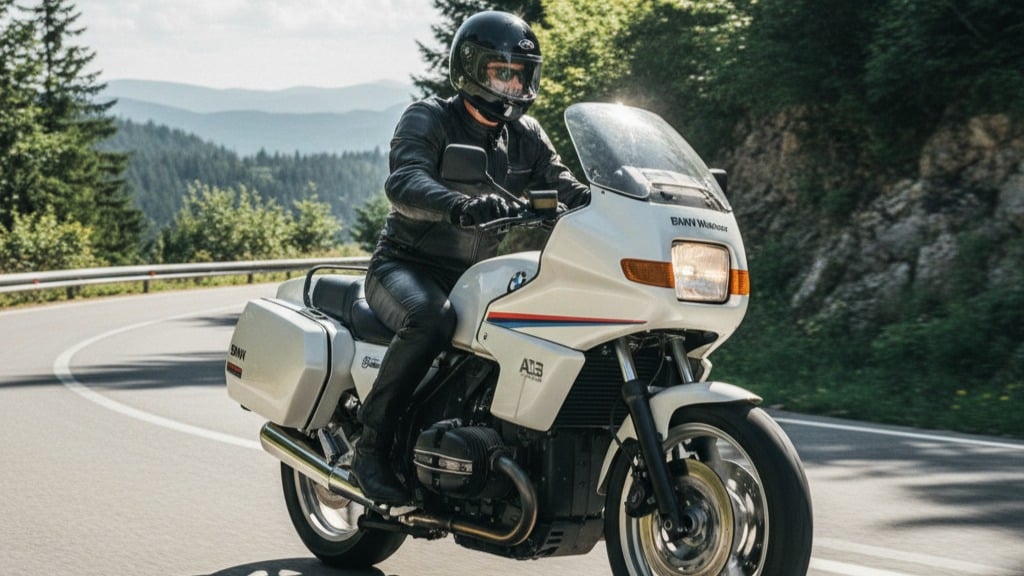
Imagine a world where riding a motorcycle involved a constant, nail-biting dance with danger, especially when it came to braking. For decades, emergency stops were a high-stakes gamble, requiring immense skill, perfect timing, and a healthy dose of luck to avoid a locked wheel, a devastating skid, or a painful spill. Then, a revolution arrived, silently, efficiently, and fundamentally changing the game forever. The advent of the first motorcycle with ABS brakes wasn’t just an engineering marvel; it was a watershed moment that dramatically enhanced safety and confidence for riders worldwide.
This isn’t just a story about a technical advancement; it’s about shifting the paradigm of motorcycle control, making two-wheeled travel inherently safer and more accessible. Join us as we unleash the history of this groundbreaking innovation and explore how it continues to shape the riding experience today.
To truly appreciate the impact of ABS (Anti-lock Braking System) on motorcycles, we need to understand its origins. The concept of preventing wheels from locking up during braking isn’t new; it dates back to early aviation. In the 1920s, French automobile and aircraft pioneer Gabriel Voisin experimented with systems to prevent aircraft tires from skidding on landing. Later, in the 1950s, Dunlop developed the Maxaret system, used in aircraft like the Avro Vulcan bomber, which prevented wheel lock-up on wet runways, ensuring safer landings.
Automotive engineers quickly recognized the potential for road vehicles. Early mechanical ABS systems appeared in cars like the British Jensen FF in 1966, but it was the electronic age that truly allowed for widespread adoption. Companies like Bosch pioneered electronic ABS for cars in the late 1970s, transforming automotive safety. The principle was simple yet profound: by rapidly modulating brake pressure to each wheel, ABS prevents them from locking, allowing the driver to maintain steering control even under heavy braking.
While ABS was a fantastic safety improvement for cars, its potential on a motorcycle was arguably even greater. A four-wheeled vehicle offers inherent stability; even if its wheels lock, the car generally maintains its upright position. A motorcycle, however, is a dynamic balance act. Locking the front wheel almost invariably leads to an immediate loss of steering and a high-side crash, while locking the rear wheel can cause a dangerous slide or low-side.
Riders traditionally learned to feather the brakes, applying pressure just shy of the lock-up point – a delicate dance that becomes incredibly difficult in panic situations, on slippery surfaces, or when encountering unexpected obstacles. Studies showed that many motorcycle accidents involved riders failing to brake effectively in an emergency, often due to fear of locking a wheel. This created a clear and urgent need for a system that could mitigate this critical vulnerability.
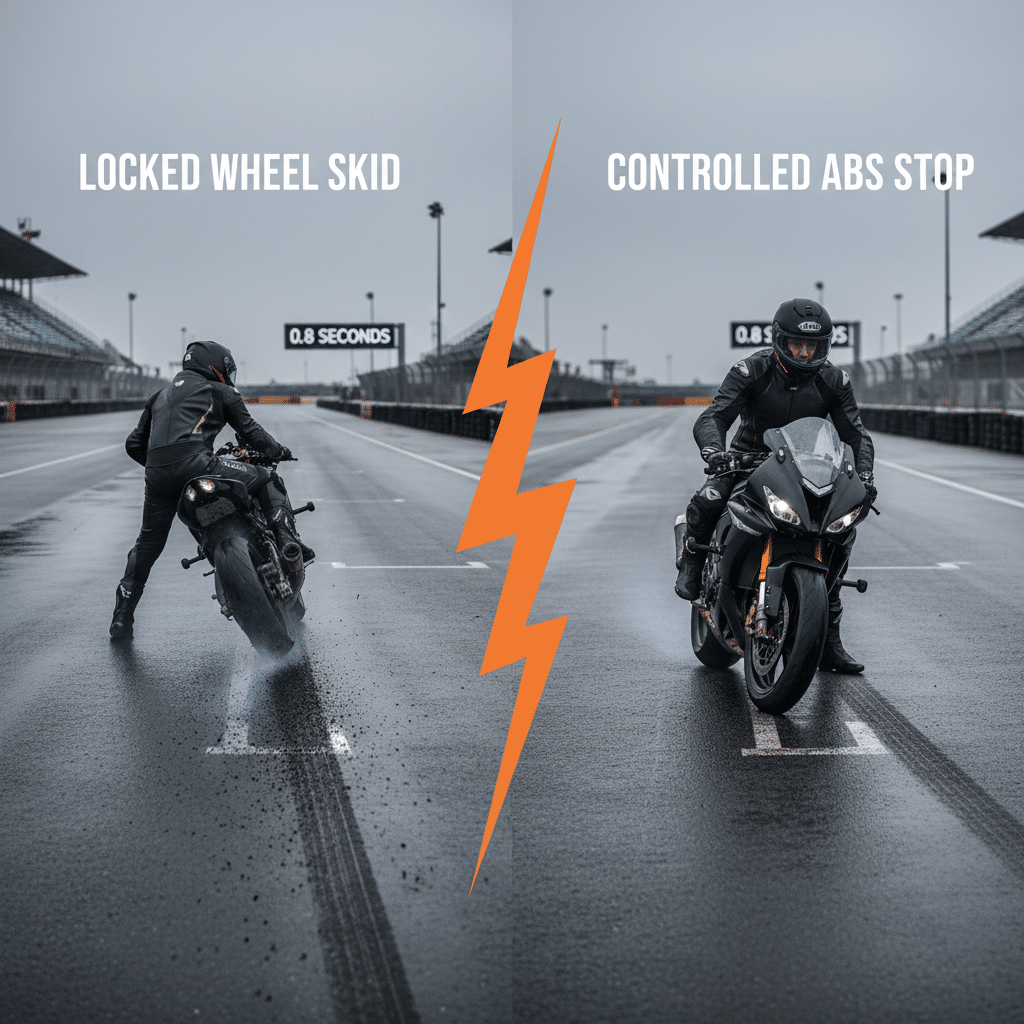
Enter BMW, a company renowned for its engineering prowess and commitment to innovation. In the late 1980s, while other manufacturers were still contemplating the challenges, BMW took the audacious step of adapting electronic ABS for motorcycles. The task was formidable. Motorcycle components needed to be smaller, lighter, and more robust to withstand the unique stresses and space constraints of a two-wheeled vehicle.
The fruit of their labor was unveiled in 1988 with the introduction of the BMW K100. This was not just a motorcycle with ABS; it was the first production motorcycle with ABS brakes. It was a true game-changer. The K100, already a technologically advanced machine for its time with its longitudinally mounted inline-four engine, now offered an unprecedented level of braking security. The system was large and somewhat heavy by today’s standards – adding about 11 kg (24 lbs) to the bike’s weight – but its benefits far outweighed these early limitations. It marked a definitive shift, signaling a new era of motorcycle safety.

The fundamental principles of ABS remained the same for the K100 as for cars, but adapted for two wheels. Here’s a simplified breakdown:
What this meant for the rider was revolutionary. Instead of risking a crash by over-braking, they could simply squeeze the levers hard in an emergency. The ABS system would take over, pulsing the brakes faster than any human could, maximizing stopping power without losing control. This made advanced braking techniques accessible to a far wider range of riders.
The introduction of ABS on the BMW K100 immediately resonated with safety advocates and forward-thinking riders. The benefits were tangible and life-saving:
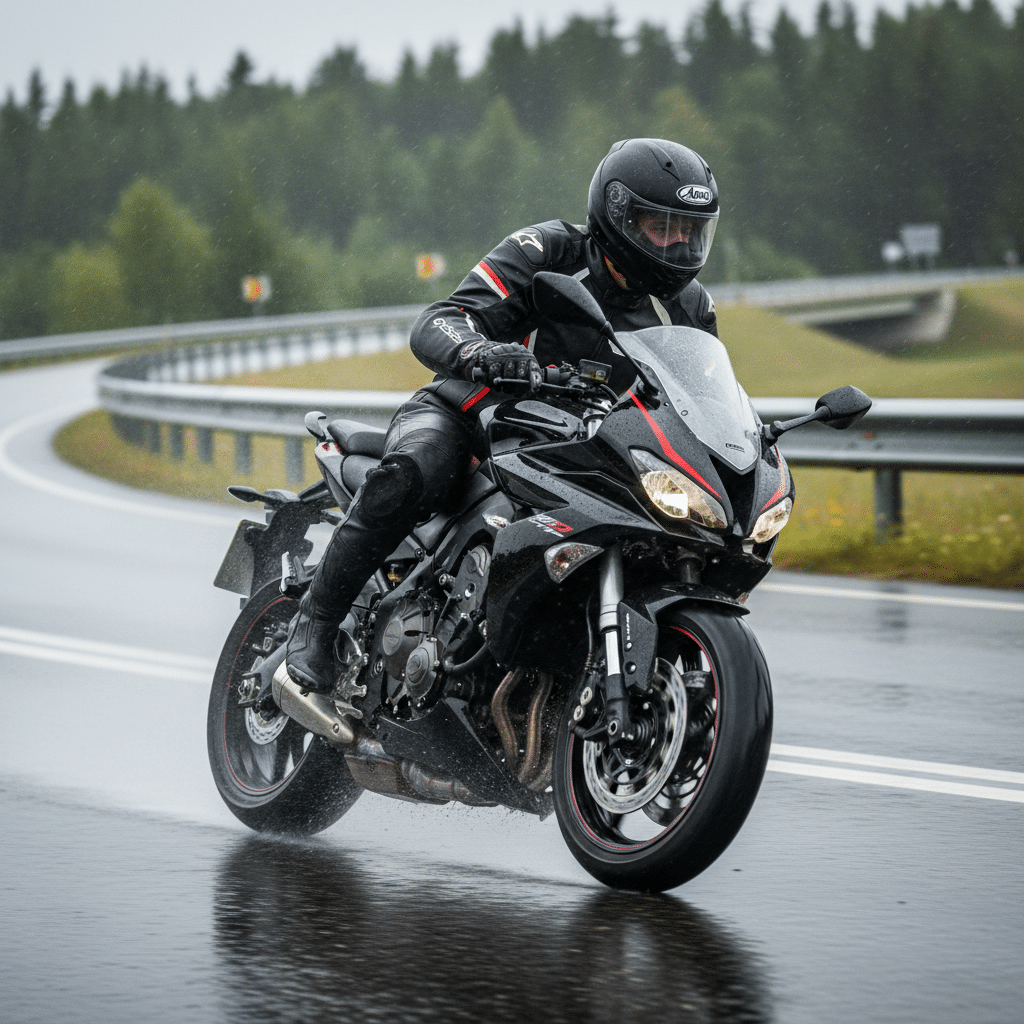
The initial adoption of ABS on motorcycles came with its own set of advantages and disadvantages, particularly in those early years.
| Pros | Cons |
|---|---|
| – Dramatically increased emergency braking safety | – Added significant weight to the motorcycle |
| – Prevented wheel lock-up and loss of control | – Increased the overall cost of the motorcycle |
| – Boosted rider confidence and reduced anxiety | – Perceptible pulsation at the lever could be unsettling initially |
| – Allowed for maximum braking force in panic situations | – Early systems were bulky and complex to integrate |
| – Improved stability on slippery or uneven surfaces | – Some riders disliked the ‘feel’ compared to traditional brakes |
The BMW K100 was just the beginning. The seed of ABS on motorcycles had been planted, and it began to grow rapidly.
Today, ABS is no longer a luxury feature confined to a few premium models. It has become an indispensable safety standard, largely due to legislative mandates. Many regions, including the European Union and India, now require ABS on all new motorcycles above a certain engine capacity. This widespread adoption has democratized safety, making effective emergency braking available to virtually every new rider.
Beyond basic dual-channel ABS, which independently controls the front and rear wheels, we’ve seen remarkable innovations:
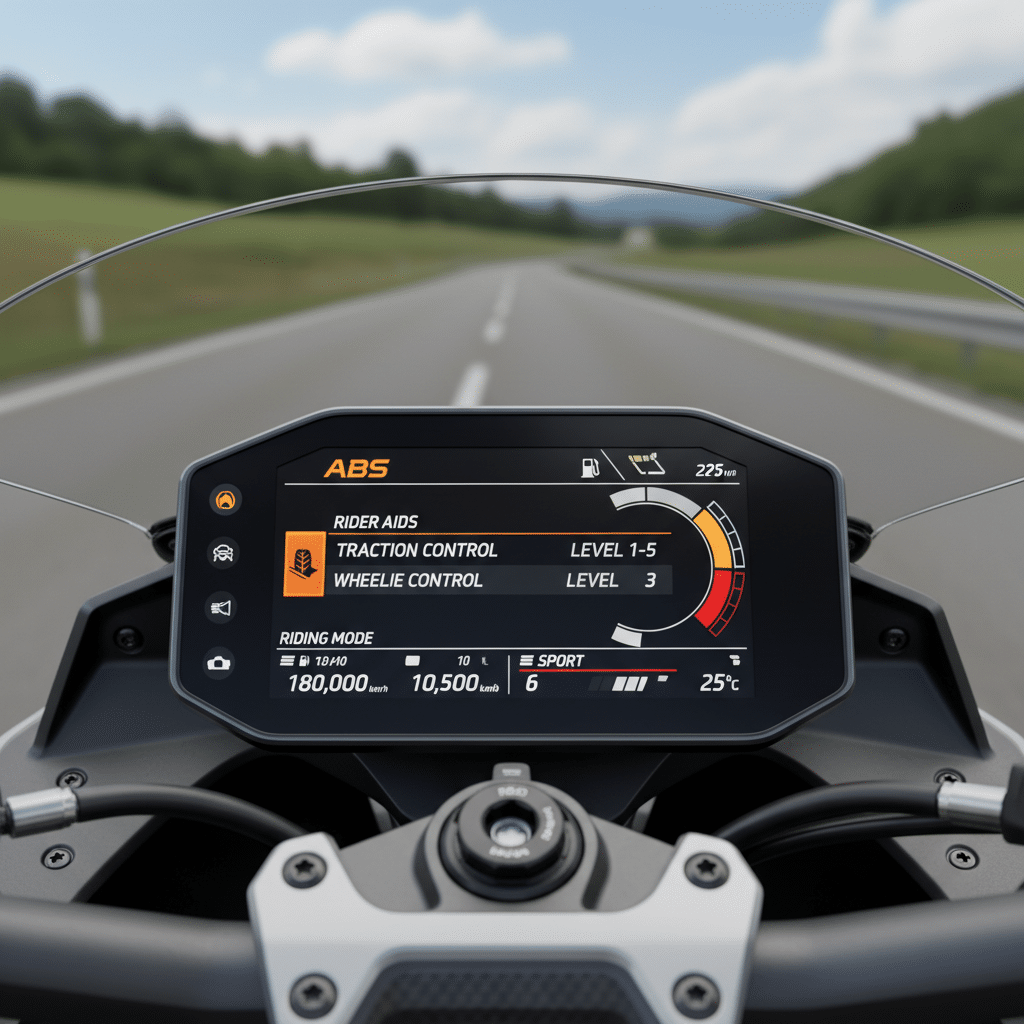
The impact of ABS extends to all segments of motorcycling, from urban commuters and touring machines to high-performance sportbikes and rugged adventure models. It empowers new riders to learn and grow with a crucial safety net, while seasoned veterans appreciate the added layer of security, especially during unexpected events. Understanding these critical systems is part of a comprehensive approach to riding, which also includes knowing how to perform a full motorcycle inspection to ensure everything is in top working order.
While specific dramatic incidents involving the K100’s ABS are part of motorcycling lore, the broader impact of ABS is well-documented. Consider these scenarios:

The innovation of ABS didn’t just improve braking; it laid the groundwork for the entire ecosystem of modern motorcycle safety electronics. The wheel speed sensors and sophisticated ECUs developed for ABS became the building blocks for:
As we look to the future, the lessons learned from the first motorcycle ABS continue to drive innovation. We’re already seeing radar-assisted cruise control, collision warning systems, and even semi-active suspension systems that utilize data from ABS sensors and IMUs. The goal remains the same: to make motorcycling an even safer, more exhilarating, and more accessible experience for everyone.

The journey from the unpredictable, high-skill braking of yesteryear to the intelligent, confidence-inspiring systems of today is a testament to human ingenuity. The first motorcycle with ABS brakes, the BMW K100, stands as a monumental achievement, a daring leap that forever changed the course of motorcycle safety. It transformed a critical point of vulnerability into a robust safety net, empowering countless riders and saving untold lives.
What began as a weighty, complex addition is now a lightweight, seamless, and often mandatory feature that makes motorcycling inherently safer and more enjoyable. So, the next time you ride, take a moment to appreciate the silent guardian working tirelessly beneath you. The legacy of that pioneering BMW K100 continues to echo in every controlled stop, every avoided skid, and every confident mile ridden. It truly unleashed a new era of safety, reminding us that innovation, when applied thoughtfully, can indeed change riding forever.
Embrace the technology, ride safely, and continue to explore the incredible evolution of motorcycling!
The first production motorcycle to be equipped with Anti-lock Braking System (ABS) was the BMW K100, introduced in 1988.
ABS was revolutionary because motorcycles are inherently unstable, and wheel lock-up during braking almost invariably leads to a crash. ABS drastically reduced this risk, allowing riders to apply maximum braking force in emergencies without losing control, thereby significantly enhancing safety.
Motorcycle ABS works by using sensors to monitor wheel speed. If a wheel begins to decelerate too rapidly (indicating a potential lock-up), an Electronic Control Unit (ECU) rapidly modulates hydraulic brake pressure to that wheel, preventing it from locking while maintaining optimal stopping power and steering control.
Not all, but ABS is becoming a standard feature across the industry and is legally mandated for new motorcycles above a certain engine capacity in many regions, such as the European Union and India. This means a vast majority of new motorcycles today come with ABS.
Standard ABS prevents wheel lock-up when braking in a straight line. Cornering ABS, also known as lean-sensitive ABS, is a more advanced system that uses an Inertial Measurement Unit (IMU) to sense the motorcycle’s lean angle. It then adjusts brake pressure accordingly to prevent lock-up and maintain stability even when the rider brakes hard mid-corner, significantly enhancing safety during leaned braking.
Yes, early ABS systems, like that on the BMW K100, added noticeable weight (around 11 kg or 24 lbs) and cost to the motorcycle. Some riders also found the pulsating feel at the brake lever unsettling initially. However, these drawbacks have been largely mitigated with advancements in miniaturization and refinement over the years.
The sensors and control units developed for ABS became the foundation for other advanced rider aids. Data from wheel speed sensors and IMUs, originally used for ABS, are now utilized by systems like Traction Control, Wheelie Control, Engine Brake Control, and various ride modes, creating a comprehensive suite of electronic safety and performance enhancements.