Post-War Motorcycle Design Revolution: How Innovation Redefined Two Wheels
When World War II ended in 1945, the motorcycle industry stood at a turning point that would reshape two-wheeled transport forever. Factories…



Motorcycles have become essential tools in the courier industry, offering speed and flexibility that larger vehicles cannot match. Their ability to weave through congested city streets and reach destinations quickly makes them ideal for time-sensitive deliveries. From important documents to hot meals, motorcycle couriers handle a wide range of goods that need to arrive fast.
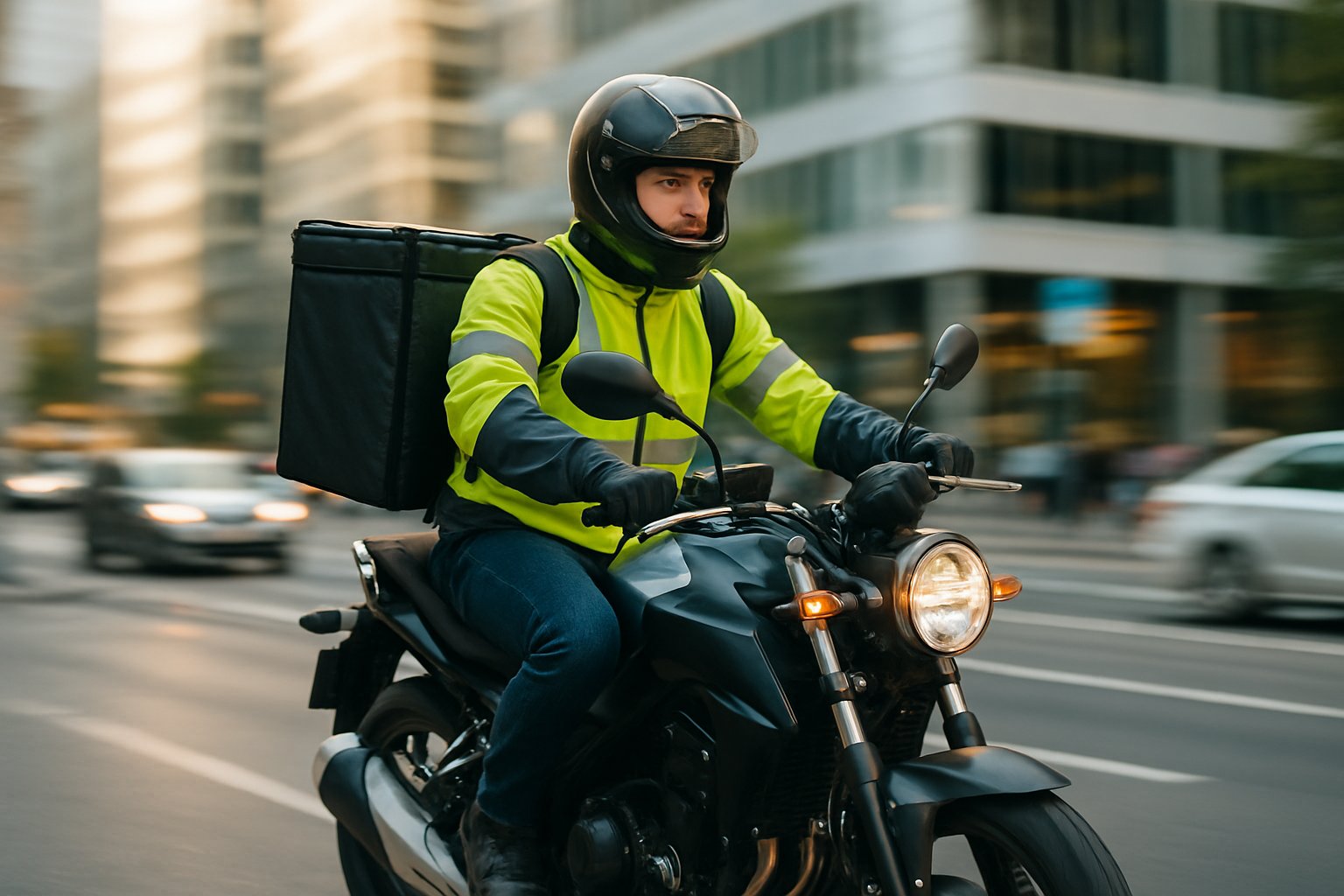
Motorcycle couriers can navigate traffic jams and tight spaces that trap cars and vans, which allows them to complete deliveries much faster in busy urban areas. This advantage has made them the go-to choice for businesses that need reliable, quick delivery services. Operating costs for motorcycles are also lower than larger vehicles, requiring less fuel and cheaper maintenance. These savings help courier companies stay competitive while keeping delivery prices reasonable.
The courier industry continues to grow and change with new technology and customer demands. Electric motorcycles are starting to appear in delivery fleets, offering quieter and cleaner options. Real-time tracking systems and routing software help motorcycle couriers work more efficiently than ever before. Understanding how motorcycles fit into modern courier services shows why they remain a vital part of the delivery world.
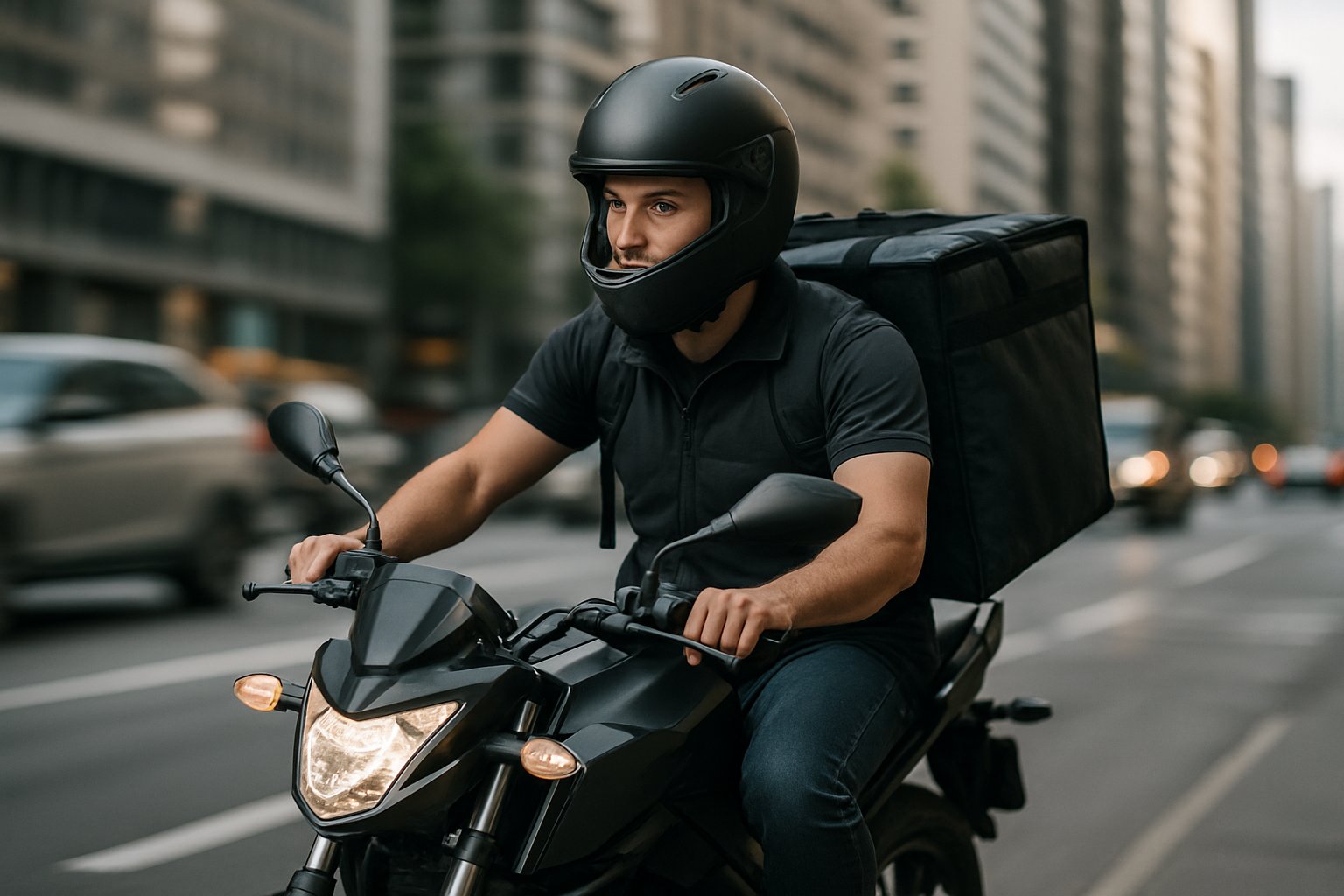
Motorcycles have become essential tools for courier companies operating in modern cities. They offer distinct advantages in speed, cost savings, and the ability to reach areas that larger vehicles cannot access efficiently.
Motorcycles achieve 45% faster driving speeds compared to cars in congested areas. This speed advantage directly translates to shorter delivery times for customers.
In cities with heavy traffic congestion, motorcycles can take 30% shorter routes than cars. They weave through traffic jams that leave larger vehicles stuck for extended periods. Some markets have seen bike deliveries triple since 2022 because of this efficiency edge.
Parking creates another time advantage. Motorcycles can park within 30 meters of delivery destinations, while cars often need to park much farther away. This reduces wasted time on every single delivery.
The combination of faster speeds and reduced delays allows courier companies to complete more deliveries per shift. In San Francisco, 76% of DoorDash deliveries use two-wheeled vehicles because of these efficiency gains.
Motorcycles cost less to operate than cars or vans for delivery services. They consume less fuel per mile and require lower maintenance expenses over time.
The last mile accounts for 50% or more of total delivery costs. Motorcycles help reduce these expenses significantly through better fuel economy and faster completion of routes.
Bike couriers earn approximately 10% more on average than car-based couriers. This happens because they complete more deliveries in the same time period. Companies benefit from higher productivity while riders earn better income.
Insurance and parking costs also remain lower for motorcycles. Many urban areas offer free or reduced parking fees for two-wheeled vehicles, adding to the cost savings.
High-density urban areas present challenges that motorcycles handle better than other vehicles. Narrow streets, limited parking, and constant traffic jams make car-based delivery difficult.
Motorcycles navigate through spaces where cars cannot fit. They access alleys, pedestrian zones, and crowded neighborhoods without the restrictions that apply to larger vehicles.
In Jakarta, delivery riders cover a typical radius of 5 kilometers. In smaller cities, this extends to 10-20 kilometers. The shorter distances in dense areas favor motorcycles over cars.
Asia-Pacific accounts for 61.61% of the global motorcycle market share, largely because dense urban populations depend on two-wheelers for delivery and mobility. Cities with heavy traffic congestion see motorcycles as the most practical solution for reaching customers quickly.
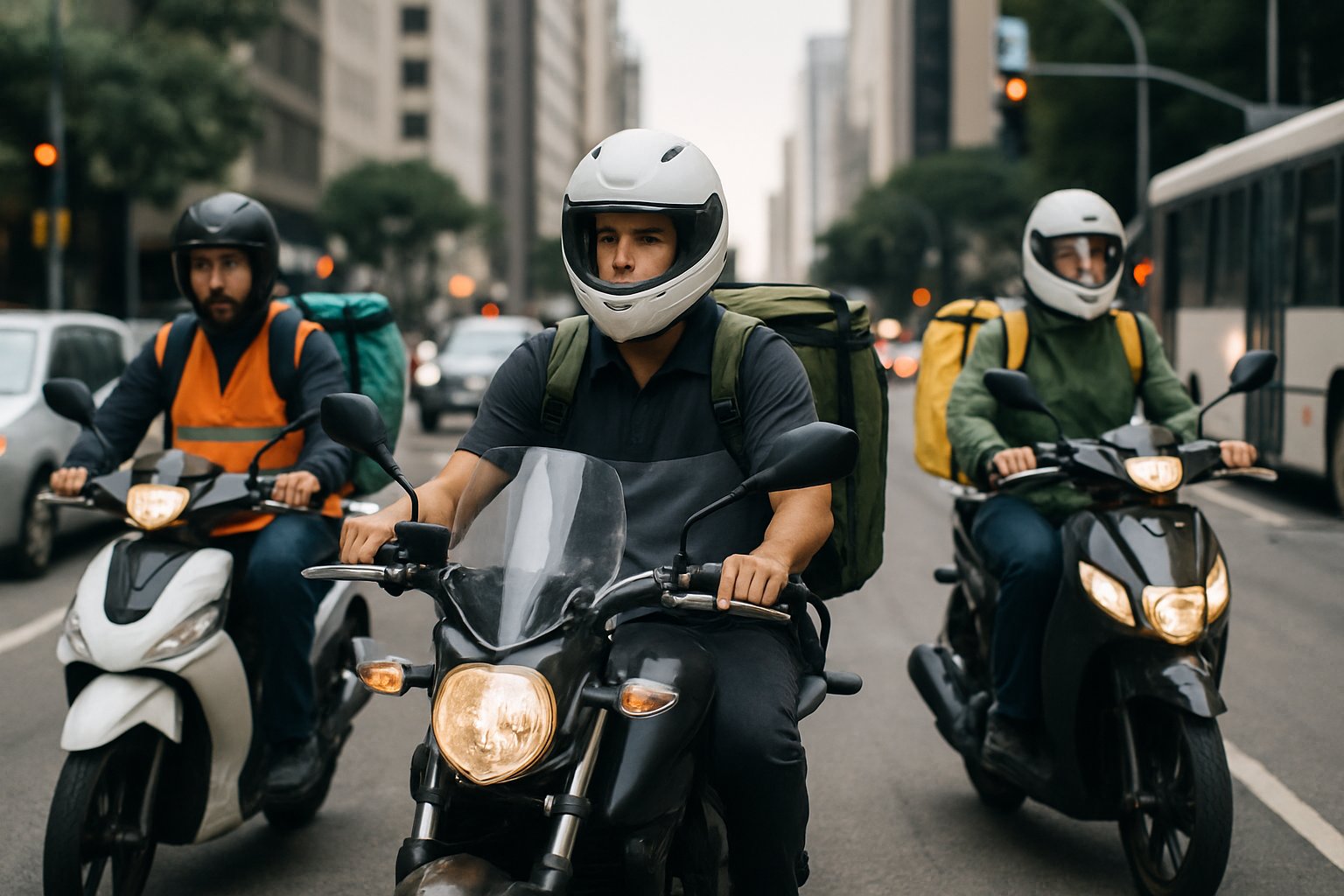
Courier services face constant pressure to deliver packages quickly in cities where traffic congestion slows traditional vehicles. Motorcycles cut through gridlock efficiently and help courier companies maintain fast delivery times even during peak traffic hours.
Motorcycles move through congested streets faster than cars or vans because of their narrow profile and agility. A courier on a motorcycle can weave between stopped vehicles and use gaps that larger vehicles cannot access. This ability becomes critical during rush hour when cars sit bumper-to-bumper for extended periods.
Lane splitting, where legal, allows motorcycle couriers to ride between lanes of slow-moving traffic. This practice saves significant time on each delivery run. Studies show motorcycles can reduce travel time by up to 30% compared to cars in heavy traffic conditions.
The smaller size of motorcycles also means courier riders can take shortcuts through alleys and narrow streets. These alternative routes often bypass major traffic jams entirely. Delivery companies rely on this flexibility to meet tight delivery windows and maintain customer satisfaction.
Each motorcycle courier removes the need for a larger delivery vehicle on city streets. A single motorcycle occupies about one-third the road space of a compact car and even less compared to delivery vans. This smaller footprint helps reduce overall traffic congestion when multiple couriers operate in the same area.
Motorcycles consume less fuel per mile than cars or trucks, which makes them more efficient for short urban trips. A typical motorcycle uses 50-80 miles per gallon, while delivery vans average 15-25 miles per gallon. This efficiency means fewer fuel stops and more time spent on actual deliveries.
Cities with high motorcycle adoption for courier services report improved traffic flow on major arterial roads. The combination of reduced vehicle size and faster movement through congestion creates a positive effect on overall urban mobility.
The final leg of package delivery presents the biggest challenge for courier services in dense urban areas. Motorcycles excel at last-mile delivery because they can park easily near building entrances and navigate crowded downtown districts. Traditional delivery trucks often struggle to find parking and must make multiple trips from distant parking spots.
Key advantages for last-mile delivery:
Courier companies organize their motorcycle fleets into zones to maximize coverage efficiency. Riders receive multiple packages for delivery within a small geographic area. This approach minimizes travel distance while maintaining fast turnaround times. The combination of speed and accessibility makes motorcycles the preferred choice for time-sensitive urban deliveries.
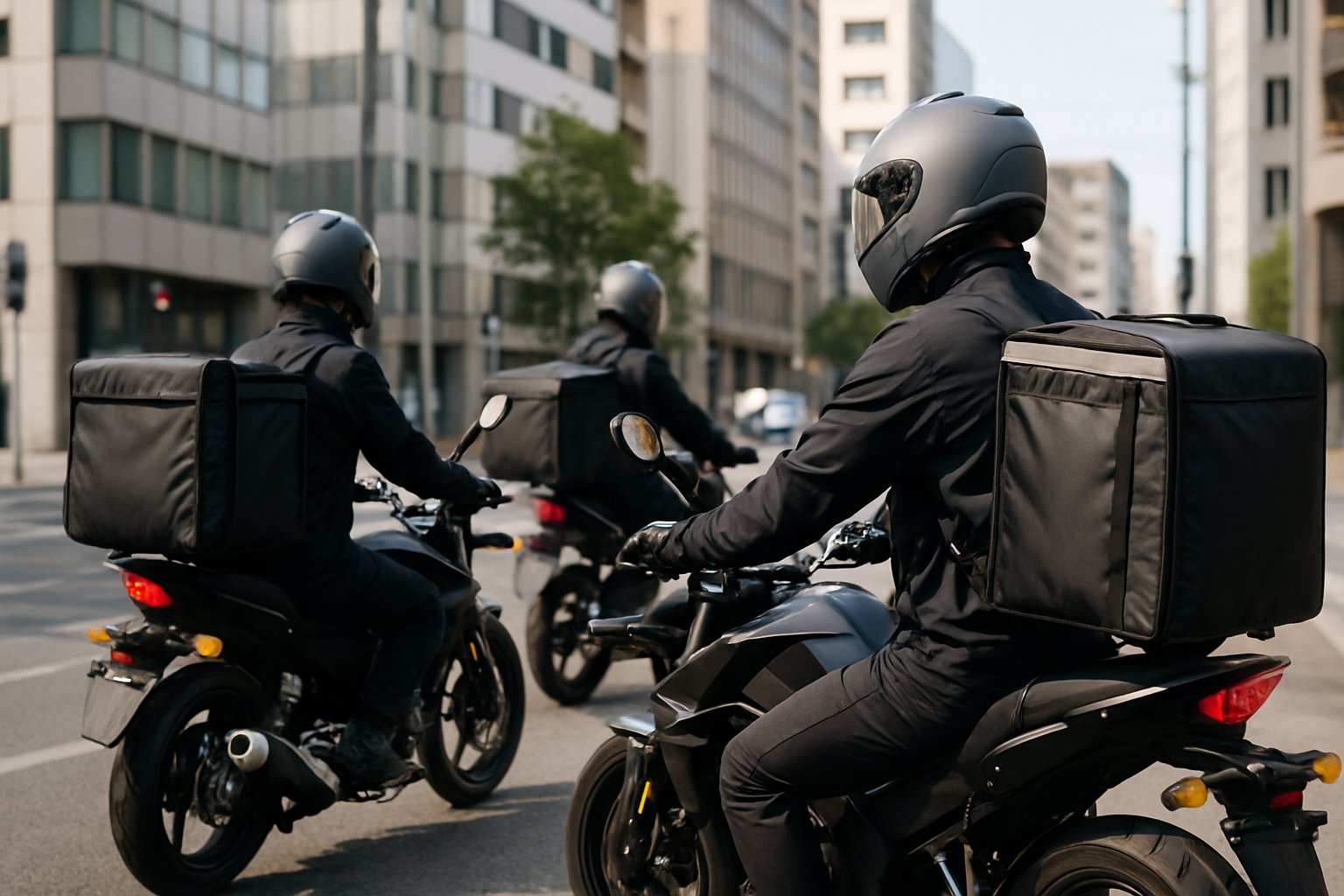
Motorcycles serve multiple roles in today’s courier industry, from transporting hot meals across busy city streets to carrying time-sensitive business documents. These vehicles handle both everyday food deliveries and critical package transport with equal efficiency.
Motorcycles have become the primary vehicle for food delivery services in urban areas. They allow delivery drivers to navigate through heavy traffic and reach customers while meals stay hot and fresh.
The speed advantage matters most during peak dining hours. A motorcycle courier can complete multiple deliveries in the time it takes a car to make one or two stops. This efficiency helps restaurants serve more customers and maintain food quality.
Key benefits for food delivery:
Many food delivery platforms now rely heavily on motorcycle fleets. The vehicles work well for carrying insulated bags that keep food at proper temperatures during transport.
Businesses use motorcycle couriers to move important documents and small packages that need same-day or express delivery. Legal firms, banks, and medical offices depend on these services for time-critical materials.
Motorcycle couriers excel at handling urgent shipments between offices in the same city. They bypass traffic jams that delay larger delivery vehicles. The secure transport bags attached to motorcycles protect sensitive documents from weather and damage.
Small to medium-sized parcels fit easily on motorcycles equipped with delivery boxes. Financial institutions frequently use motorcycle services to transport banking documents between branches. Medical facilities rely on them for lab samples and prescription deliveries that require speed and reliability.
The cost-effectiveness makes motorcycle courier services attractive for business-to-business operations. Companies save money on delivery expenses while maintaining fast turnaround times for their critical shipments.
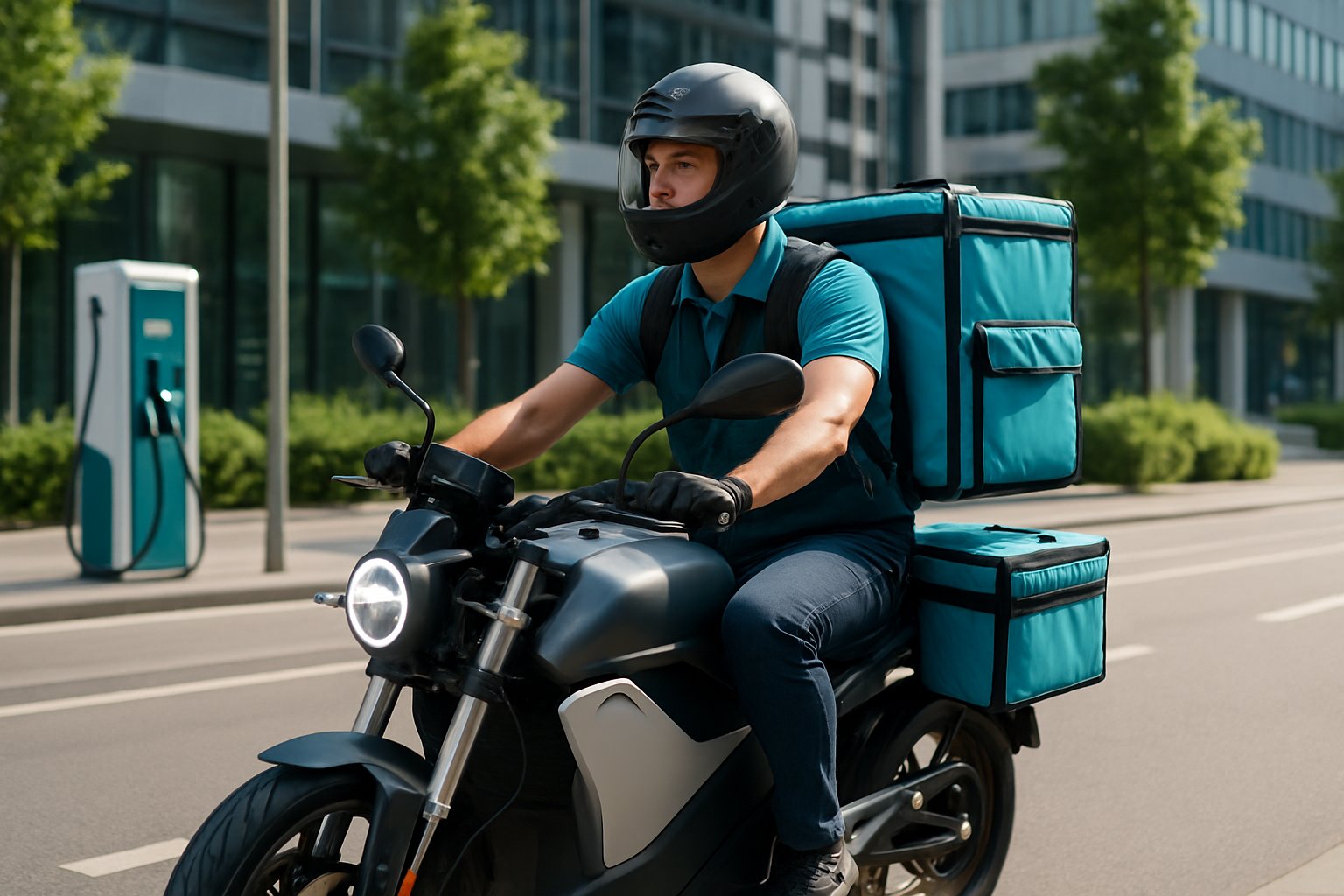
Electric motorcycles are transforming courier services through rapid adoption driven by environmental regulations and operating cost reductions. Battery technology improvements now enable ranges of 80-120 km per charge, making electric models practical for urban delivery routes.
Courier companies are switching to electric motorcycles at an increasing rate. Major delivery services in urban areas now operate fleets of electric two-wheelers to meet stricter emission regulations and reduce fuel expenses.
The adoption rate accelerates in cities with congestion charges and low-emission zones. Electric motorcycles allow delivery riders to access restricted areas without penalties while maintaining fast delivery times through heavy traffic.
Small businesses and independent couriers also invest in electric models. The lower barrier to entry compared to traditional delivery vehicles makes electric motorcycles accessible for startups and gig economy workers entering the delivery market.
Government incentives support this transition. Many regions offer tax credits, purchase rebates, and reduced registration fees for electric vehicle adoption, making the initial investment more affordable for delivery operators.
Operating costs drop significantly with electric motorcycles. Electricity costs roughly 60-70% less than gasoline per kilometer, while maintenance expenses decrease due to fewer moving parts and no oil changes required.
Zero tailpipe emissions help delivery companies meet sustainability goals. Electric motorcycles produce no direct air pollutants, reducing urban air quality degradation in high-density delivery zones.
Battery replacement represents the main long-term cost. Lithium-ion batteries typically last 800-1,200 charging cycles or 3-5 years of daily use before requiring replacement.
Fleet operators report improved profit margins. The combination of lower fuel costs, reduced maintenance, and increased delivery capacity due to better traffic maneuverability creates substantial savings over traditional gasoline-powered motorcycles.
Modern electric motorcycles feature motors ranging from 3000W to 5000W, providing sufficient torque for carrying cargo loads of 150-300 kg. These power outputs enable delivery riders to transport substantial package volumes while maintaining speeds of 55-70 km/h suitable for urban routes.
Fast-charging technology reduces downtime between delivery runs. Current models charge fully in 4-6 hours, with some systems offering partial charging options that restore 50% capacity in under 2 hours.
Smart features improve operational efficiency. LED dashboards display real-time battery status, remaining range, and speed data, allowing riders to plan routes and charging stops effectively.
Battery technology continues advancing. New lithium-ion formulations increase energy density, extending range while reducing weight and charging times for future electric motorcycle models.
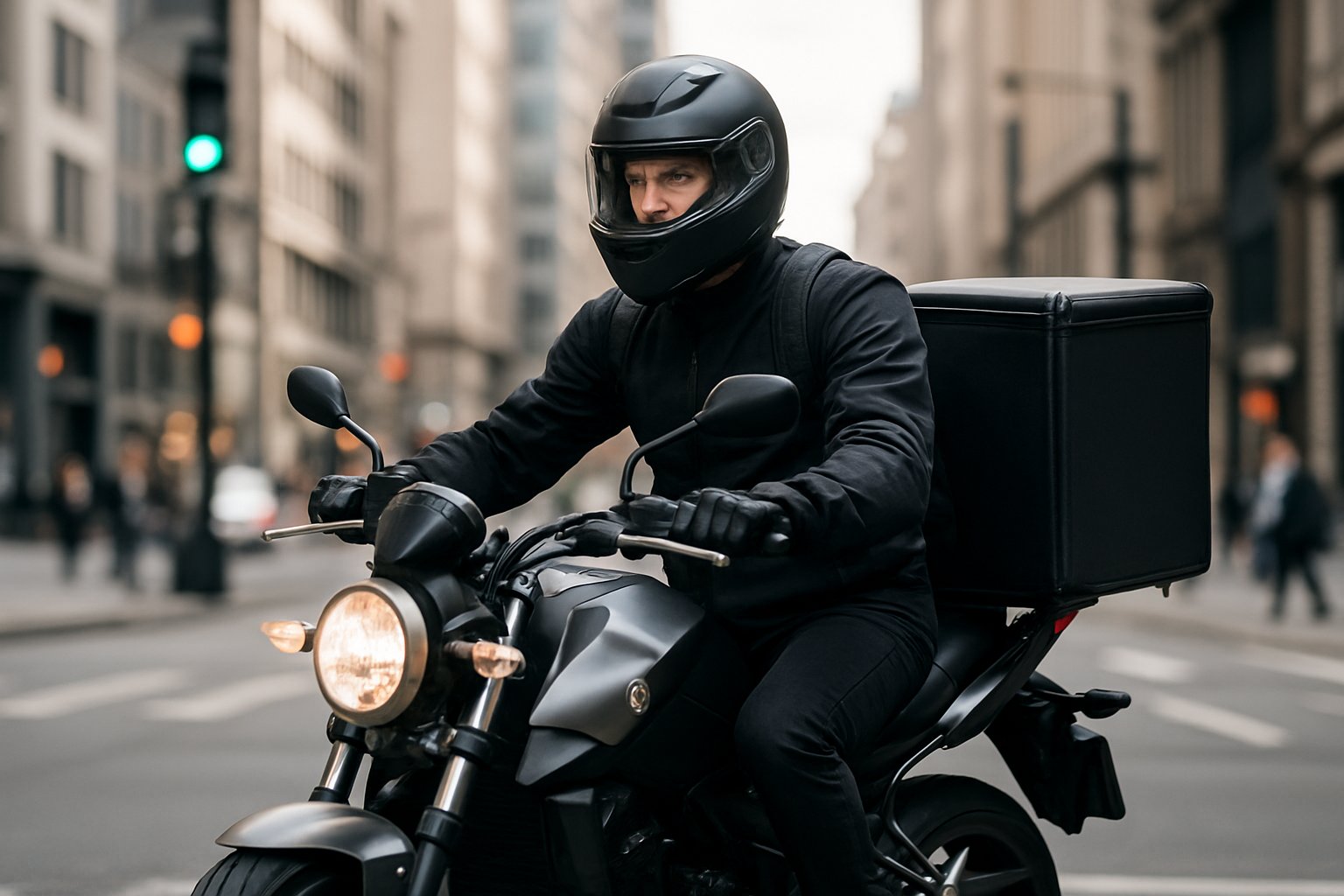
Running a successful motorcycle courier operation requires attention to vehicle upkeep, rider qualifications, and legal compliance. These three areas work together to ensure reliable service delivery while protecting both the business and its riders.
Motorcycles used in courier services face demanding conditions that require strict maintenance schedules. Daily inspections should cover tire pressure, brake function, lights, and fluid levels. These checks prevent breakdowns during delivery runs.
Regular servicing intervals matter more for courier motorcycles than personal vehicles. Most courier operations schedule service every 3,000 to 5,000 miles. This includes oil changes, chain adjustments, and brake pad replacements.
Common wear items need monitoring:
Keeping spare parts on hand reduces downtime. Smart courier services stock items like bulbs, fuses, and spark plugs. A single day of missed deliveries costs more than maintaining an inventory of basic parts.
Courier riders need advanced motorcycle handling skills beyond basic licensing requirements. Training programs should cover defensive riding techniques, navigation in heavy traffic, and safe load securing methods.
Safety gear requirements protect riders from injury. A full-face helmet, reinforced jacket, gloves, and boots are standard equipment. High-visibility clothing helps other road users spot riders in congested urban areas.
Companies must establish clear protocols for different weather conditions. Rain and ice create hazards that require adjusted riding speeds and increased following distances. Some operations pause deliveries during severe weather to protect rider safety.
Commercial motorcycle courier operations must meet specific insurance and licensing standards. Standard personal motorcycle insurance does not cover commercial delivery activities. Courier insurance policies address the higher risk levels and liability exposure of business use.
Riders need proper licensing for commercial operations. In many regions, this means holding a full motorcycle license rather than a learner’s permit. Some areas require additional certifications for commercial delivery work.
Vehicle registration must reflect commercial use. This affects road tax rates and inspection requirements in most jurisdictions. Motorcycles used for courier work often need more frequent safety inspections than private vehicles.
Business operators must track and report hours worked to comply with labor regulations. Fatigue management rules prevent riders from working excessive hours that increase accident risk.
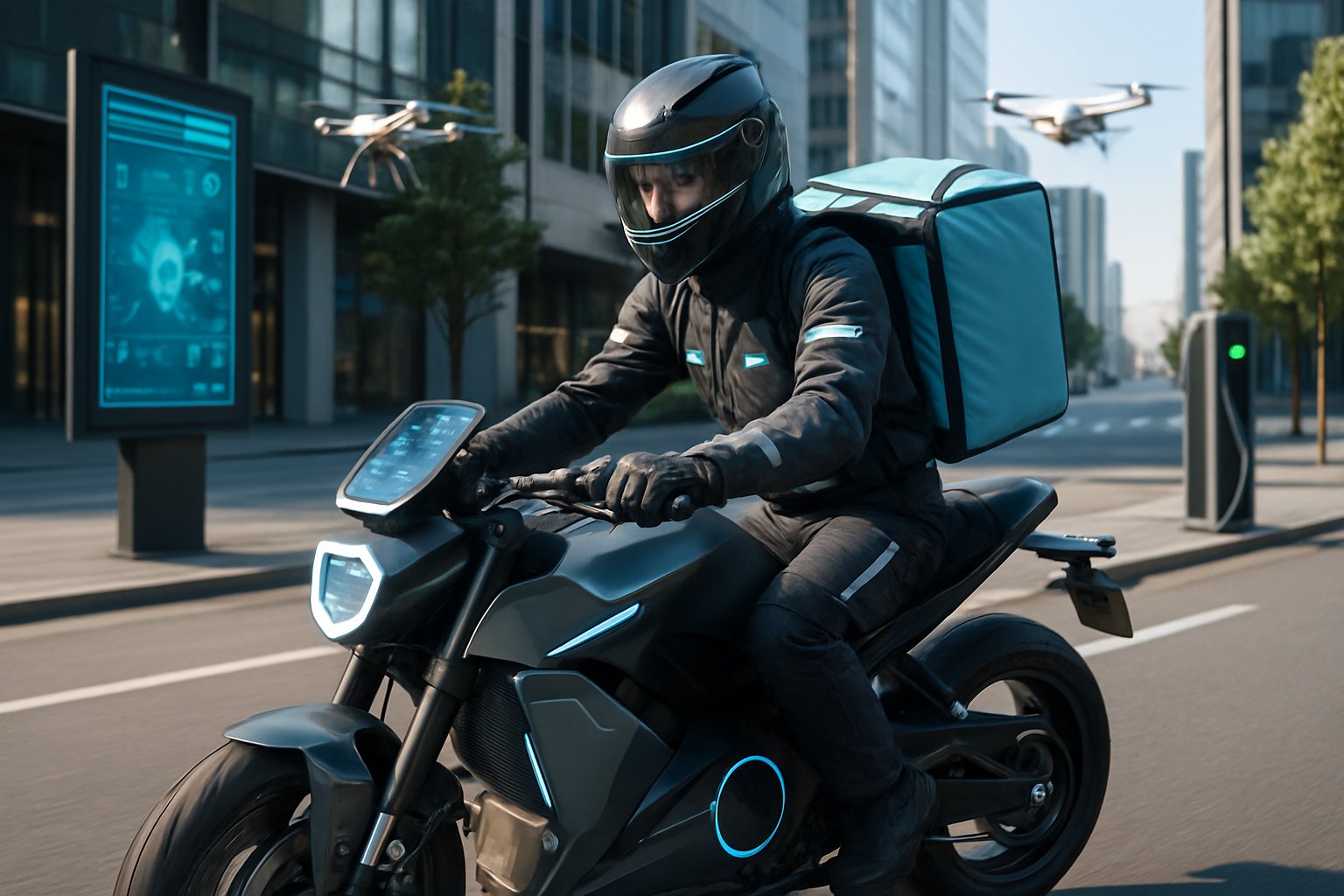
Motorcycle courier services are adopting new technology and environmentally friendly practices to meet growing delivery demands. Digital platforms are making it easier to track packages and manage routes, while electric motorcycles offer cleaner alternatives to traditional gas-powered bikes.
Digital platforms now connect customers, couriers, and businesses through smartphone apps and web interfaces. These systems allow real-time package tracking, instant booking, and automated route planning. Customers can see exactly where their delivery is at any moment.
AI-powered route optimization helps motorcycle couriers avoid traffic jams and find the fastest paths. The technology analyzes traffic patterns, weather conditions, and delivery priorities to create efficient routes. This saves time and reduces fuel costs for courier companies.
Mobile apps give couriers access to delivery details, customer contact information, and navigation tools in one place. They can update delivery statuses instantly and communicate with dispatchers when problems arise. Some platforms use GPS data to automatically confirm deliveries when a courier reaches the destination.
Many courier services now integrate with e-commerce websites and business management systems. This automation reduces manual data entry and speeds up the entire delivery process from order to doorstep.
Electric motorcycles are becoming more common in courier fleets as cities push for cleaner air and lower emissions. These bikes produce zero direct emissions and cost less to operate than gas-powered models. Battery technology improvements now allow electric motorcycles to travel longer distances on a single charge.
Major courier companies are investing in charging infrastructure at their warehouses and distribution centers. Some cities offer incentives like reduced licensing fees or access to restricted zones for electric delivery vehicles. This makes electric motorcycles more attractive for urban courier services.
Electric motorcycles also run more quietly than traditional bikes, which reduces noise pollution in residential areas. The lower maintenance requirements mean fewer breakdowns and more reliable delivery schedules. Battery swapping stations are emerging in busy delivery zones, allowing couriers to exchange depleted batteries for fully charged ones in minutes instead of waiting for a recharge.
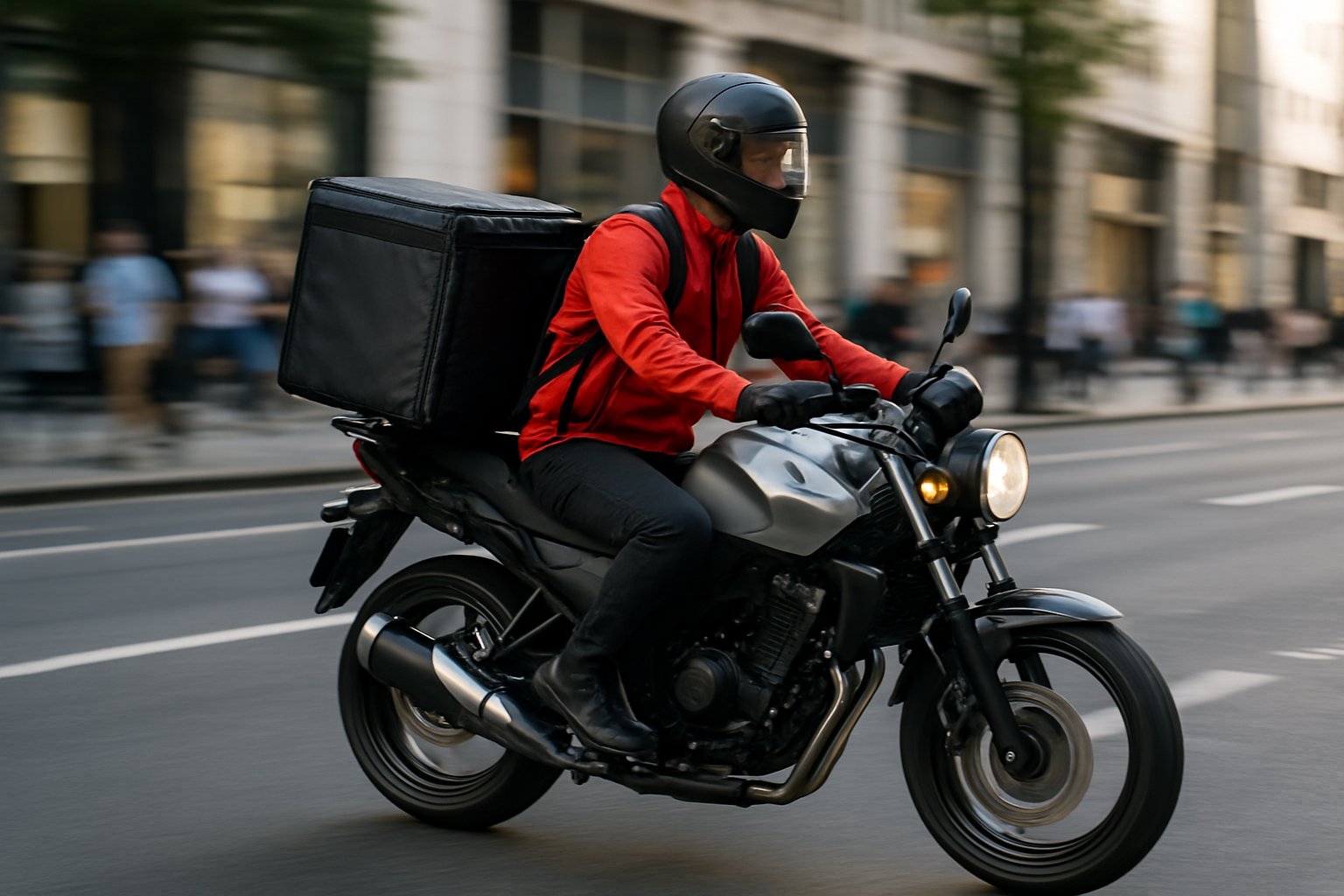
Motorcycle couriers navigate complex urban environments while maintaining safety standards and efficiency through specific training and technology. The choice of motorcycles, delivery methods, and operational advantages make them a preferred option for time-sensitive deliveries.
Motorcycle couriers navigate city streets more easily than cars or trucks because they can move through traffic and use lanes that larger vehicles cannot access. They rely on GPS navigation systems to find the fastest routes and avoid traffic congestion. Most couriers develop extensive knowledge of local roads, shortcuts, and traffic patterns in their delivery areas.
Time management plays a critical role in successful deliveries. Couriers plan their routes to handle multiple pickups and drop-offs efficiently. They coordinate with dispatch centers that provide real-time updates about traffic conditions and delivery priorities.
Motorcycle couriers must wear helmets at all times while riding. They need to obey all traffic laws, including speed limits and traffic signals. Maintaining awareness of their surroundings helps them anticipate potential hazards on the road.
Couriers face risks from traffic accidents, harsh weather conditions, and the possibility of theft. They mitigate these risks by following safe driving practices and staying alert. Most courier services require riders to maintain clean driving records and carry proper insurance coverage.
Regular motorcycle maintenance ensures the vehicle operates safely during deliveries. Couriers inspect their bikes before shifts to check brakes, lights, and tire pressure.
Speed and maneuverability rank as top priorities when selecting motorcycles for courier work. The bike needs enough storage capacity for packages while remaining easy to handle in urban traffic. Fuel efficiency matters because couriers travel long distances throughout their shifts.
Reliability is essential since mechanical breakdowns delay deliveries and reduce income. Many courier services prefer motorcycles with proven track records for durability. The bike must also have adequate power to carry the rider, packages, and safety equipment without strain.
Cost factors include the purchase price, maintenance expenses, and insurance rates. Lighter bikes often work better for navigating congested city streets.
GPS navigation systems have transformed how couriers find addresses and plan routes. These systems provide real-time traffic updates that help riders avoid delays. Digital dispatch platforms connect couriers with customers instantly and assign deliveries based on location and availability.
Mobile apps allow customers to track their packages in real-time and receive delivery notifications. Couriers use smartphones to confirm pickups, capture delivery signatures, and communicate with dispatch centers. Electronic payment systems speed up transactions at both pickup and delivery locations.
Route optimization software calculates the most efficient paths for multiple deliveries. This technology reduces fuel costs and increases the number of deliveries a courier can complete per shift.
A valid motorcycle license serves as the basic requirement for courier work. Most employers expect candidates to have a high school diploma. Riders need a clean driving record that demonstrates safe driving habits.
Knowledge of local traffic laws is necessary for legal and safe operations. Some employers require prior delivery experience or familiarity with GPS navigation systems. Customer service skills matter because couriers interact with clients at pickup and drop-off locations.
New couriers often receive on-the-job training that covers company procedures, package handling, and route planning. They learn how to communicate effectively with customers and answer questions about delivery services.
Motorcycles deliver items faster than cars or trucks in urban environments because they navigate through traffic more easily. They reach destinations quickly, making them ideal for time-sensitive deliveries. The cost to operate a motorcycle is lower than other vehicles due to better fuel efficiency and reduced maintenance expenses.
Parking presents fewer challenges for motorcycle couriers since bikes require less space than cars. They can access locations that larger vehicles cannot reach, including narrow streets and congested areas. This flexibility allows couriers to serve a wider range of delivery locations.
Motorcycles prove more cost-effective for businesses that need to transport small packages and documents. They provide a convenient and reliable delivery method for items that do not require large cargo capacity.