The History of Off-Road Motorcycles: From Pioneers to Modern Machines
Off-road motorcycles didn’t start as the powerful machines riders see today. They began in the early 1900s when people modified regular…



Motorcycles have become the backbone of transportation in many developing countries around the world. In cities and rural areas across Asia, Africa, and Latin America, motorcycles offer an affordable way for millions of people to get to work, run businesses, and access essential services. While a car can cost tens of thousands of dollars, a basic motorcycle often sells for around $1,000, making it the only realistic option for families living on modest incomes.
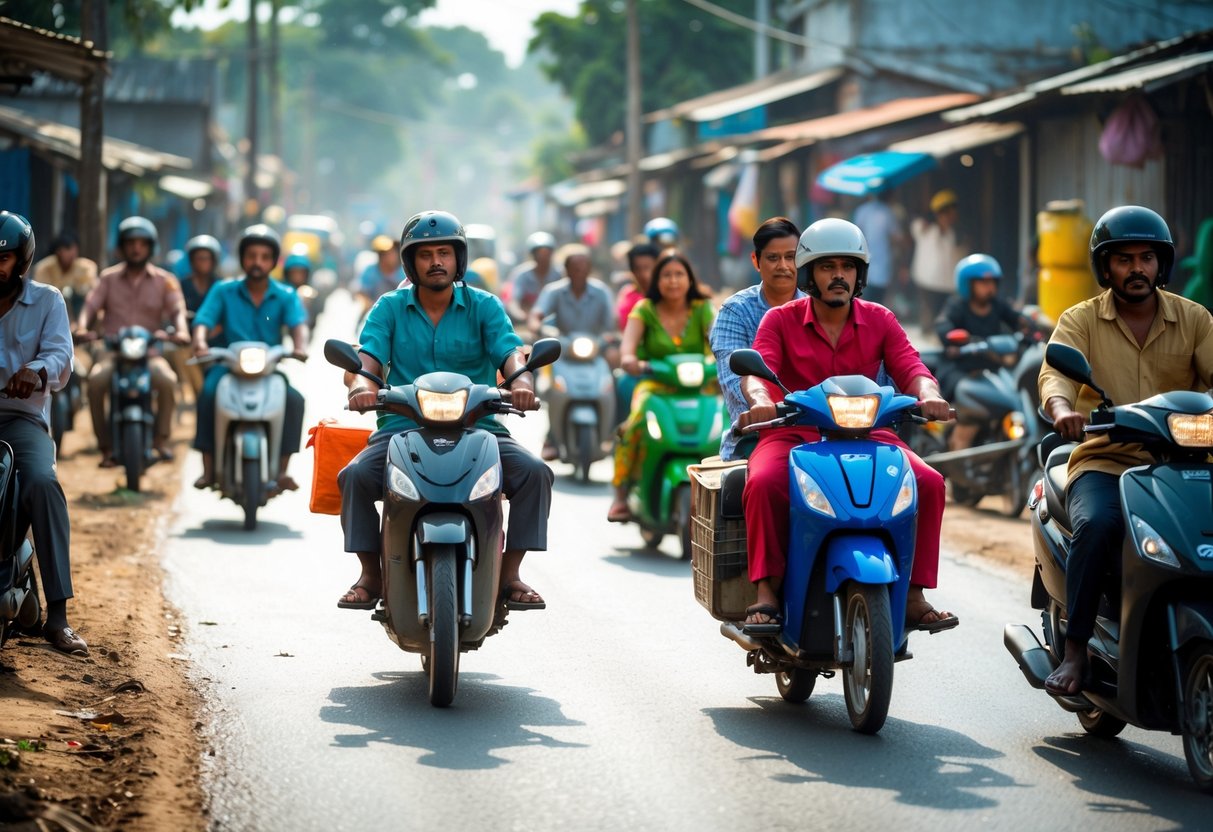
The rise of motorcycles in these regions tells a complex story about economic growth, urban planning, and daily survival. In countries like Indonesia, Nigeria, and Honduras, two-wheeled vehicles now outnumber cars on many roads. This shift has created jobs for motorcycle taxi drivers, helped small businesses deliver goods, and given people in remote areas better connections to markets and healthcare.
The motorcycle boom brings both opportunities and challenges. These vehicles provide mobility where public transportation systems fall short, but they also raise concerns about road safety, air pollution, and urban congestion. Understanding how motorcycles fit into the development puzzle helps explain broader patterns of economic change and the search for sustainable transportation solutions.
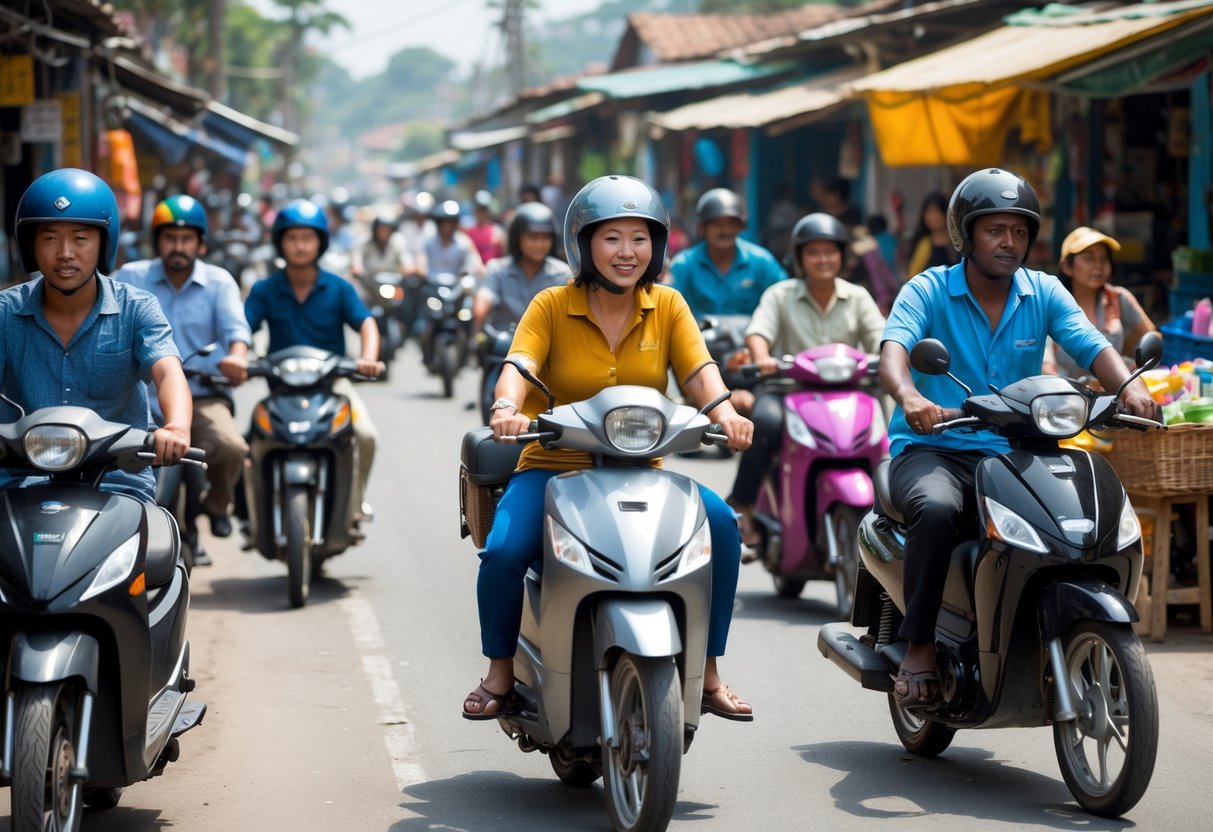
Motorcycles serve as essential transportation tools in developing countries, providing access to areas where other vehicles cannot reach and creating income opportunities for millions of riders. They cost less than cars and work better than buses in crowded cities with poor road infrastructure.
Motorcycles move easily through congested city streets where cars get stuck in traffic. They reach remote suburbs and rural areas that lack public transportation options. In sub-Saharan Africa, walking remains the most common way to travel, but it does not allow people to move across entire cities quickly.
Rural areas in countries like Rwanda and Indonesia rely heavily on motorcycles because roads are often unpaved or poorly maintained. A motorcycle can navigate narrow paths and rough terrain that would stop a car. In Thailand and the Philippines, motorcycles connect farming communities to markets and health clinics.
Urban areas benefit from motorcycles in different ways. They reduce travel time during rush hours and provide flexible routes that buses cannot offer. Cities in India see millions of motorcycle riders daily because the vehicles can squeeze through tight spaces between other traffic.
Motorcycle taxis create jobs and income for workers across developing countries. In many nations, 7 out of 10 motorcycles function as work tools rather than just personal transport. Riders earn money by carrying passengers or delivering goods throughout cities and towns.
The motorcycle taxi sector supports families who depend on this income for basic needs. In cities like Lagos, Douala, and Kampala, commercial motorcycle services employ thousands of people. These services cost less than regular taxis and reach places where cars cannot go.
Women use motorcycle taxis more often than they own motorcycles themselves. The service provides safe transport options for female passengers who need to travel for work or daily tasks. Motorcycle delivery services also help small businesses move products quickly without expensive shipping costs.
Motorcycles cost significantly less than cars, making them accessible to middle-class families in developing countries. The initial purchase price stays within reach for many households, and fuel consumption remains lower than four-wheeled vehicles. Maintenance costs also run cheaper because parts and repairs cost less.
Cost Comparison Factors:
In India and Southeast Asian countries, people prefer motorcycles over cars primarily because of price differences. A family can buy a motorcycle through affordable payment plans at local stores. Public transportation exists in many cities, but it does not always run on time or reach all neighborhoods.
Motorcycle ownership rates vary between regions and between urban and rural areas. Personal motorcycle users tend to be younger and male compared to public transport users, though they have less wealth than car owners. The low cost of entry makes motorcycles the main alternative to walking or taking crowded buses.
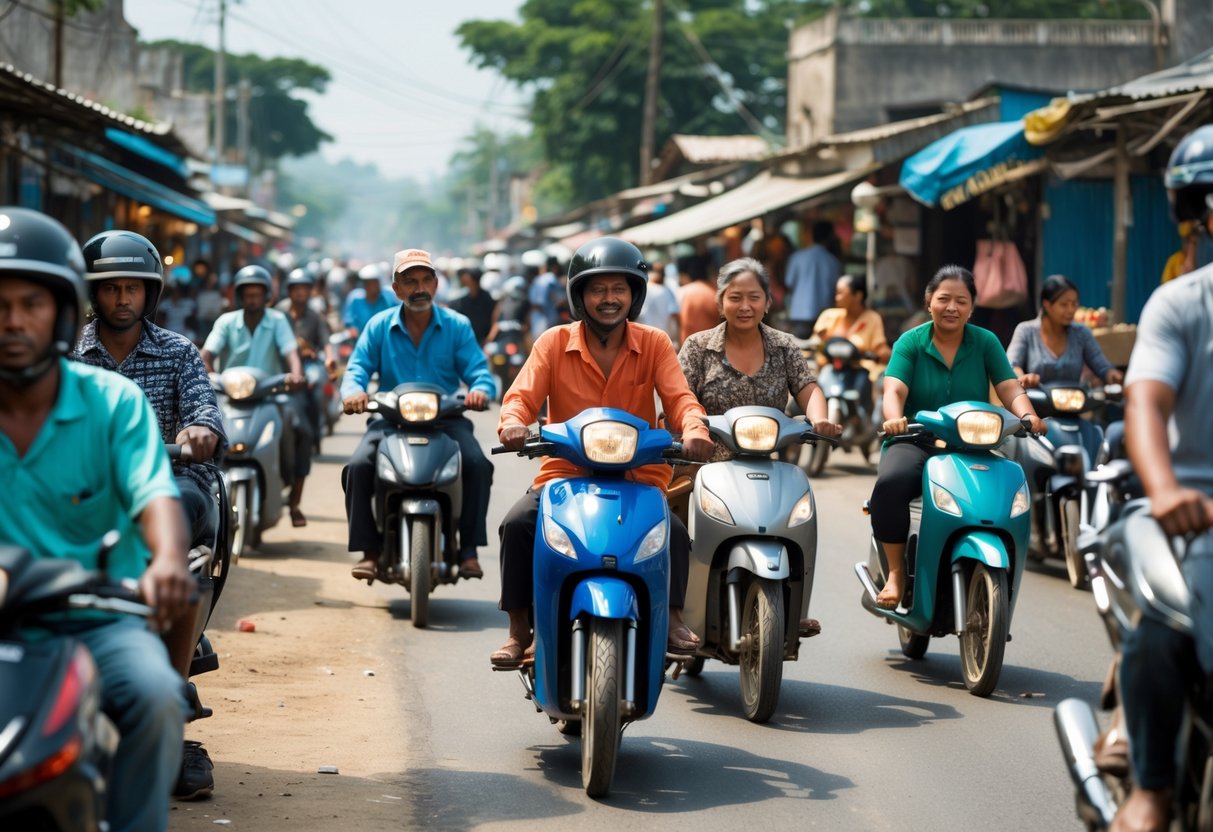
Motorcycles offer developing countries a practical answer to transportation needs by providing low-cost access to jobs, services, and markets. These vehicles cost significantly less to purchase and operate than cars while delivering greater speed and flexibility than public transport options.
The affordability of motorcycles makes them accessible to millions of people in developing nations. A basic motorcycle costs a fraction of what a car requires, with entry-level models available for under $1,000 in many markets. Monthly payment plans and dealer financing options further reduce barriers to ownership.
Inadequate public transport systems push people toward personal vehicles. Many cities lack reliable bus or train networks, especially in suburban and rural areas. Motorcycles fill this gap by reaching locations where buses don’t operate.
Traffic congestion drives motorcycle adoption in densely populated cities. In countries like Indonesia, Thailand, and the Philippines, motorcycles weave through gridlocked streets while cars sit motionless. A 30-minute car journey often takes 10 minutes by motorcycle.
The ease of obtaining a motorcycle supports rapid growth. Buyers need minimal documentation, and licensing requirements remain less stringent than for cars in many regions.
Fuel efficiency delivers substantial savings to motorcycle owners. Most motorcycles consume 60-100 miles per gallon, compared to 25-35 miles per gallon for cars. A daily commuter in India might spend $20 monthly on fuel versus $60 for a car.
Maintenance costs remain minimal. Basic service requires only oil changes and tire replacements, which local mechanics perform at low rates. Parts are widely available and inexpensive.
Insurance and registration fees cost less than vehicle alternatives. Many developing countries charge minimal annual fees for motorcycles, making ownership sustainable for low-income families.
Motorcycles generate income through taxi services and delivery work. Seven out of ten motorcycles in developing countries serve as work tools. Riders in Rwanda and other African nations earn daily wages by transporting passengers and goods.
Motorcycles provide faster point-to-point travel than buses or shared taxis. Public transport requires waiting at stops, following fixed routes, and making multiple transfers. A direct motorcycle trip saves 30-50% of travel time.
Cost comparisons favor motorcycles for frequent travelers. Daily bus fare of $1-2 accumulates to $30-60 monthly, while motorcycle fuel costs less for similar distances. Families owning motorcycles avoid paying multiple fares.
Public transport serves specific corridors but leaves gaps in coverage. Motorcycles access remote neighborhoods, rural villages, and areas without bus service. This flexibility proves essential where infrastructure remains underdeveloped.
Reliability differs significantly between modes. Buses face delays from traffic and mechanical problems, while motorcycle owners control their schedules. The independence attracts workers with fixed hours or irregular shift patterns.
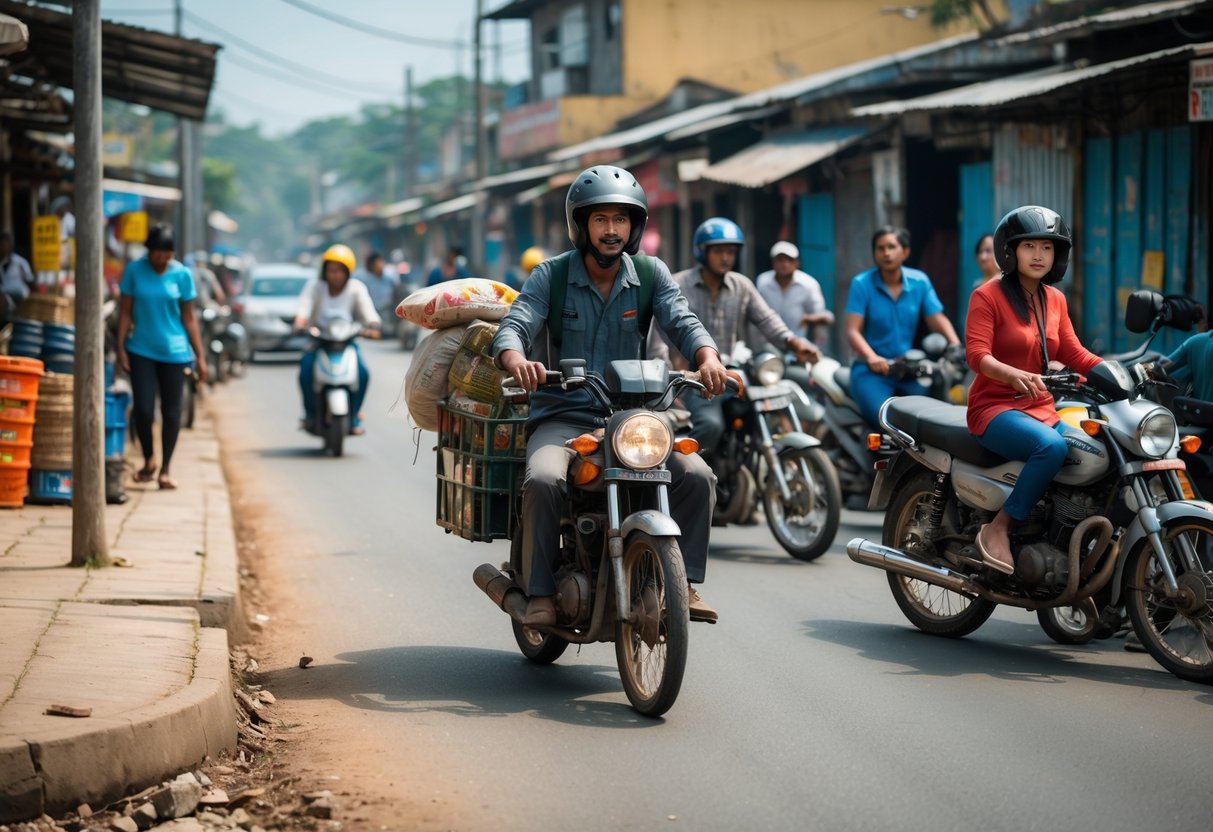
Motorcycles have reshaped economies and daily life across developing nations by creating millions of jobs and enabling new forms of commerce. The sector supports not just riders but entire networks of mechanics, parts dealers, and small businesses that depend on two-wheeled transport.
The motorcycle sector employs millions of people across developing countries, with an estimated 27 million motorcycle taxi and delivery riders working in Sub-Saharan Africa alone. These jobs primarily support young men who face limited formal employment options.
Motorcycle riders often become primary breadwinners for their families. In countries like Rwanda, Indonesia, and the Philippines, commercial motorcycle services have created a vast informal economy. Beyond the riders themselves, millions of people work as motorcycle owners, mechanics, and spare parts salespeople.
This employment comes with challenges. Riding motorcycle taxis remains a precarious occupation with irregular income and high risks. Many riders lack formal contracts, benefits, or safety protections. The sector operates largely outside government regulation in most developing nations.
Motorcycles serve as essential tools for small businesses and entrepreneurs throughout developing countries. Farmers use motorcycles to transport produce to market along rural roads. Health workers reach remote villages to provide medical care.
The low cost of motorcycles makes them accessible to people who cannot afford cars or trucks. Delivery services built on motorcycle transport have expanded rapidly in India, Thailand, and other Asian nations. These services connect urban consumers with restaurants, shops, and markets.
Small business owners use motorcycles to expand their customer reach and reduce delivery times. The vehicles navigate through heavy traffic that would slow down cars. This advantage proves particularly valuable in congested cities where traffic jams are common.
Urban residents depend on motorcycle taxis to commute to work and school. The vehicles weave through traffic congestion that paralyzes other forms of transport. Children ride motorcycles to school, and pregnant women use them to reach hospitals.
Motorcycles fill gaps left by inadequate public transportation systems. Poor roads, lack of infrastructure for walking and cycling, and rapid urbanization have all contributed to motorcycle growth. In many cities, these two-wheelers provide the only reliable way to travel moderate distances quickly.
The vehicles offer door-to-door service that buses and trains cannot match. Riders charge affordable fares that make transportation accessible to low-income residents. This mobility helps people access jobs, education, and services that would otherwise remain out of reach.
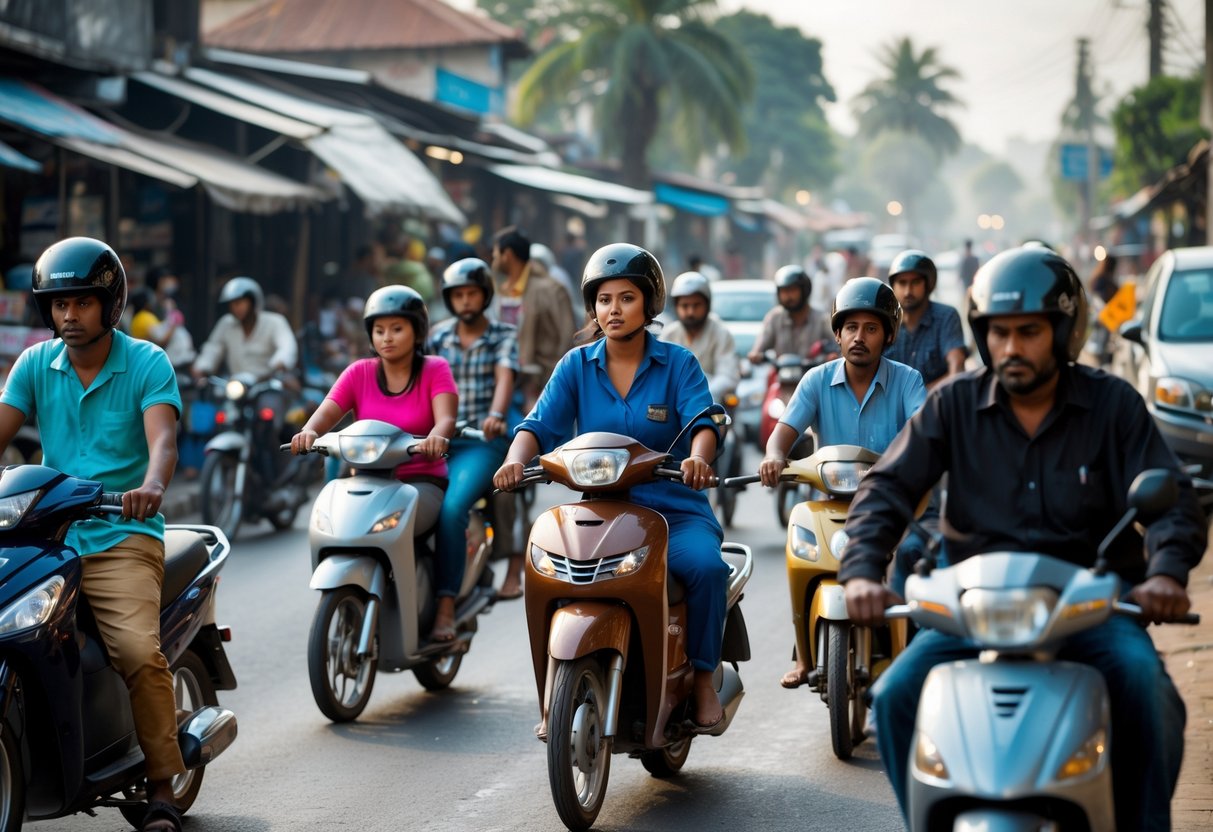
Motorcycles in developing countries create significant environmental and health challenges despite their role in affordable transportation. Air pollution from motorcycle emissions contributes to public health problems, while noise and traffic issues add strain to urban areas.
Motorcycles with small engines can produce substantial pollution relative to their size. In Sub-Saharan Africa, ambient air pollution from motorized vehicles contributed to over 350,000 deaths in 2019. Many developing countries import low-cost motorcycles from China and India that often lack modern emission controls.
The transport sector relies heavily on fossil fuels, which creates health risks for urban populations. Two and three-wheelers represent the fastest growing transport mode in many low and middle-income countries. Countries like Indonesia, Thailand, and the Philippines have millions of motorcycles on their roads, each adding to daily emissions.
Electric motorcycles offer a potential solution. E-mobility can reduce negative environmental impacts, though adoption remains limited in developing regions. The transition from petrol engines to electric power needs coordination with broader transport policies.
Motorcycles generate noise pollution that affects quality of life in cities. Despite their small engines, the sheer number of motorcycles creates constant noise in urban areas. This noise adds to stress levels and disrupts daily activities for residents.
Cities in developing countries face unique challenges from motorcycle growth. Poor road infrastructure, rapid urbanization, and limited public transport options push more people toward motorcycle use. The informal nature of motorcycle taxis means less regulation of vehicle maintenance and noise standards.
Motorcycles weave through congested streets, which helps riders avoid traffic jams but creates safety risks. Urban residents in African cities use motorcycle taxis to navigate notorious traffic congestion. This pattern appears in cities across Asia and Latin America as well.
The rapid growth of motorcycles has outpaced road infrastructure development. Roads designed for cars and pedestrians now accommodate millions of motorcycles. In countries like Nigeria, Indonesia, and Honduras, the growing prevalence of motorcycles reflects gaps in public transport systems rather than planned mobility solutions.
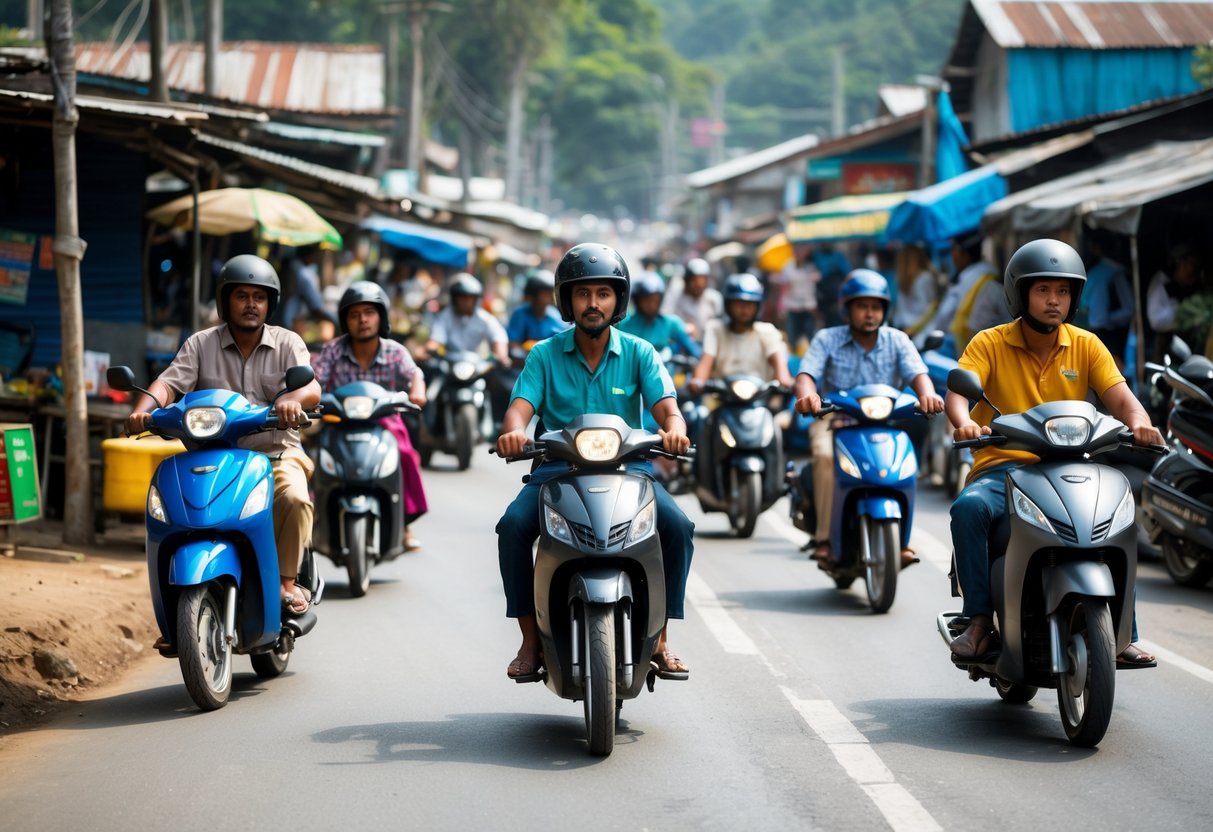
Motorcycle use in developing countries creates serious safety challenges that claim thousands of lives each year. Governments struggle to implement effective regulations while riders often lack proper training and safety equipment.
Motorcycle riders in developing countries face death rates far higher than riders in wealthier nations. In some African countries, motorcycle deaths account for over half of all road fatalities. Togo reports that more than 70% of road deaths involve motorcycles.
Southeast Asia carries about 50% of the world’s motorcycle fatalities. Countries like Indonesia, Thailand, and the Philippines report high injury rates among riders and passengers. Children face particular risk as pedestrians, with more than half of child pedestrian injuries in Dar es Salaam, Tanzania caused by motorcycle collisions.
Limited helmet use remains a major problem. Many riders choose not to wear helmets due to cost, discomfort, or lack of enforcement. Risky behaviors like speeding, carrying multiple passengers, and weaving through traffic increase crash severity. Poor road conditions and lack of proper lighting make riding more dangerous, especially in rural areas.
Most developing countries lack comprehensive motorcycle safety policies. While some nations include motorcycles in general road safety plans, few have dedicated strategies that address the specific risks riders face.
India, Indonesia, and the Philippines have introduced helmet laws, but enforcement remains weak in many areas. Licensing requirements often go unenforced, allowing untrained riders to operate motorcycles legally or illegally. Some countries require rider training before licensing, but these programs reach only a small fraction of total riders.
Vehicle safety standards vary widely. Many countries do not mandate anti-lock braking systems (ABS) on imported motorcycles, despite evidence that ABS reduces crash severity. Road infrastructure rarely accounts for motorcycle traffic, leaving riders without dedicated lanes or safe spaces to operate.
Helmet quality varies dramatically across developing countries. Many riders wear substandard helmets that provide little protection in crashes. Few countries maintain testing facilities to verify that helmets meet safety standards.
Effective rider training programs remain scarce. Where training exists, it often costs too much for commercial riders who earn low wages. Thailand has developed more extensive training programs, but most countries lack the infrastructure and instructors needed to train millions of riders.
Governments need to establish clear helmet standards and build testing facilities to verify compliance. Training programs must become affordable and accessible, with direct links to licensing processes. Without these measures, motorcycle deaths will continue to rise as motorcycle use expands.
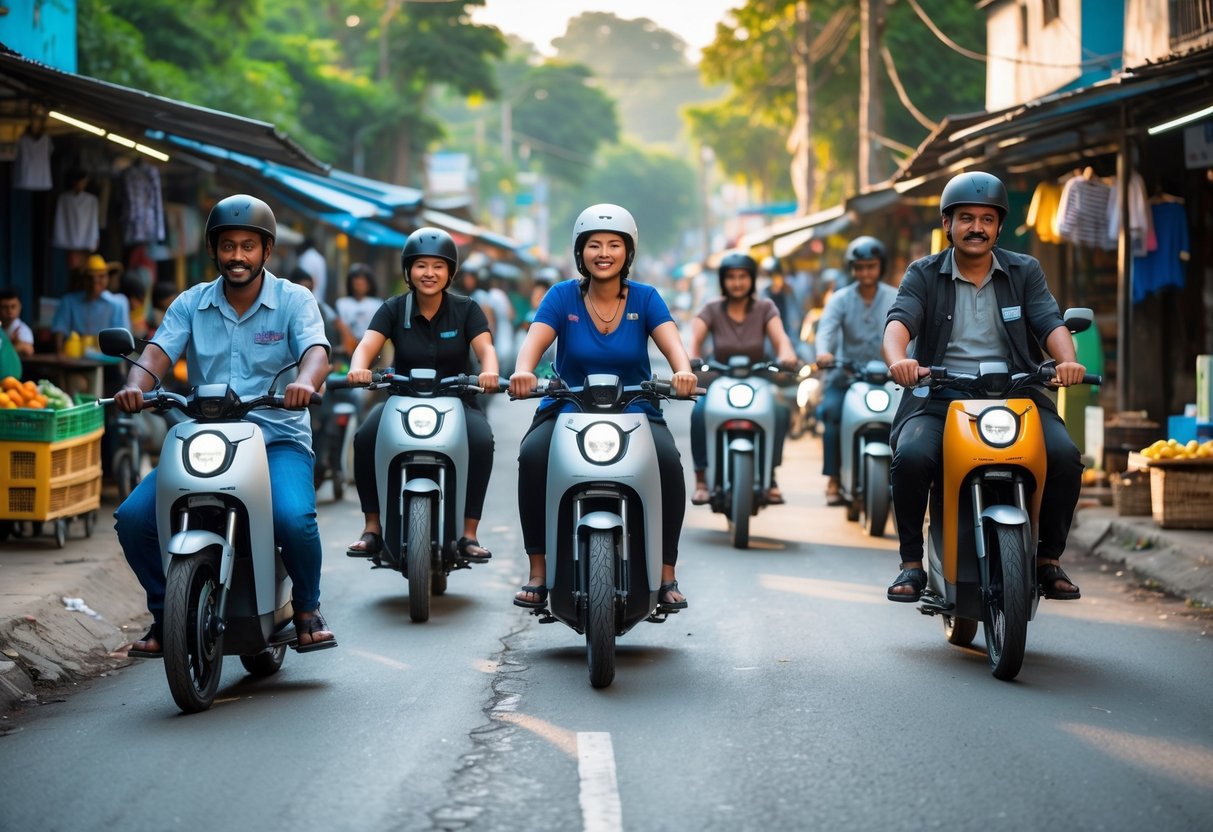
Electric motorcycles offer a path to reduce air pollution and greenhouse gas emissions in developing countries where two-wheelers dominate transport. A shift to 90 percent battery electric motorcycle sales by 2030 could cut CO2 emissions by 11 billion tonnes by 2050.
Countries across Africa and Asia have started national programs to introduce electric two and three-wheelers. The United Nations Environment Programme supports electric motorcycle projects in 16 countries including Rwanda, Kenya, Ethiopia, Uganda, Thailand, the Philippines, Vietnam, India, and Bangladesh.
Asia holds the largest share of the global motorcycle fleet at 270 million vehicles. Growth rates in African countries rank among the highest worldwide. By 2050, the global motorcycle fleet will reach over 400 million vehicles, a 50 percent increase from current levels.
The Regional Support and Investment Platforms provide technical training and help countries connect with electric mobility suppliers and financiers. These platforms create communities where countries share lessons and best practices. A Global Thematic Working Group works to set regional targets and develop global standards for electric mobility.
Many internal combustion engine motorcycles in developing countries are old and inefficient. Two-stroke scooters produce more particle emissions than passenger cars. These vehicles release substantial amounts of particulate matter and black carbon into the air.
Experts consider two and three-wheelers the first priority for electric mobility transitions. Electric motorcycles produce zero direct emissions during operation. A global shift to electric motorcycles by 2030 could save $350 billion by 2050 through lower fuel and maintenance costs, even with higher purchase prices.
Indonesia and other Southeast Asian countries face challenges from increasing motorized vehicle use and its impact on air quality and traffic. Converting traditional motorcycles to battery electric vehicles addresses energy security and reduces greenhouse gas emissions in these regions.
Converting motorcycles to electric vehicles in Indonesia shows strong environmental and technological performance but needs improvement in economic and institutional areas. Financial support and marketing assistance remain weak points for mass adoption.
The higher purchase price of electric motorcycles compared to conventional models creates a barrier for consumers in developing countries. Charging infrastructure requires significant investment and planning. Countries need consistent electricity supply to support widespread electric motorcycle use.
Studies on consumer adoption of electric motorcycles remain limited, especially in developing markets. Research shows that institutional dimensions, particularly financial support and the conversion process itself, need priority attention. Policy makers in many countries give little attention to two-wheelers despite their environmental potential.
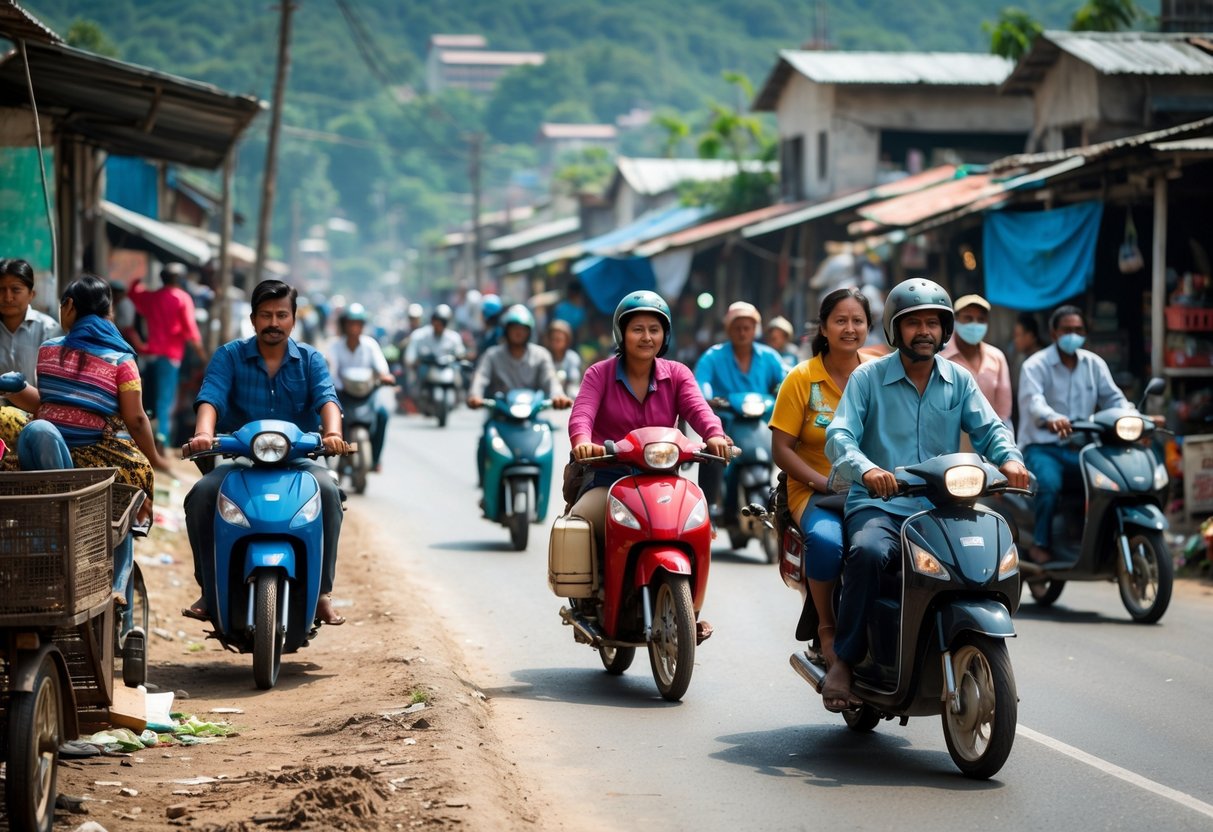
Motorcycles have become essential transportation tools in developing nations due to their low purchase prices, typically around $1,000 compared to significantly more expensive cars. These vehicles serve both personal mobility needs and generate income for millions of workers in regions with limited public transit options.
The low purchase price stands as the primary factor driving motorcycle popularity in developing nations. A basic 125cc motorcycle costs approximately $1,000, making it accessible to middle-class families who cannot afford cars.
Rapid urbanization and traffic congestion make motorcycles practical for navigating crowded streets. Cities in developing countries often lack comprehensive public transportation systems, leaving gaps that motorcycles fill effectively.
Easy financing options have expanded access to motorcycle ownership. Manufacturers partner with financial firms to offer payment plans that allow buyers to spread costs over time. Some companies have established local assembly plants to reduce prices further and create jobs.
Motorcycle ownership has grown rapidly across developing regions, particularly in Africa and Southeast Asia. Countries like Nigeria, Kenya, Uganda, and Rwanda have experienced some of the highest growth rates globally.
This affordable mobility option has opened employment opportunities for people in both urban and rural areas. Workers can now travel longer distances to jobs that were previously unreachable. Communities once isolated due to poor road infrastructure gained better connections to markets and services.
The flexibility of motorcycles allows riders to navigate unpaved and muddy roads that cars cannot handle. This capability proves especially valuable in rural areas where road conditions remain poor.
Motorcycles provide quick navigation through heavy traffic that often paralyzes cars and buses. Riders can weave through congested streets and reach destinations faster during peak hours.
The fuel efficiency of motorcycles reduces ongoing transportation costs significantly. A small engine consumes less gasoline than cars, making daily commuting more affordable for families on limited budgets.
Maintenance and repair costs remain lower than those for cars. Parts are readily available and mechanics familiar with motorcycle repairs are abundant in most developing country cities.
Cars cost several times more than motorcycles, placing them out of reach for most citizens in developing countries. The average motorcycle price of $1,000 contrasts sharply with car prices that typically start at $5,000 or higher for basic models.
Public transportation fees add up over time, especially for daily commuters. A motorcycle purchase represents a one-time investment that eliminates recurring transit costs.
The initial investment in a motorcycle pays off quickly for workers who use it to generate income. Delivery riders and taxi services can recoup their purchase costs within months through regular work.
Seven out of ten motorcycles in developing countries serve as work tools rather than just personal transportation. Riders use them for delivery services, taxi operations, and transporting goods to markets.
The motorcycle economy creates employment opportunities beyond just riders. Mechanics, parts dealers, fuel stations, and rental businesses all benefit from the growing motorcycle sector.
Assembly plants established by manufacturers generate local jobs and reduce import costs. Companies from Asia have opened facilities in countries like Togo and Angola to meet regional demand.
Safety concerns present major challenges as accident rates involving motorcycles remain high. Many riders lack proper training and roads often lack designated motorcycle lanes or safety infrastructure.
Air pollution from gasoline-powered motorcycles contributes to environmental problems in densely populated cities. Most motorcycles in developing countries still run on conventional fuel rather than cleaner alternatives.
Initial purchase costs, while lower than cars, still represent a substantial expense for families living in poverty. Not everyone can access financing options or afford the upfront payment required.