The Invention and Improvement of Motorcycle Brakes: History, Systems, and Innovation
Early motorcycles had no brakes at all, forcing riders to drag their feet on the ground to stop. The first real braking system appeared in…



Early motorcycles had no real suspension at all. Riders bounced along on rigid frames with only padded seats to cushion the impact of rough roads. Motorcycle suspension has evolved from basic spring forks in the 1930s to today’s electronic systems that automatically adjust to road conditions and riding style in real-time.
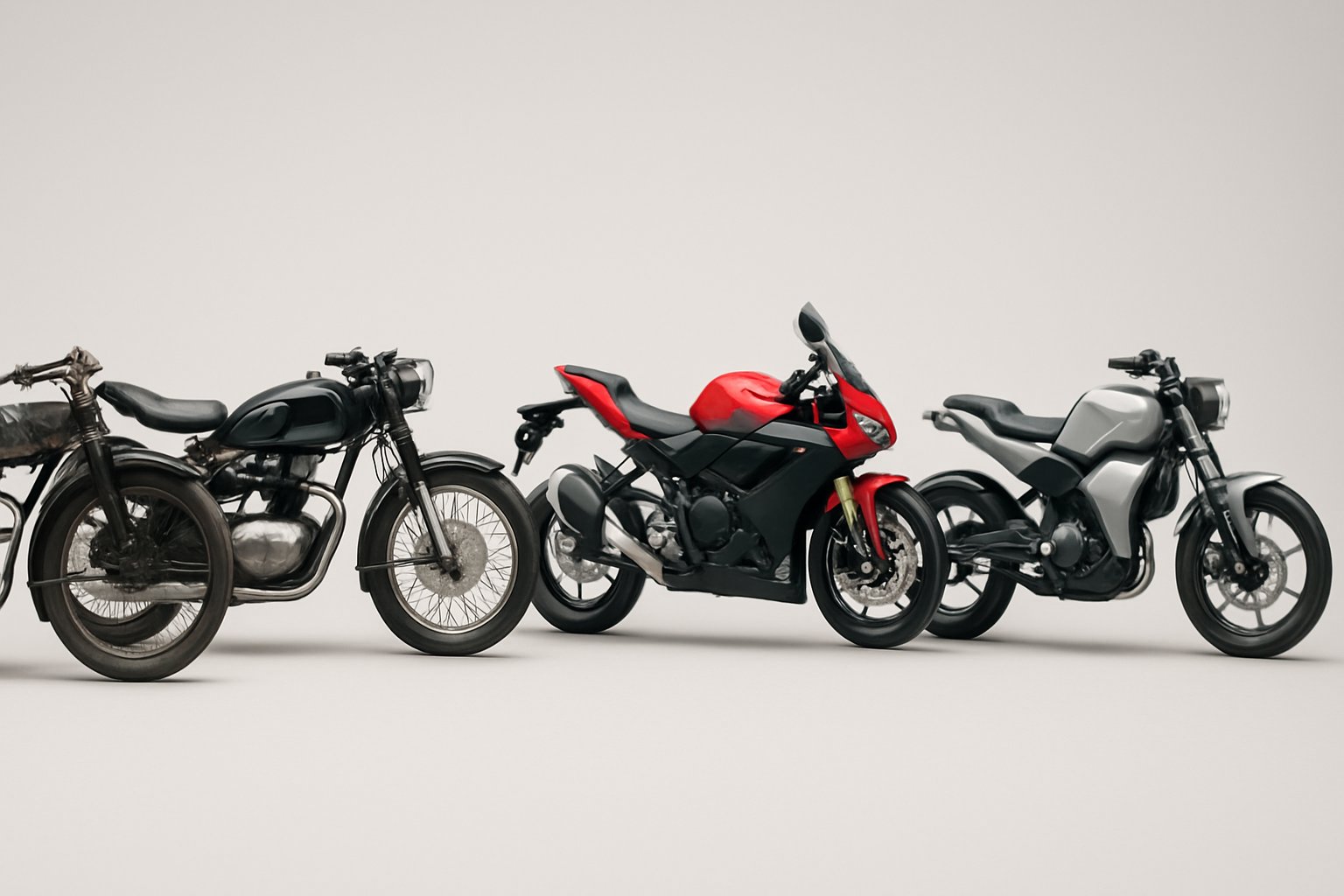
The changes in suspension technology have transformed how motorcycles handle, brake, and provide comfort. Telescopic forks became the first major breakthrough for front suspension. By the mid-1900s, rear suspension became standard with swingarm designs and twin shocks. Monoshock systems later improved performance for sport and off-road bikes.
Today’s riders benefit from systems that use sensors, electronic controls, and lightweight materials. These advances make motorcycles more stable, comfortable, and responsive than ever before. The journey from rigid frames to smart suspension systems shows how far motorcycle engineering has come.
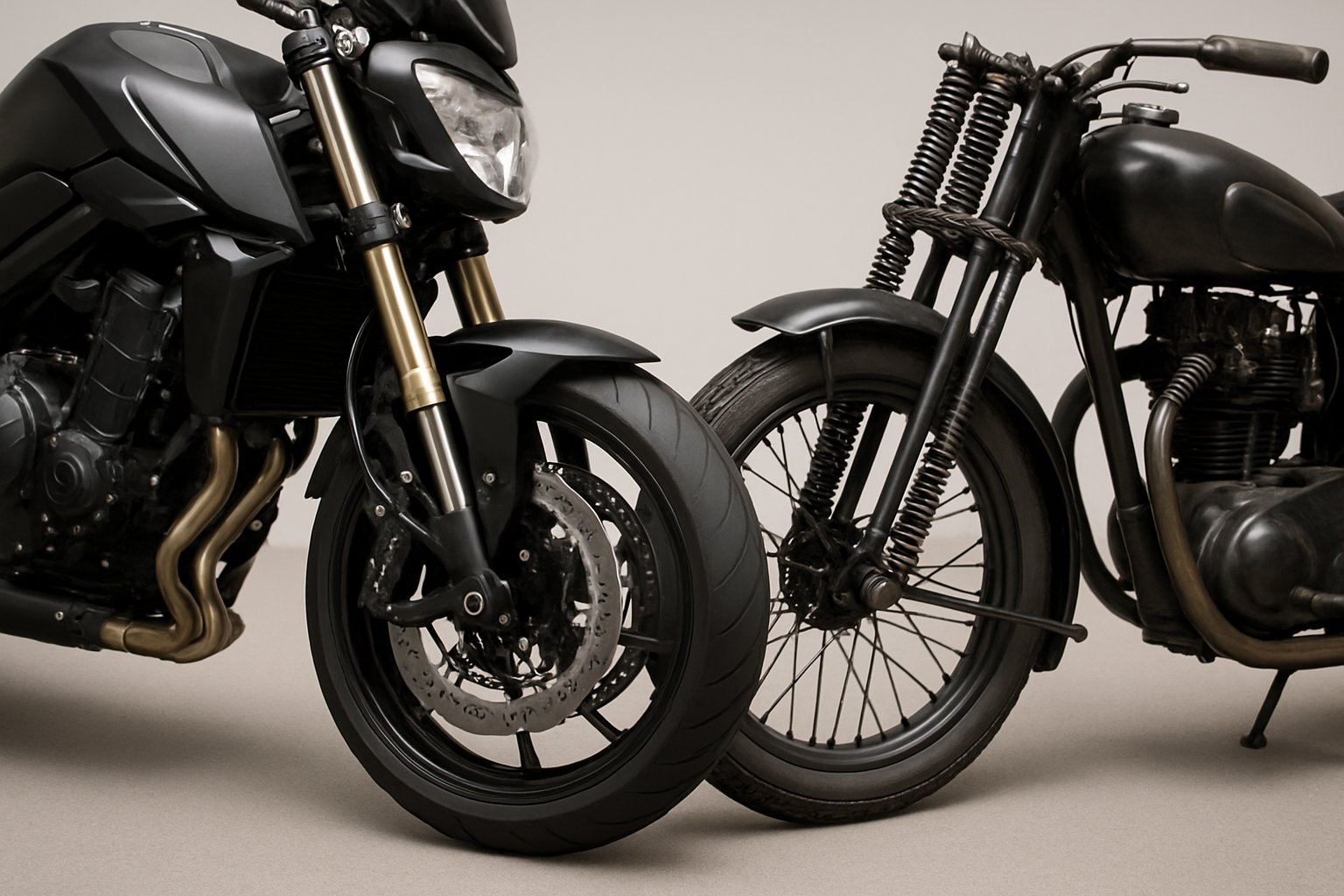
Motorcycle suspension systems rely on springs to absorb impacts and dampers to control movement, with front and rear systems using different designs to handle specific forces. These components work together to maintain tire contact with the road while protecting the rider from harsh impacts.
Motorcycle suspension serves three critical functions. It maintains tire contact with the road surface, which directly affects traction for acceleration, braking, and cornering. The system absorbs impacts from bumps, potholes, and uneven surfaces before they reach the rider.
It also keeps the motorcycle stable during different riding conditions. Without suspension, every road irregularity would transfer directly through the frame to the rider. The wheels would bounce off the ground, losing grip and control.
Suspension systems must balance two competing needs. They need to be soft enough to absorb small bumps comfortably. They also need to be firm enough to prevent excessive movement during hard braking or aggressive cornering.
Springs support the motorcycle’s weight and compress when the wheel hits a bump. They store energy during compression and release it during extension. Most motorcycles use coil springs made from steel wire, though some systems use air pressure as a spring medium.
Dampers control how quickly springs compress and extend. Without dampers, springs would oscillate uncontrollably after each bump. Hydraulic dampers (also called shock absorbers) use oil forced through small passages to create resistance.
Dampers provide two types of control:
The combination of springs and hydraulic dampers creates a controlled suspension action. Springs handle the load and absorb energy. Dampers dissipate that energy as heat, preventing bouncing and maintaining stability.
Front suspension typically uses telescopic forks with built-in springs and damping. These units must handle steering inputs while absorbing impacts and managing brake dive forces. The front suspension travels through its range while the handlebars remain connected to the fork assembly.
Rear suspension operates through a swingarm that pivots from the frame. Modern motorcycles usually mount shock absorbers between the swingarm and frame, often using linkage systems to create progressive action. The rear suspension must manage forces from acceleration, braking, and the drive system.
Front systems generally use two separate fork legs, while rear suspension relies on either twin shocks or a single mono-shock design. Rear suspension linkages can alter the leverage ratio throughout the travel range, creating rising-rate characteristics that make the suspension progressively stiffer as it compresses.
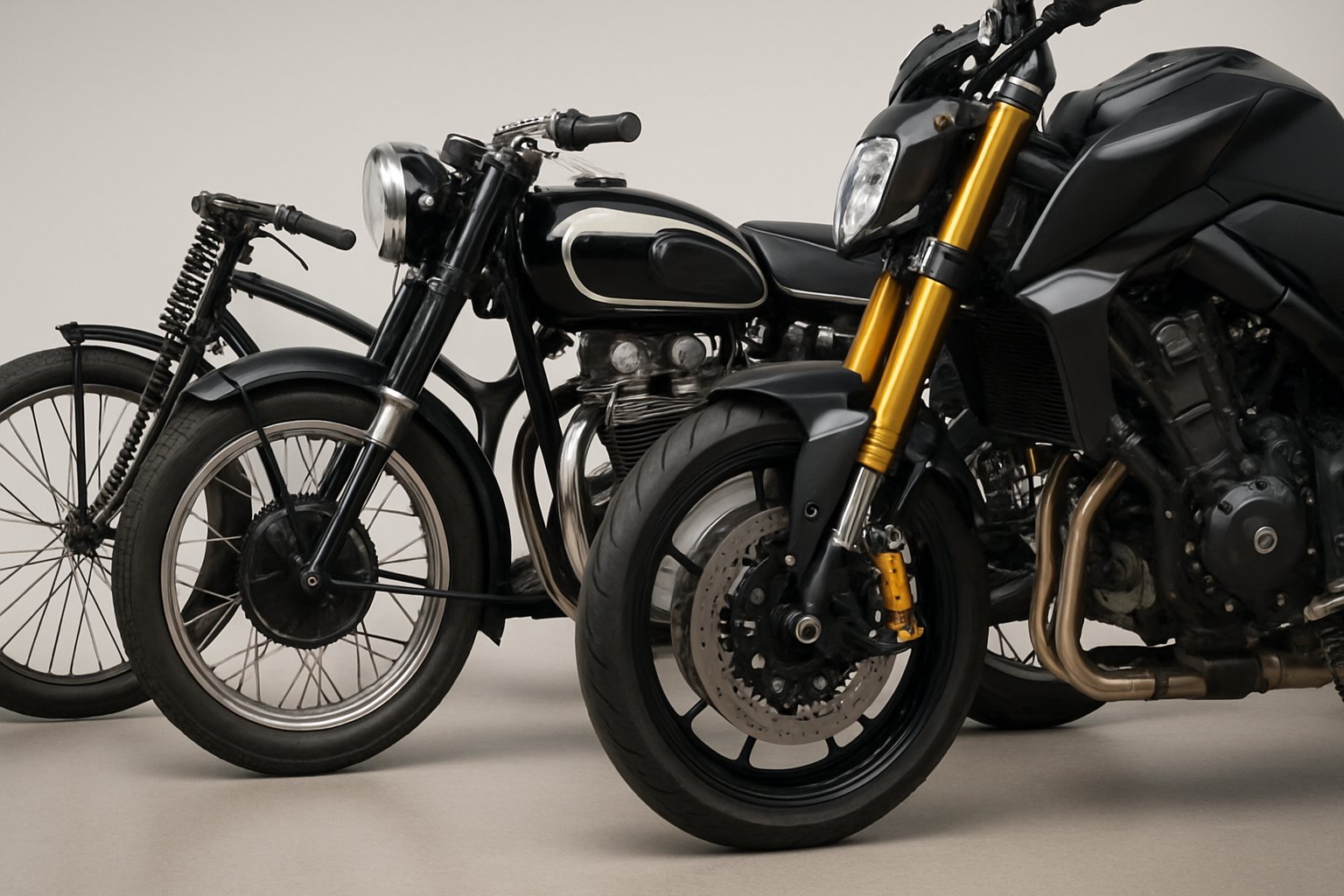
Motorcycle suspension systems transformed from basic rigid frames to sophisticated mechanical systems through several key innovations. The industry moved through distinct phases, starting with fixed designs, progressing to telescopic forks in the 1930s, and finally developing effective rear suspension with swingarms by the mid-20th century.
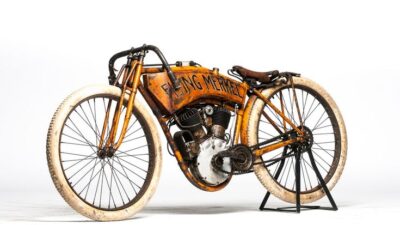
The earliest motorcycles featured no suspension at all. Rigid frames connected the wheels directly to the chassis, transmitting every bump and vibration to the rider. These machines earned the nickname “boneshakers” for good reason.
The first improvements came through sprung saddles in the early 1900s. These provided minimal comfort but did little for control or handling. Girder forks emerged as the first genuine front suspension solution, using parallel links and external springs to absorb road impacts.
The Druid fork appeared as an early example, essentially a reinforced bicycle fork with added coil springs. Most lacked damping mechanisms, which meant the springs bounced uncontrollably. The Webb fork improved on this design with a large central spring and occasionally included basic friction dampers. Vincent later introduced the “Girdraulic” fork, which incorporated hydraulic damping into the forged alloy structure.
Springer forks and leading link designs offered alternative approaches. These systems used external springs and pivot points to manage wheel movement, though they required constant maintenance and often altered steering geometry during compression.
Alfred Angas Scott fitted telescopic forks to a motorcycle in 1908, but they lacked damping. The real breakthrough came in 1934 when the Danish Nimbus introduced the first production motorcycle with oil-damped telescopic forks. BMW adopted this technology in 1935, helping spread its use across the motorcycle industry.
Telescopic forks integrated springs and damping mechanisms directly within the fork tubes. This design offered several advantages over earlier systems: simpler construction, lower manufacturing costs, reduced weight, and cleaner appearance. By the 1970s, telescopic forks had become the standard front suspension design.
The system had drawbacks. Brake dive compressed the springs under braking, reducing available travel and causing the fork tubes to bind. Engineers developed solutions including progressive springs, air assistance, and anti-dive systems like Honda’s TRAC and Kawasaki’s AVDS in the 1970s and 1980s.
The inverted fork addressed many limitations by placing larger diameter tubes at the top and lighter stanchions at the bottom. This configuration reduced unsprung weight and increased rigidity through stronger clamping at the steering head.
Early motorcycles relied entirely on tire flex and sprung seats to manage rear impacts. The development of the swingarm revolutionized rear suspension by allowing the rear wheel to move vertically relative to the frame.
Twin shock absorbers mounted on either side of the swingarm became the standard setup. These units evolved from basic plunger designs to sophisticated telescopic dampers with hydraulic damping, similar in principle to front forks.
Yamaha pioneered mono-shock systems in the 1970s for motocross applications. A single, centrally mounted shock absorber improved mass centralization and enabled more complex linkage systems. These linkages created rising-rate suspension action that remained soft over small bumps but stiffened progressively to prevent bottoming on large impacts.
Don Richardson’s Full Floater system for Suzuki marked a significant milestone in rear suspension. The design mounted the shock “floating” between the frame and swingarm via linkages at both ends, delivering highly progressive action. This innovation proved particularly influential in off-road racing, where suspension performance directly impacted competitive results.
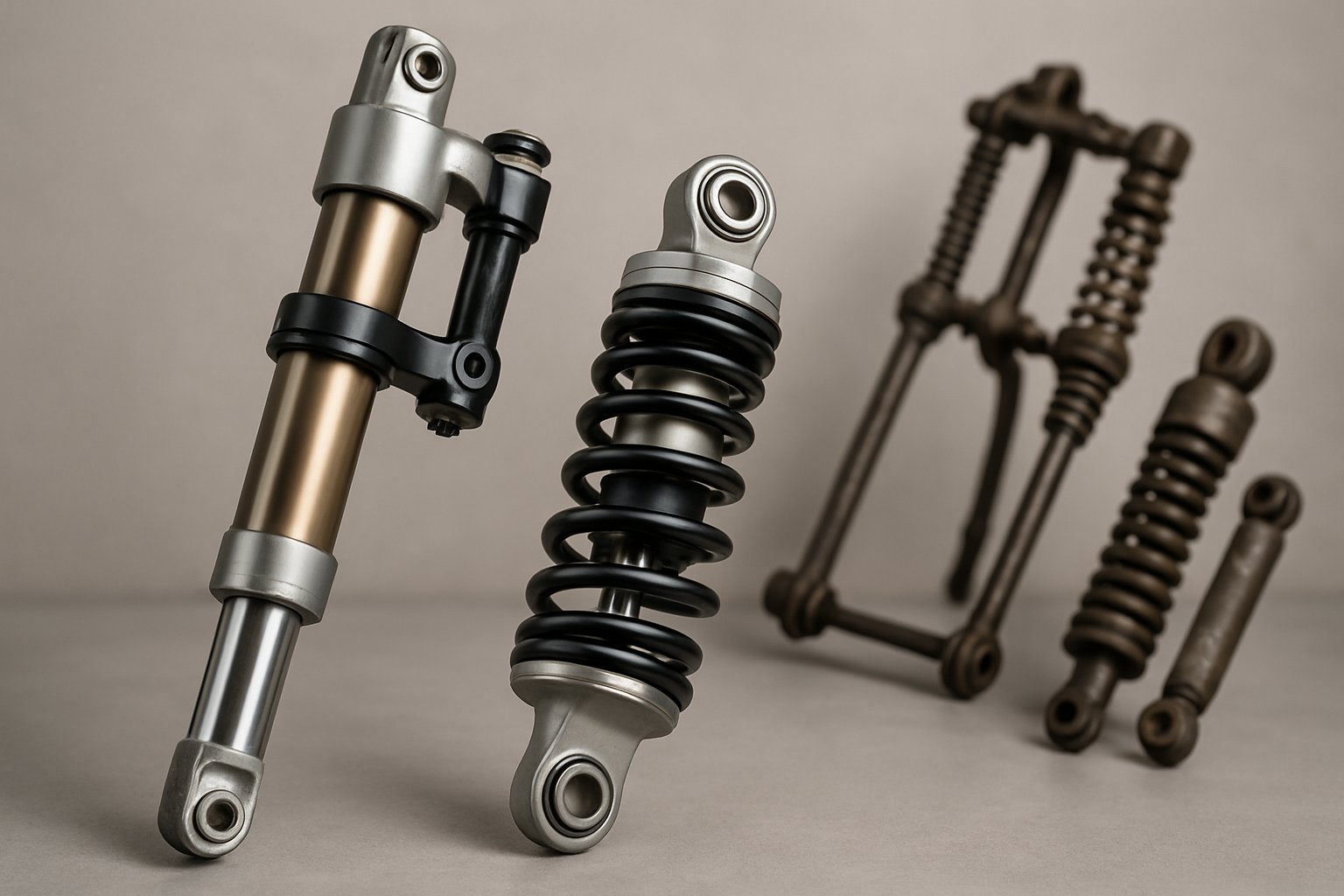
Motorcycle suspension transformed through three major innovations that shaped modern riding. Hydraulic dampers brought controlled movement, shock absorbers evolved from simple springs to complex units, and single-shock systems changed rear suspension design.
Hydraulic dampers marked a turning point in motorcycle suspension technology. These components use oil flowing through valves to control how fast suspension compresses and extends. This system replaced earlier friction-based dampers that wore out quickly and provided limited control.
The introduction of adjustable dampers gave riders the ability to tune their suspension. Compression damping controls how the suspension responds when hitting bumps. Rebound damping manages how quickly the suspension returns to its normal position after compression.
Modern adjustable dampers feature separate controls for compression and rebound. Riders can adjust these settings using external knobs or screws. High-end systems offer independent adjustment for low-speed and high-speed compression.
Key adjustable damper features:
These advancements allowed riders to customize suspension behavior for different riding styles and road conditions.
Early shock absorbers consisted of basic springs with minimal damping. The 1950s brought spring-and-hydraulic combinations that significantly improved ride quality. These units combined coil springs with oil-filled dampers in a single component.
Twin-shock systems dominated motorcycle design through the 1970s. Two shock absorbers mounted on either side of the rear wheel provided suspension control. These systems offered basic adjustability through spring preload changes.
Modern shock absorbers incorporate nitrogen gas chambers to prevent oil cavitation. The gas pressurizes the oil, maintaining consistent damping performance during hard use. This technology prevents fade and improves suspension response.
Shock absorber evolution timeline:
Remote reservoir shocks appeared in the 1990s, separating the oil chamber from the main damper body. This design increased oil capacity and improved cooling during demanding riding conditions.
Yamaha introduced the Monocross system in 1973, revolutionizing rear suspension design. This single-shock layout moved the shock absorber to a central position under the seat. The design reduced weight and improved suspension performance through better linkage geometry.
Single-shock systems use linkages to create a rising rate suspension. The suspension becomes progressively stiffer as it compresses. This characteristic provides a soft ride over small bumps while resisting bottoming on larger impacts.
Progressive linkage designs vary the shock absorber’s mechanical advantage throughout the suspension stroke. The linkage multiplies forces applied to the shock, changing the effective spring rate. This approach delivers better control across the full range of suspension travel.
Most modern motorcycles now use single-shock rear suspension. The design allows for more compact packaging and easier adjustment access. Engineers can precisely tune suspension characteristics through linkage geometry changes without modifying the shock absorber itself.
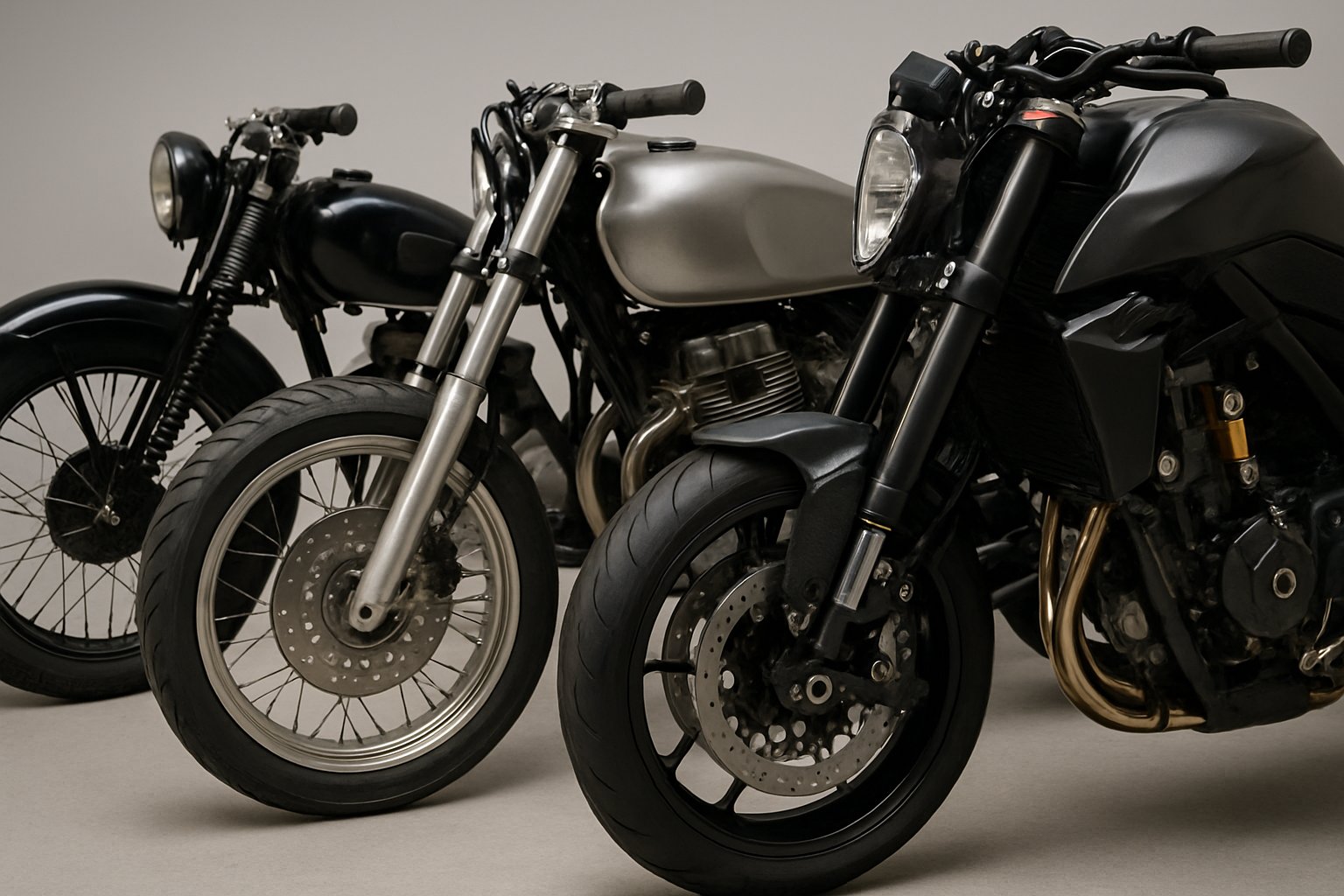
Today’s motorcycle suspension systems combine electronic control with advanced materials and specialized components. Premium motorcycles now feature sensors that adjust damping in real-time, while aftermarket manufacturers offer sophisticated upgrades that transform standard suspension into race-ready systems.
Modern semi-active suspension uses an Inertial Measurement Unit (IMU) that detects pitch, roll, and yaw movements. These sensors work with wheel speed monitors and suspension position trackers to feed data into an Electronic Control Unit (ECU).
The ECU processes this information in milliseconds. It adjusts damping settings through electronically controlled solenoid valves inside the forks and shock absorber.
Riders can select different modes like Comfort, Sport, or Off-Road. The suspension automatically adapts between firm control during aggressive riding and plush absorption over bumps. This dynamic range was impossible with fixed settings.
Recent innovations include:
The motorcycle industry continues to develop smarter sensors and faster processing. Some manufacturers now explore artificial intelligence that learns individual riding styles.
Aftermarket manufacturers provide sophisticated alternatives to stock motorcycle suspension systems. Companies like Race Tech offer internal upgrades that optimize damping characteristics for specific riding needs.
Common upgrade options:
| Component | Benefit |
|---|---|
| Gold Valves | Replace stock pistons to improve damping control |
| Custom springs | Better stiffness-to-mass ratios reduce unsprung weight |
| Complete cartridge kits | Superior performance and adjustability |
Most modern bikes allow riders to adjust preload, compression damping, and rebound damping. Preload sets the correct ride height for rider weight and luggage. Compression damping controls how quickly suspension compresses over bumps. Rebound damping manages extension speed after compression.
Specialist builders also work with advanced materials that reduce weight while maintaining strength. These components help suspension react faster to road conditions. Custom shock absorbers can be tuned precisely for track use, touring, or off-road riding.
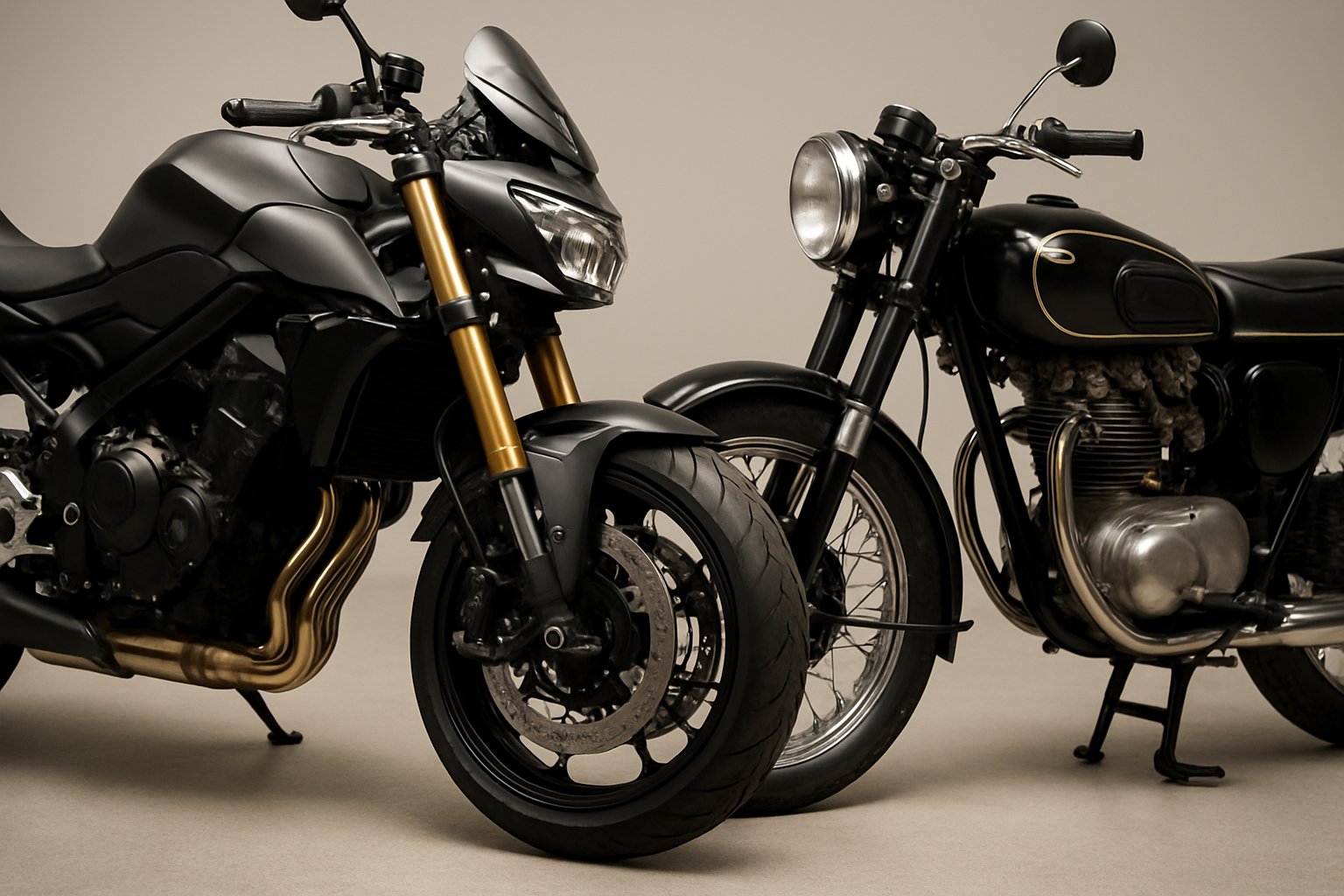
Engineers have developed several alternatives to telescopic forks that separate steering, braking, and suspension forces. These systems aim to eliminate dive under braking and reduce the binding and flex inherent in conventional fork designs.
Norman Hossack developed a double-wishbone front suspension design that uses two rigid links pivoting from the frame to hold the front wheel carrier. This configuration completely separates braking forces from suspension movement.
BMW adapted this concept into their Duolever system for K-series motorcycles. The design delivers controlled suspension action without the typical dive characteristics of telescopic forks.
BMW’s earlier Telelever system, introduced in 1993, takes a different approach. It uses conventional-looking fork sliders primarily for steering and wheel location. A separate A-arm connects to the fork brace through a ball joint and supports a single shock absorber that handles the actual suspension work.
This design significantly reduces brake dive and stress on the steering head. The Telelever keeps most steering feel familiar to riders while improving stability during hard braking.
The Bimota Tesi represents one of the most radical departures from conventional suspension. It employs hub-center steering with a front swingarm similar to the rear suspension setup. Complex linkages act directly at the wheel hub to control steering.
James Parker developed the RADD system, which also eliminates traditional forks. The motorcycle industry tested these alternatives but found limited market acceptance despite their technical advantages.
Trailing link forks place the axle pivot ahead of the fork structure. Indian and early BMW motorcycles used this design successfully. Modern versions like the Australian-developed Motoinno TS3 system employ a parallelogram linkage that maintains constant geometry throughout suspension travel. A separate scissor-link mechanism connects the handlebars to the front upright for steering.
Test riders report the TS3 delivers familiar steering feel with enhanced braking stability. The system eliminates the heavily reinforced steering head that telescopic forks require.
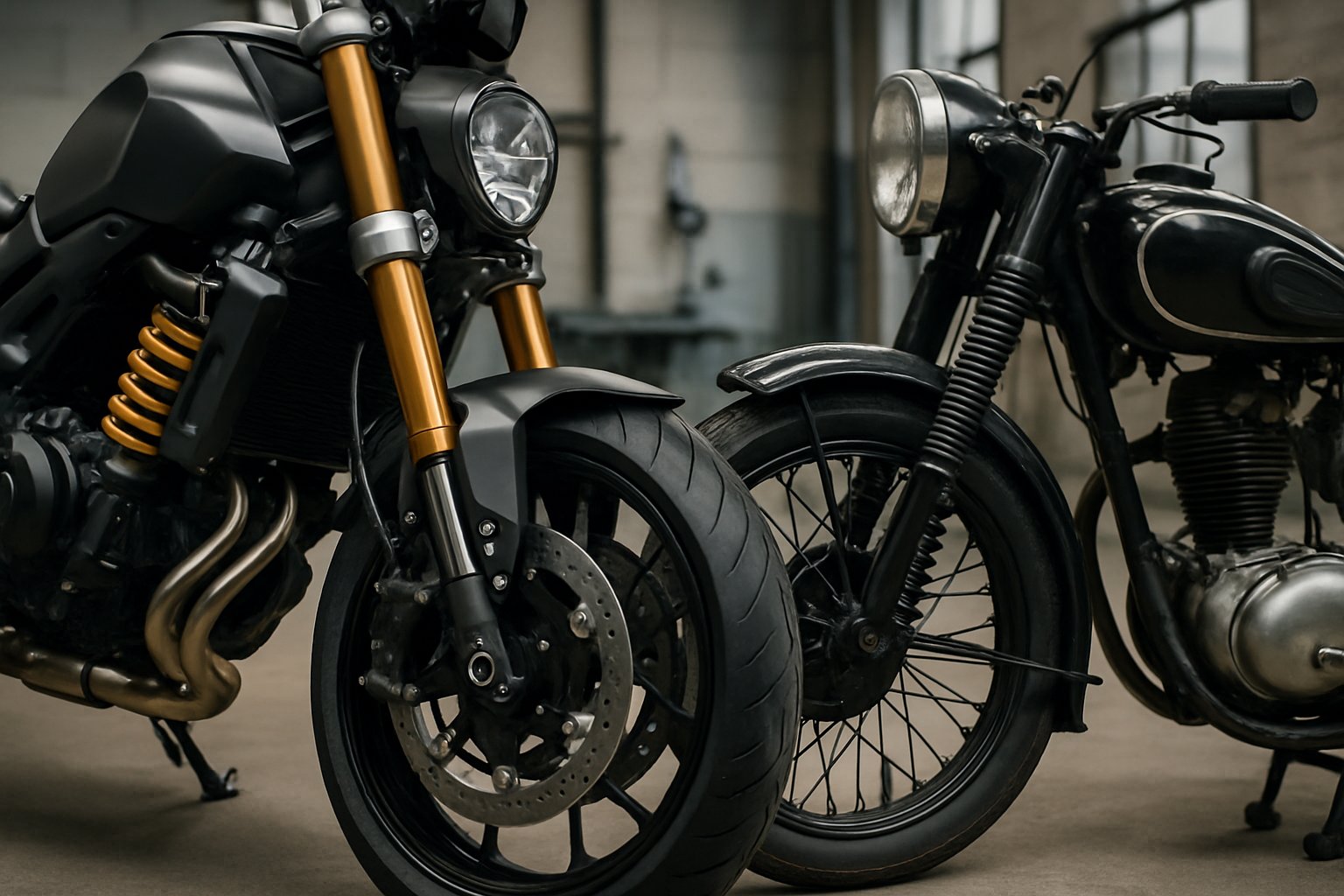
Better suspension technology has changed how motorcycles perform and shaped the entire direction of motorcycle design. These advances have made bikes safer and faster while pushing manufacturers to rethink how they build motorcycles from the ground up.
Suspension evolution directly improved rider safety across all motorcycle categories. Early rigid frames transmitted every road impact to the rider, reducing control and increasing fatigue on long rides. The introduction of hydraulic damping in telescopic forks during the 1930s gave riders predictable handling and better braking stability.
Modern suspension systems keep tires in contact with the road more consistently. This improves traction during acceleration, braking, and cornering. Semi-active electronic suspension adjusts damping rates in milliseconds based on road conditions and riding style. This technology reduces the risk of losing control on uneven surfaces.
Anti-dive systems and rising-rate linkages solved specific performance problems. Bikes no longer compress excessively under hard braking, which maintains proper geometry and prevents front-end instability. Progressive rear suspension through mono-shock designs and complex linkages allows motorcycles to handle both small bumps and large impacts without bottoming out.
The motorcycle industry now builds machines that can safely travel faster and handle more aggressively than ever before. Track performance has improved measurably as suspension technology has advanced.
Suspension technology shaped what motorcycles look like and how they function. The shift from twin rear shocks to mono-shock systems in the 1970s changed motorcycle aesthetics entirely. Single shock absorbers allowed cleaner lines and freed up space for other components.
Manufacturers began designing frames around suspension capabilities rather than the reverse. BMW’s Paralever system for shaft-drive motorcycles required specific frame geometry to work properly. This integration of suspension and chassis design became standard practice across the motorcycle industry.
Key design changes driven by suspension:
The pursuit of better suspension performance pushed the industry toward specialized motorcycle categories. Adventure bikes developed long-travel suspension, while sportbikes prioritized stiff, responsive setups. Each category evolved distinct design languages based on suspension requirements.
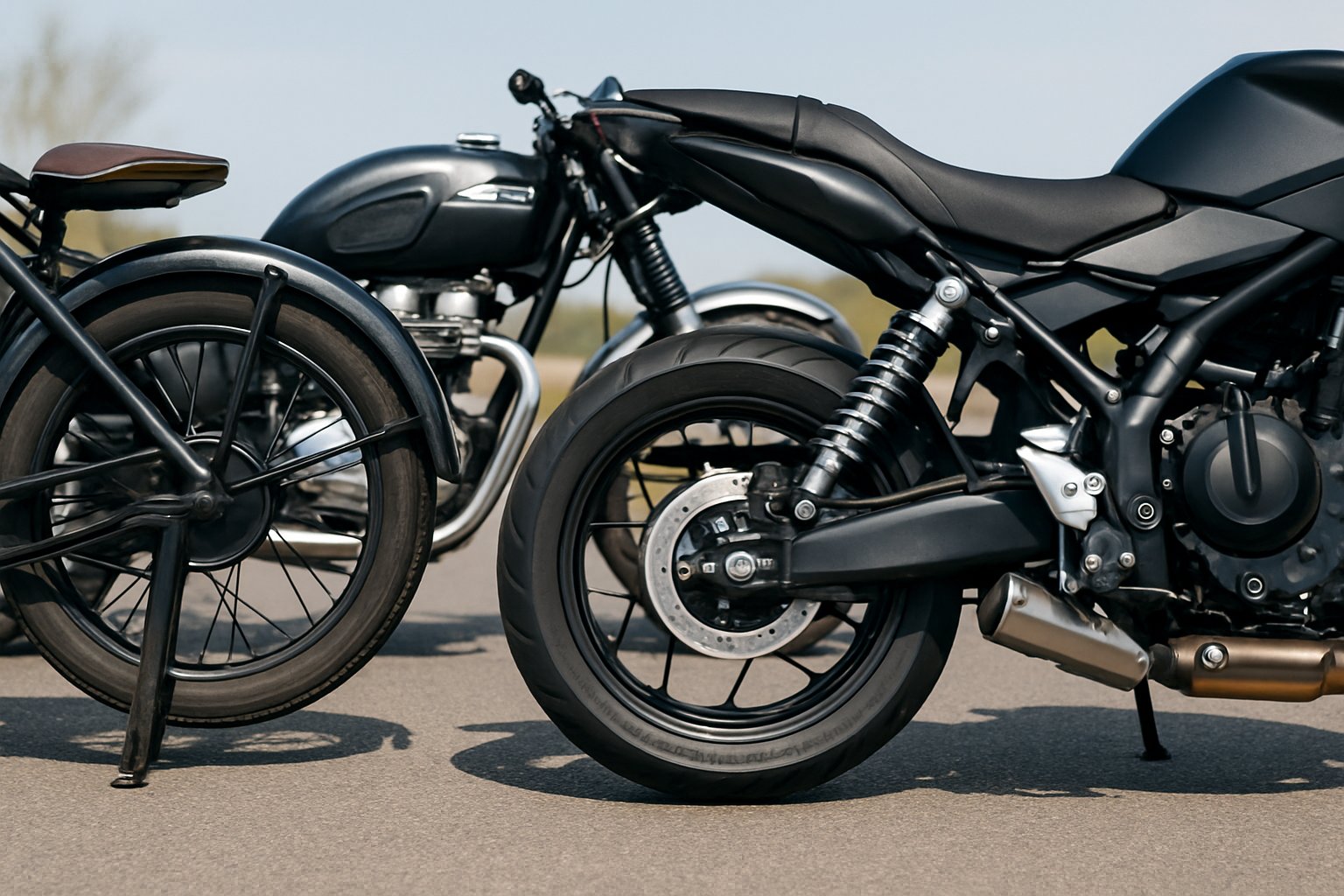
Motorcycle suspension has transformed from simple spring systems to advanced electronic setups over more than a century. Riders today can choose from multiple suspension designs, linkage systems, and upgrade options that affect how their bikes handle and perform.
Early motorcycles had no formal suspension at all. The first bikes relied on their tires and frame flex to absorb bumps from the road.
Manufacturers added basic spring systems in the early 1900s. These simple springs attached to the front forks and rear frame. They offered minimal comfort but represented a major step forward from rigid frames.
Hydraulic damping arrived in the 1930s and 1940s. This technology used oil to control spring movement. Dampers prevented the springs from bouncing too much after hitting bumps.
Modern suspension emerged in the 1970s and 1980s with cartridge forks and monoshock rear designs. These systems separated compression and rebound damping. Riders gained more control over how their suspension behaved.
Electronic suspension became available in the 2000s. These systems adjust damping automatically based on riding conditions. Sensors detect bumps, lean angles, and rider inputs to optimize suspension performance in real time.
Dual shock systems mount two shock absorbers directly between the swingarm and frame. This traditional design appeared on most motorcycles from the 1950s through the 1970s. Many cruisers and retro-styled bikes still use dual shocks today.
Monoshock suspension uses a single shock absorber mounted to the frame. The shock connects to the swingarm through a linkage system. This design saves weight and provides better control over suspension movement.
Swingarm designs vary based on how they pivot and connect to the frame. Single-sided swingarms attach the wheel on one side only. Conventional swingarms support the wheel on both sides with the shock mounted separately.
Traditional telescopic forks slide inside outer tubes that connect to the front wheel. The fork tubes contain springs and oil for damping. This design has existed since the 1940s and remains common on many motorcycles.
Modern cartridge forks house the damping components in sealed cartridges inside the fork tubes. This separation improves damping performance and consistency. Cartridge forks cost more but offer better adjustability and response.
Inverted forks flip the traditional design upside down. The larger diameter tubes attach to the triple clamps at the top. The smaller tubes connect to the wheel axle. This arrangement increases rigidity and reduces unsprung weight for better handling.
Alternative designs include single-sided forks and hub-center steering systems. These exotic setups separate steering from suspension functions. They appear mainly on high-end sport bikes and concept motorcycles.
Linkage systems connect the swingarm to the shock absorber through a series of pivoting links. The geometry of these links changes how the shock compresses at different points in the suspension travel. This relationship is called the rising rate.
Progressive linkages make the suspension firmer as it compresses deeper into its travel. The bike stays higher in its stroke during normal riding. It resists bottoming out when hitting large bumps or landing from jumps.
Different manufacturers use various linkage designs with specific names. These systems all aim to optimize how the rear wheel tracks over bumps. Proper linkage design keeps the tire in contact with the road surface for better traction.
Linkage maintenance requires regular inspection and lubrication. Worn linkage bearings create play in the suspension. This wear causes poor handling and uneven tire wear.
Springs support the weight of the bike and rider. Softer springs compress more easily but bottom out faster. Stiffer springs resist compression but can feel harsh over small bumps.
Dampers control how fast springs compress and extend. Compression damping slows the spring when it compresses over a bump. Rebound damping slows the spring as it extends back to normal length.
Preload adjustment changes the spring’s initial tension without changing spring stiffness. More preload raises the bike’s ride height. Less preload lowers it. Preload does not make springs stiffer or softer.
Unsprung weight includes everything that moves with the wheel, like brakes and suspension components. Lower unsprung weight helps the suspension respond faster to bumps. This improves traction and handling.
Riding style determines suspension needs more than any other factor. Track riders need firm, responsive suspension with precise damping control. Street riders benefit from softer setups that handle varied road conditions. Off-road riders require long suspension travel and impact resistance.
Budget affects which upgrades make sense. Replacing springs and oil provides noticeable improvements at low cost. Complete fork cartridge kits and premium shocks cost significantly more but offer professional-level performance.
Brand reputation matters because suspension quality varies widely. Established manufacturers offer proven designs and reliable customer support. Less expensive brands may save money but could lack durability or adjustability.
Compatibility with the specific motorcycle model is essential. Some suspension components require modifications to fit properly. Others bolt directly onto stock mounting points. Riders should verify fitment before purchasing components.