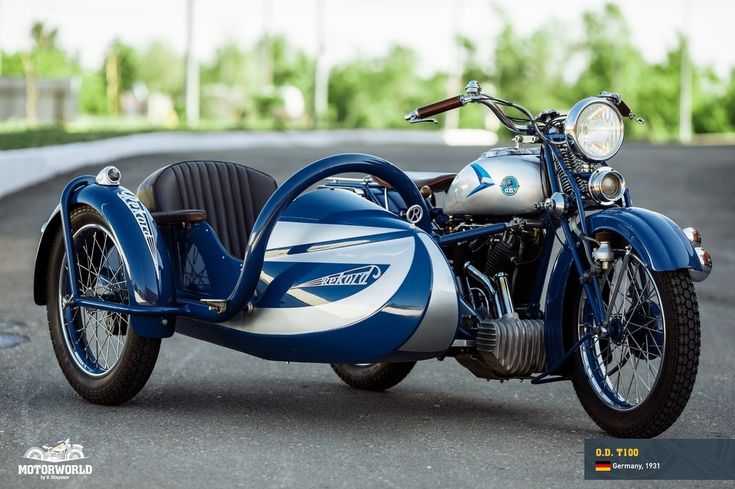
The Role of Motorcycles in Courier Services: Efficiency and Innovation
Motorcycles have become essential tools in the courier industry, offering speed and flexibility that larger vehicles cannot match. Their…



The Isle of Man TT stands as one of motorsport’s most extreme competitions. Since 1907, this motorcycle race has drawn riders from around the world to test themselves on public roads that become a racetrack once a year. The event takes place on a small island between England and Ireland, where normal streets transform into a high-speed course stretching over 37 miles.
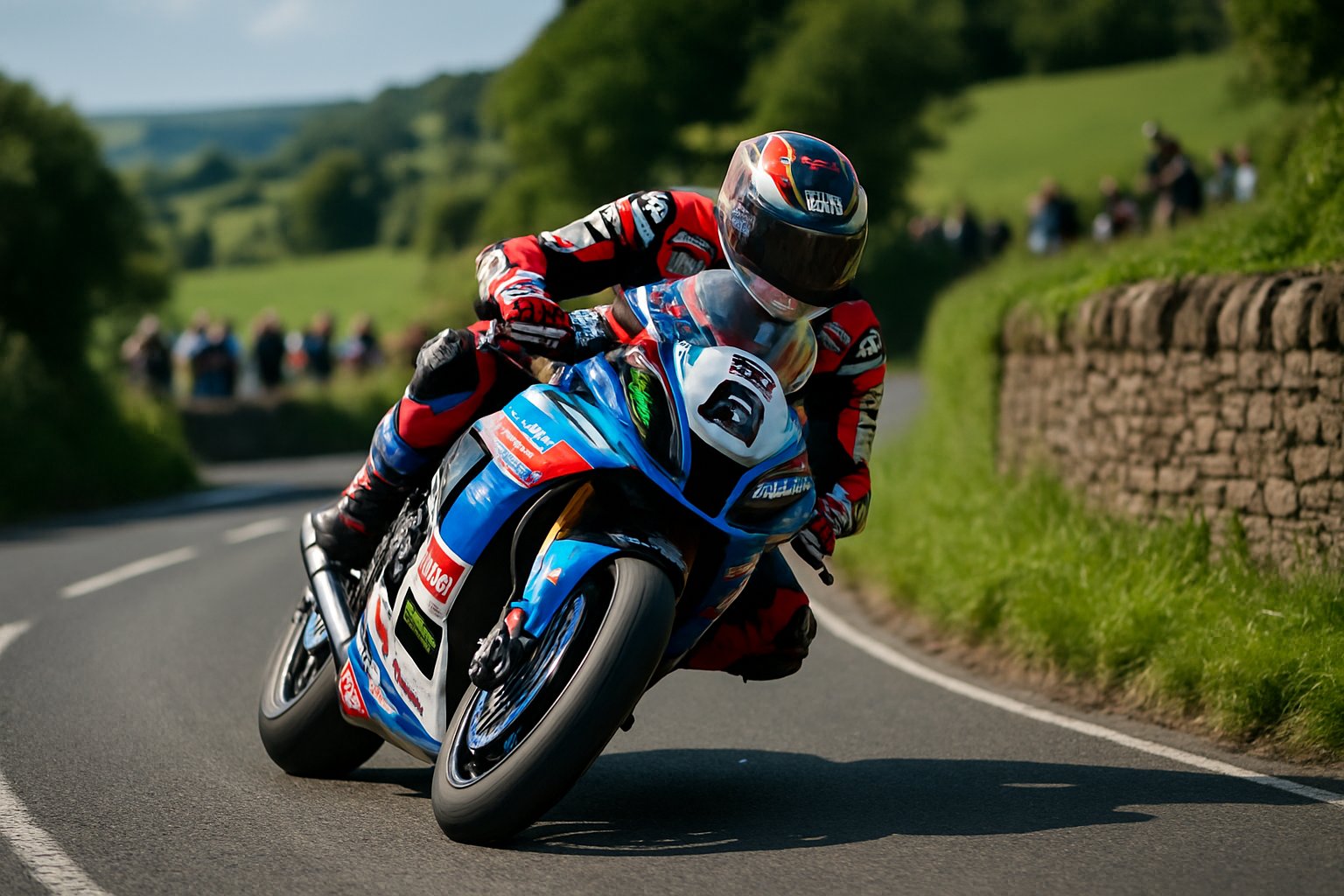
The Isle of Man TT has claimed more than 260 lives since its first race, making it the deadliest motorsport event in history. Riders reach speeds over 200 mph on narrow roads lined with stone walls, houses, and other hazards that would never appear on a modern racing circuit. The course includes sharp turns, dramatic elevation changes, and more than 200 corners that riders must memorize perfectly. Despite these dangers, the race continues to attract hundreds of competitors who willingly accept the risks.
The event lost its world championship status in 1977, which means riders now choose to compete rather than being required to race there. This change has allowed the TT to continue while other dangerous races were shut down. The Isle of Man depends heavily on the race for tourism income, bringing in tens of millions of dollars each year. The combination of extreme danger, personal choice, and economic necessity creates ongoing debates about whether this historic race should continue.
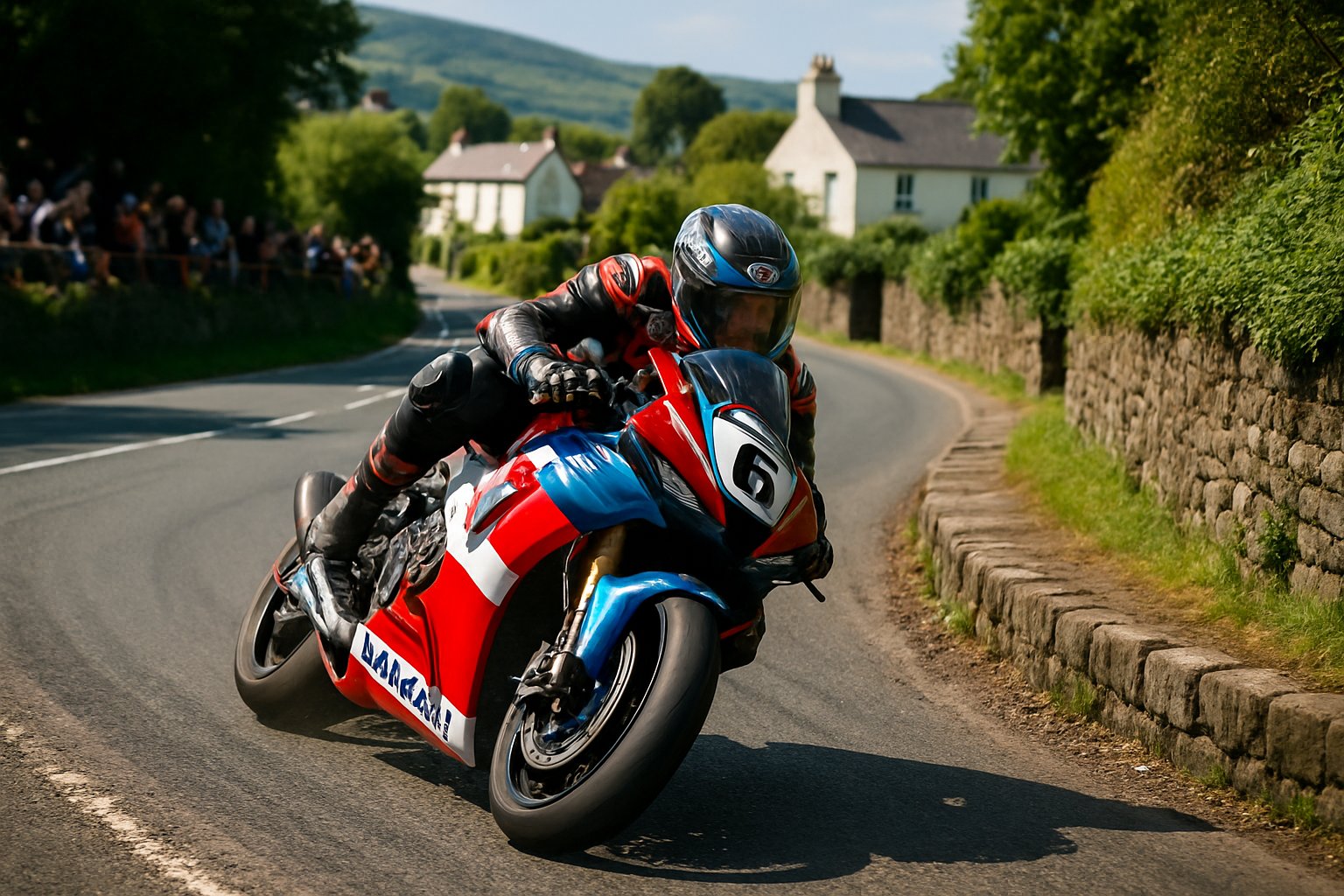
The Isle of Man TT holds the grim title of the world’s deadliest race due to its extraordinary fatality count, course design that offers no margin for error, and the inherent risks that draw competitors back year after year. These factors combine to create a motorsport event unlike any other in modern racing.
The numbers tell a sobering story. Since 1911, the TT Mountain Course has claimed 269 lives, making it the deadliest race in motorsport history. This averages more than one death per event over the race’s history.
The year 1970 stands as particularly tragic, with six riders losing their lives. The toll includes both experienced champions and newcomers who underestimated the course’s demands. These deaths occur not just from racing incidents but during practice sessions as well.
Even in recent years, the fatality rate continues. Six lives were lost during the 2023 event alone. The TT race maintains this dangerous reputation while other motorsports have dramatically improved safety records through modern circuit design and protective technology.
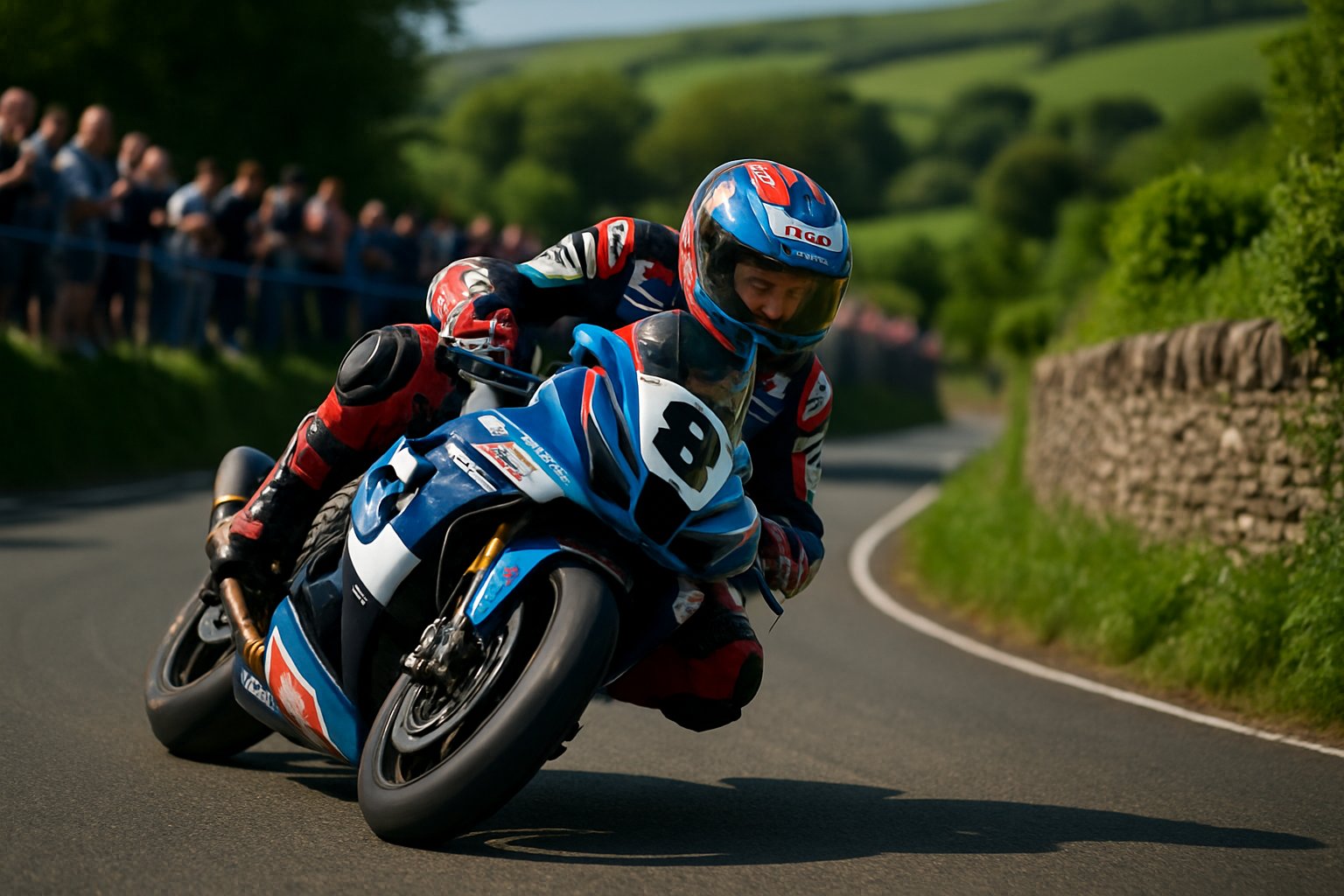
The 37.73-mile Mountain Course runs entirely on public roads never designed for racing. Riders reach speeds exceeding 200 mph while navigating through narrow streets lined with stone walls, buildings, and telephone poles positioned just inches from their racing line.
Fixed obstacles throughout the course include:
The course climbs from sea level to 1,300 feet of elevation, creating dramatic changes in weather and visibility. Unlike purpose-built racing circuits with gravel traps and impact barriers, the Isle of Man TT offers no safety features to protect riders from mistakes. A single error at racing speeds becomes fatal when the only thing between a rider and disaster is a stone wall.
Despite the well-documented dangers, elite riders return to the TT each year. The extreme challenge of mastering 264 corners across nearly 38 miles represents what many consider the ultimate test in motorcycle racing.
Competitors openly acknowledge they accept the risks. The adrenalin rush from racing at such speeds on public roads creates an experience many describe as unlike anything else in motorsport. The intense focus required produces a state of flow that proves addictive to those who survive it.
The prestige of joining the ranks of TT winners provides powerful motivation. For many riders, the danger itself forms part of the appeal rather than a deterrent. This willingness to risk everything for a chance at victory ensures the isle of man tt race continues attracting participants who understand they might not finish alive.
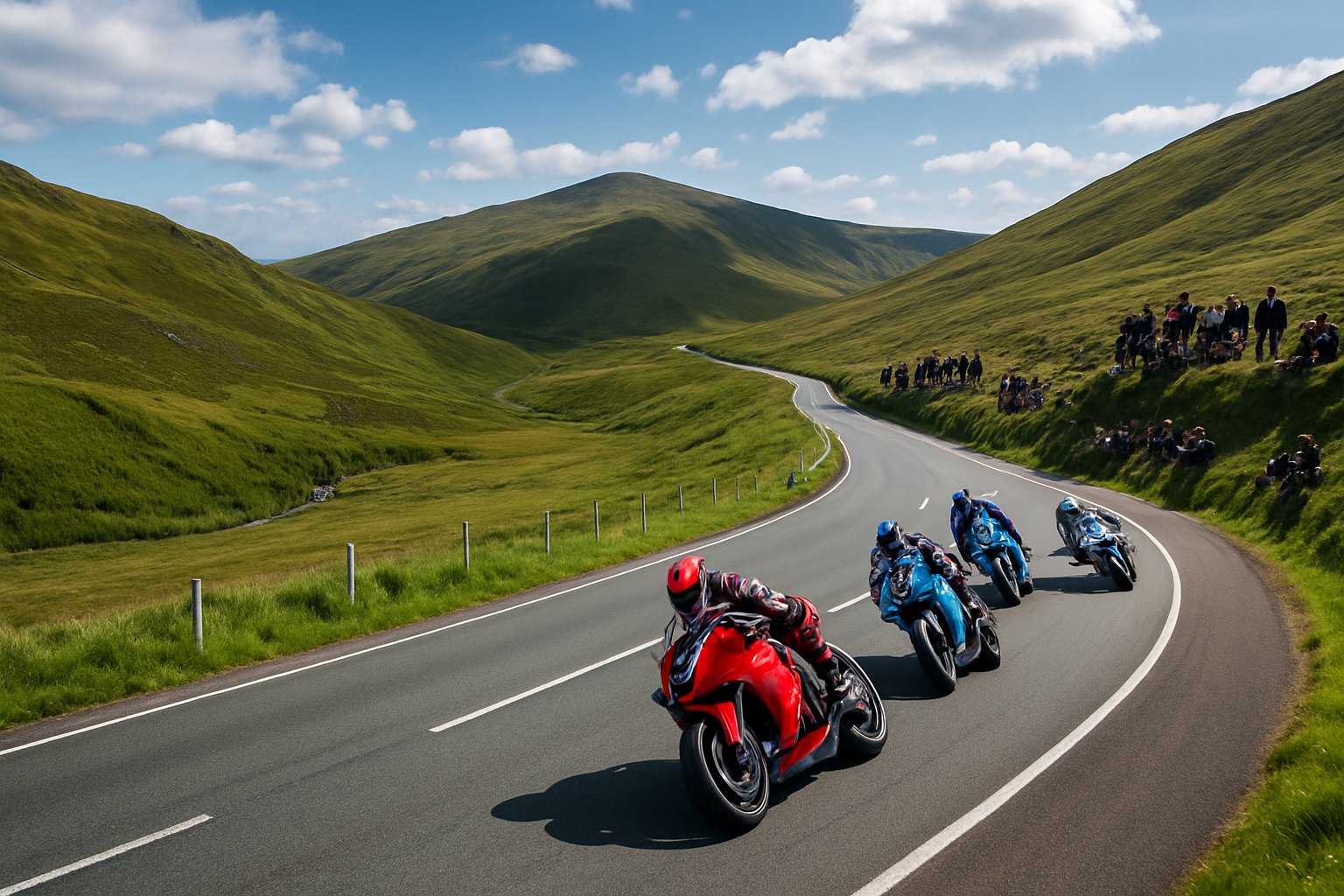
The Snaefell Mountain Course stretches 37.73 miles through public roads on the Isle of Man, making it the longest and most demanding track in motorcycle racing. The course combines village streets, mountain passes, and over 200 bends with minimal safety barriers between riders and unforgiving obstacles.
The Snaefell Mountain Course spans 37.73 miles of public roads that wind clockwise around the island. Riders start from the TT Grandstand in Douglas, the island’s capital, and follow a route that takes them through multiple towns and terrain types.
The track uses three main roads: the A1 from Douglas to Peel, the A3 from Castletown to Ramsey, and the A2 from Ramsey back to Douglas. This layout has remained largely unchanged since 1923. The course reaches its highest point at Hailwood Height, sitting 422 meters above sea level.
Riders face more than 200 bends during each lap. The course includes high-speed straights, tight hairpin turns, and elevation changes that test both rider skill and motorcycle performance.
The track features named sections that reflect its history and danger. Hailwood’s Rise leads upward to Hailwood Height, named after world champion Mike Hailwood. Sulby Straight allows riders to reach speeds over 200 mph, with Bruce Anstey recording an unofficial top speed of 206 mph in 2006.
Stone walls line much of the course, standing just inches from the racing line. Riders also navigate past lamp posts, trees, and buildings with no buffer zone. The course runs through residential areas where spectators watch from gardens and sidewalks.
Michael Dunlop set the current lap record in 2016 with a time of 16 minutes 53.929 seconds, averaging 133.962 mph across the entire circuit.
The Snaefell Mountain Course uses regular streets and rural roads that remain open to traffic outside race periods. These roads lack the run-off areas, gravel traps, and tire barriers found at purpose-built racing circuits.
The TT Grandstand area is the only section with ticket sales and permanent infrastructure. The rest of the course relies on temporary fencing and marshals. Riders face solid obstacles like stone walls and buildings directly alongside the track with minimal protection.
This lack of safety features contributes to the track’s deadly reputation, with over 270 fatalities recorded since racing began. The course demands absolute precision because even small mistakes can prove fatal at racing speeds.
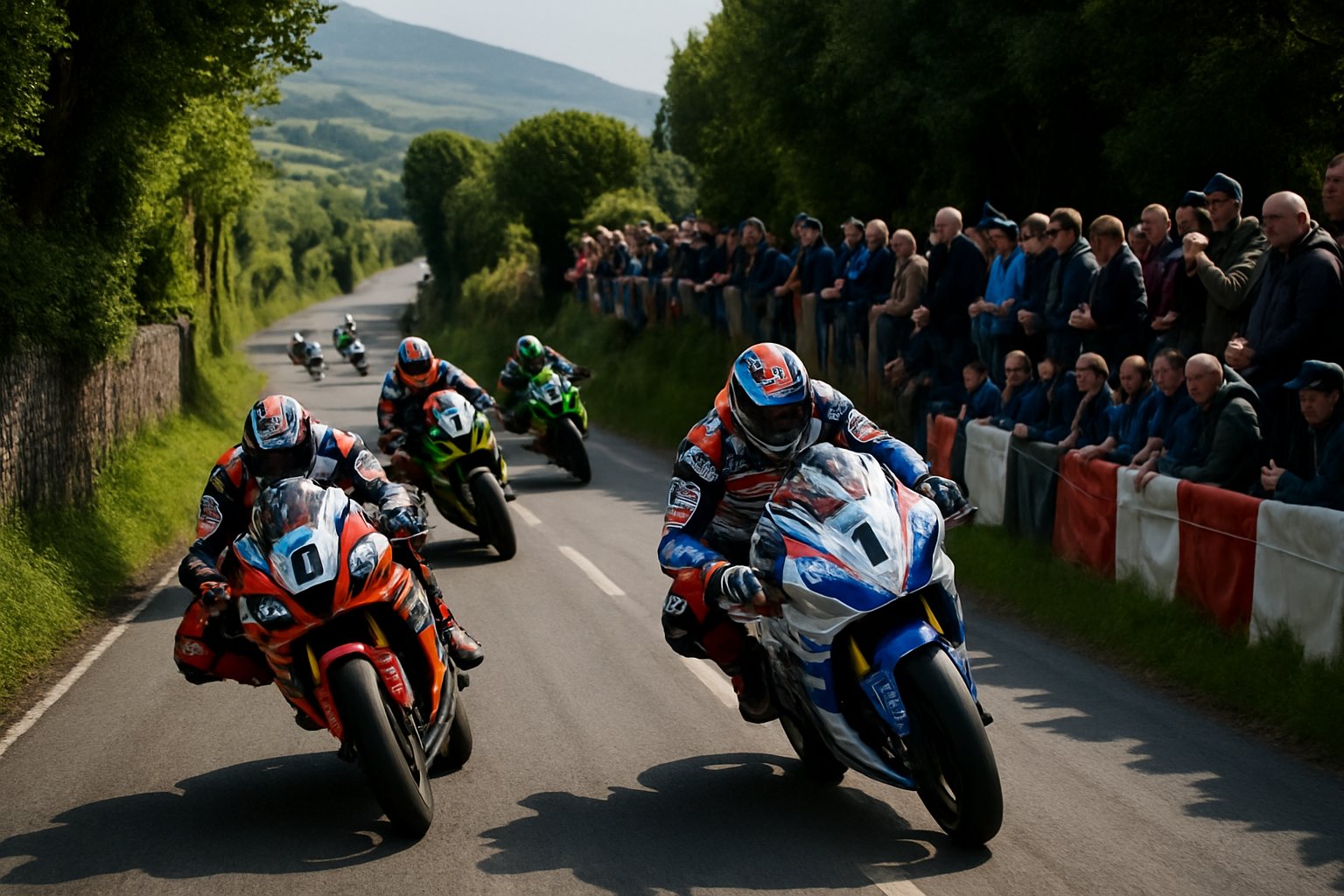
The Isle of Man TT uses a unique time trial format across two weeks of competition, with riders competing individually against the clock rather than wheel-to-wheel racing. The event spans one week of practice and qualifying followed by six days of races across multiple motorcycle classes.
Riders at the Isle of Man TT races start at 10-second intervals rather than launching together from a grid. Each competitor tackles the 37.73-mile Snaefell Mountain Course alone, aiming to record the fastest overall time across multiple laps.
The rider with the quickest cumulative time wins their race class. This format eliminates direct overtaking battles but creates intense competition as riders push limits on public roads at speeds exceeding 200 mph. Riders race the clock, not each other.
The Manx government owns and promotes the Tourist Trophy event. Race organizers close public roads for competition, transforming everyday streets and country lanes into one of motorsport’s most demanding circuits.
Practice week begins on the final Monday of May with morning free practice and afternoon qualifying sessions. Riders complete four additional qualifying sessions throughout the week to familiarize themselves with the course and secure their starting positions.
These sessions run during evening hours to minimize disruption to island residents. The qualifying week proves essential for newcomers learning the 264 corners and experienced riders fine-tuning their approach.
More than 100 riders participate across the fortnight. The extended practice period reflects the course’s complexity and danger, giving competitors crucial time to memorize the track layout and refine their racing lines.
The TT features four main classes based on engine size and motorcycle type. Superbike machines use 1000cc engines with over 200 horsepower and 24-liter fuel tanks for pit stops. Supersport bikes run 600cc four-cylinder or 675cc three-cylinder engines with less power.
Supertwin motorcycles compete with 700cc twin-cylinder engines. Sidecar races feature a driver and passenger working together on 600cc, 675cc, or 900cc machines.
Race week includes six competition days with rest days built into the schedule. The Milwaukee Senior TT Race serves as the final event, closing the competition on the second Saturday of June.
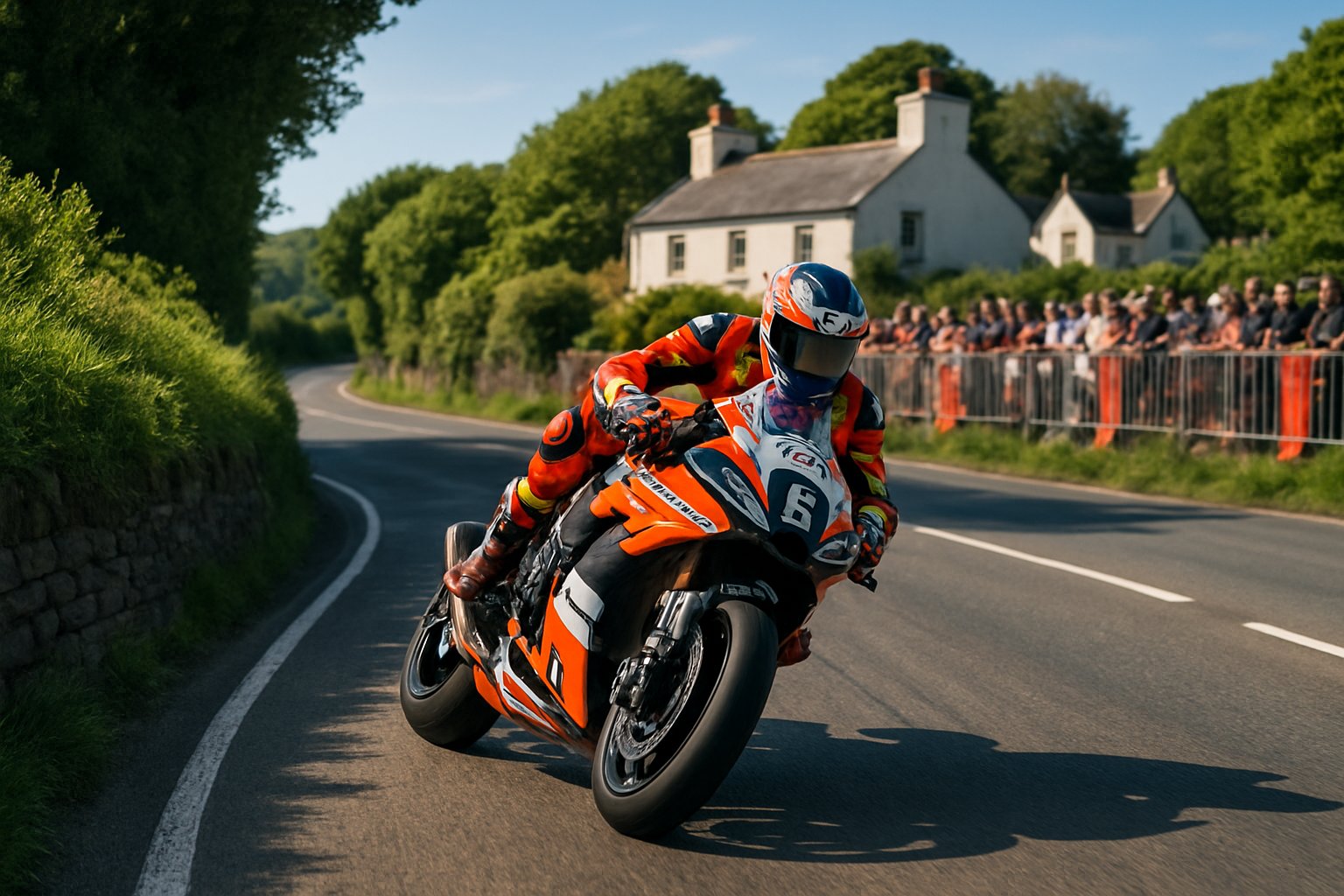
The Isle of Man TT features five distinct race classes, each with specific engine sizes and technical requirements. These classes range from 1000cc+ Superbikes reaching speeds over 200 mph to twin-cylinder machines and three-wheeled sidecars, creating a diverse field of competition on the 37.73-mile Mountain Course.
The Superbike class represents the top tier of TT racing. These machines use 1000cc+ engines producing over 200 horsepower. Riders complete 6 laps covering 226.38 miles with two pit stops.
The bikes run on slick tires and can include modified race machines. Michael Dunlop holds the lap record at 135.970 mph, set in 2024. The Senior TT, which closes the race week, uses Superbike class machines and is considered the most important race of the event.
Superstock bikes use 1000cc engines with limited modifications compared to Superbikes. These machines complete 3 laps with one pit stop. Despite being closer to showroom specification, they are extremely fast. Peter Hickman set the all-time TT lap record of 136.358 mph in 2023 riding a Superstock bike.
The Supersport class features 600cc four-cylinder bikes, 675cc triples, and newer models like the Ducati V2. Riders complete 4 laps with one pit stop. These middleweight machines demand precise riding through corners. Michael Dunlop’s lap record stands at 130.403 mph.
Supertwin machines use 700cc twin-cylinder engines producing roughly 90 horsepower. Riders complete 3 laps with a pit stop after the first lap. The class uses slick tires and road-derived engines.
Originally created as a budget-friendly support class, Supertwins now require significant investment. The lap record sits at 122.750 mph.
Sidecar racing features three-wheeled machines with two riders. Engine options include 600cc four-cylinders, 675cc triples, or 900cc twins. Teams complete 3 laps without pit stops on slick tires.
The driver controls the machine while the passenger shifts their weight to balance the s
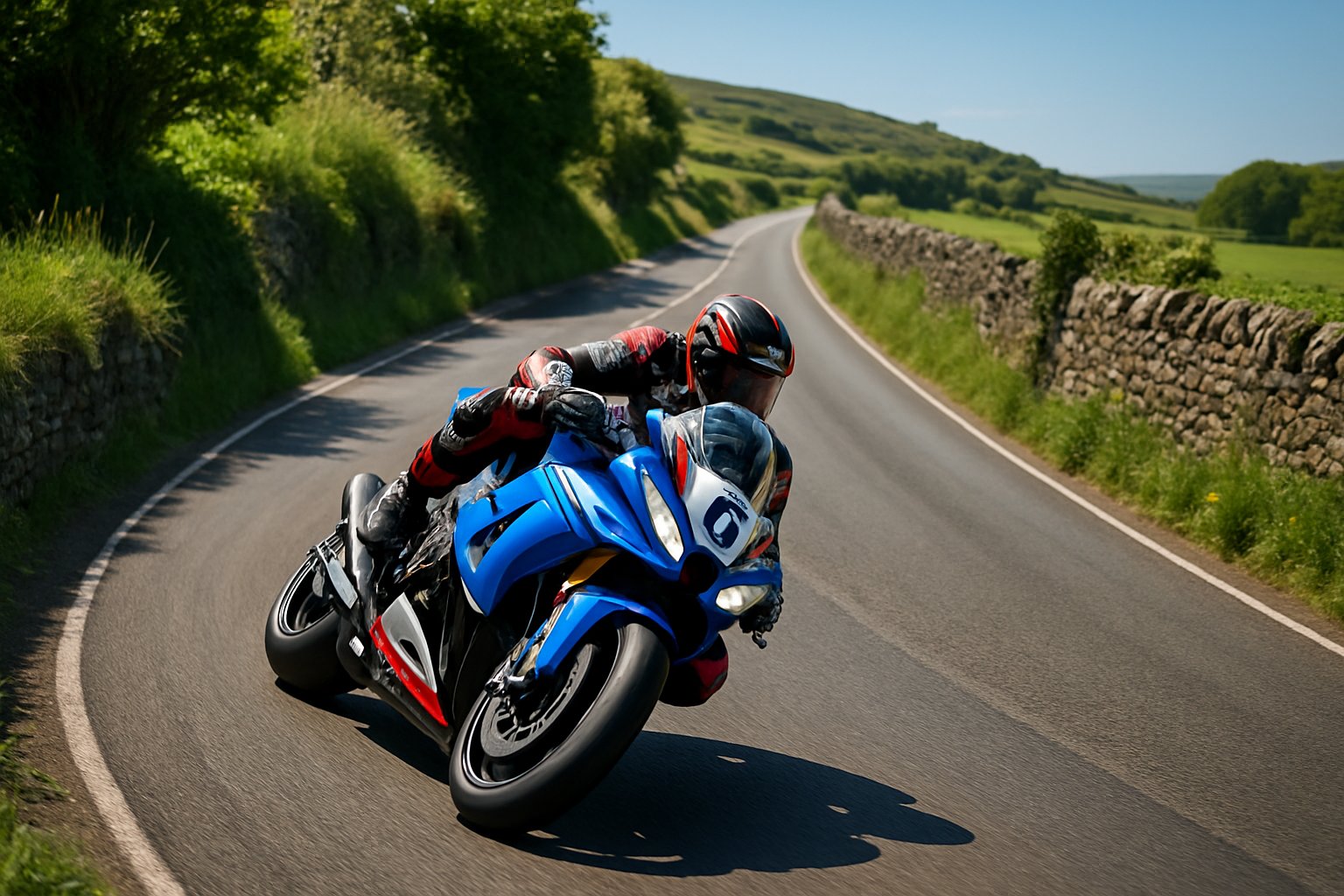
The Isle of Man TT has produced some of motorcycle racing‘s greatest champions, with riders like Joey Dunlop holding 26 wins and modern stars like Michael Dunlop and Peter Hickman pushing speed records beyond 135 mph.
Joey Dunlop stands at the top of the all-time winners list with 26 victories. He competed at the TT from 1976 until his death in 2000, earning his final win at age 48.
John McGuinness has claimed 23 TT wins throughout his career. He became known for his consistency and skill on the mountain course. McGuinness broke the 130 mph barrier and remained competitive for over two decades.
Other legendary riders include Mike Hailwood with 14 wins and Giacomo Agostini with 10 victories. These early champions helped establish the TT as the premier road racing event in motorcycle history.
Michael Dunlop currently holds 29 TT wins, surpassing his uncle Joey’s record in recent years. He competes across multiple race classes and continues to add to his total each year.
Peter Hickman set the absolute lap record in 2018 with an average speed of 135.452 mph. He has won multiple races and consistently ranks among the fastest riders on the course.
Ian Hutchinson earned the nickname “Hutchy” and won five races in a single week during the 2010 TT. Despite serious injuries, he returned to competition and added more victories to his career total.
Bob McIntyre recorded the first 100 mph lap in 1957. Later milestones included John Williams breaking 110 mph in 1976 and Steve Hislop reaching 120 mph in 1989.
Peter Hickman holds the current outright lap record at 135.452 mph, set during the 2018 Senior TT. This record represents an average speed over the entire 37.73-mile course.
The fastest riders now regularly exceed 130 mph average speeds during races. Modern bikes and improved rider skills have pushed speeds far beyond what early competitors thought possible on public roads.
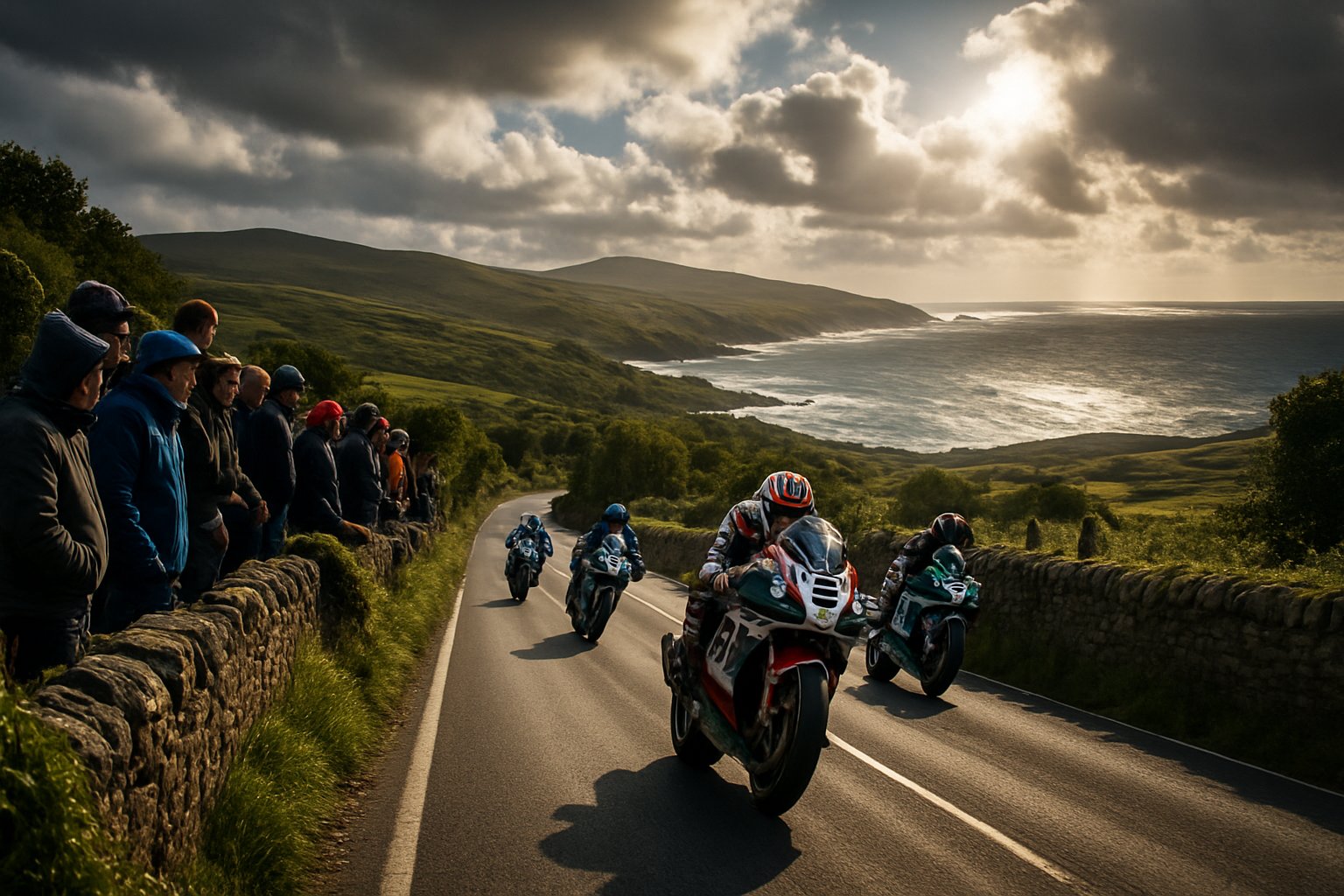
The Isle of Man presents unique challenges beyond the dangerous course itself. Weather conditions can change racing schedules at any moment, while the small island community adapts to hosting one of motorsport’s biggest events on their everyday roads.
Rain and wind create major problems for the Isle of Man TT. The 2025 event saw constant schedule changes due to wet roads and strong winds across the Mountain section of the course. Race organizers cancelled the Senior TT for only the second time since 1911 because of dangerous wind conditions.
Weather delays affect everyone involved. The unpredictable conditions force teams to keep their bikes race-ready every single day, not knowing when they might actually compete. Riders face an eight-hour window where racing might start, then get pushed back again.
The Mountain section sits at 1,300 feet elevation and experiences the worst weather. Wind speeds can make it impossible to safely control motorcycles traveling over 140 mph. Rain makes the already narrow public roads even more treacherous, with stone walls and buildings offering no margin for error.
The Isle of Man has roughly 86,000 residents who must share their roads during the two-week event. School routes, work commutes, and grocery store trips all get disrupted when 37.73 miles of public roads transform into a race course.
Local businesses and citizens play a critical role in making the TT work. The island only has about 2,000 hotel rooms but hosts nearly 50,000 visitors. Private homes, churches, and farms open their grounds as viewing areas for small fees.
The TT requires over 500 volunteer marshals to staff each session. Many are Isle of Man residents who undergo trauma management and firefighting training. Without this community support, the race could not exist.
Watching the Isle of Man TT remains free at most locations around the course. Fans can stand at hedges or climb berms to feel motorcycles pass inches away at 175 mph. Churches and community halls offer seating and refreshments for small donations of around 20 pounds.
Premium experiences now range from $250 to $500 per day for those wanting hospitality areas. The Union Mills Methodist Church projects races on a screen inside while viewers sit in the sanctuary. Local spots like the Crosby pub and Ginger Hall Hotel provide traditional viewing atmospheres.
The island atmosphere separates this motorsport event from others. Spectators access viewing spots through muddy paths on working farmland. They share space with locals going about normal life while world-class racing happens on their neighborhood streets.
The Isle of Man TT has claimed 269 lives since 1911 and features riders averaging 135 mph on a 37.7-mile public road course. These frequently asked questions address the race’s fatality record, speed achievements, safety protocols, and how it compares to other forms of motorsport.
Since 1911, the Isle of Man TT Mountain Course has recorded 269 fatalities. This number includes riders who have died during practice sessions, qualifying runs, and official races.
The deaths occur almost every year. In 2022, six riders lost their lives during the event. The consistent fatality rate has made the TT widely regarded as the most dangerous motorsport event in the world.
The high death toll prompted safety concerns that led to the race losing its world championship status in 1976. However, the event continues to run annually with riders competing by their own choice.
Riders achieve an average speed of approximately 135 mph per lap around the Mountain Course. Peter Hickman holds the lap record with an average speed of 136.358 mph, which he set in 2023.
Top speeds exceed 200 mph on certain sections of the course. The bikes reach these extreme velocities on narrow public roads that were never designed for racing. Different bike classes produce varying power outputs, with Superbike machines generating over 200 horsepower from their 1000cc engines.
The Mountain Course lacks the standard safety features found at modern racing circuits. There are no runoff areas or extensive safety barriers along the 37.7-mile route. Lamp posts, trees, stone walls, and buildings line the track.
Helmets became compulsory in 1919. The race can be postponed due to dangerous weather conditions, as happened with the 2022 Senior TT when rain forced organizers to delay the event.
Medical personnel and marshals are stationed around the course. However, the fundamental nature of racing on public roads with minimal protection remains unchanged since the course opened in 1911.
The Isle of Man TT presents significantly greater danger than Formula One racing. Formula One uses purpose-built circuits with extensive runoff areas, tire barriers, and safety fencing. The TT uses public roads with stone walls, buildings, and trees directly adjacent to the racing line.
Cars provide much greater protection than motorcycles during crashes. Formula One vehicles feature survival cells, halos, and crumple zones that absorb impact energy. Motorcycle riders have no such protection and risk being thrown from their bikes during accidents.
Formula One also races on street circuits like Monaco, Baku, and Jeddah. These tracks still incorporate more safety features than the TT Mountain Course and benefit from the protective nature of enclosed race cars.
The TT lost its world championship status in 1976 after top riders boycotted the event over safety concerns. Italian rider Giacomo Agostini vowed never to race at the event again following the death of his friend Gilberto Parlotti in 1972. Other prominent riders joined the boycott.
The race was part of the Motorcycle Grand Prix World Championship from 1949 to 1976. This period is considered the TT’s golden era, with legends like John Surtees, Mike Hailwood, and Agostini competing. However, annual fatalities eventually led world championship riders to refuse participation.
Modern MotoGP riders do not compete at the Isle of Man TT. The event continues with specialist road racing riders who choose to accept the risks.
The TT began in 1907 on the St John’s Short Course, a 15.9-mile circuit. The race moved to the larger Mountain Course in 1911, where it has remained with the layout largely unchanged since then. The longer course allowed bikes to achieve higher speeds.
Helmets became mandatory in 1919, marking an early safety regulation. Road conditions improved during the 1920s and 1930s. The sidecar class debuted during this period, adding variety to the racing program.
The event now features six distinct classes with different technical regulations. Superbike machines use 1000cc engines with over 200 horsepower, while Superstock bikes must remain closer to showroom specifications despite using the same engine size. Supersport bikes run 600cc or 675cc engines, and Supertwin machines use 700cc twin-cylinder engines producing up to 90 horsepower.
Race formats have also evolved. Current regulations specify different race lengths for each class, with Superbike and Senior TT running six laps while other classes complete three or four laps. All races follow a time trial format where riders start at 10-second intervals and compete on corrected time rather than wheel-to-wheel racing.