The Isle of Man TT: The World’s Most Dangerous Race Explained
The Isle of Man TT stands as one of motorsport’s most extreme competitions. Since 1907, this motorcycle race has drawn riders from…



Motorcycle racing didn’t start with packed stadiums and million-dollar sponsorships. It began with determined inventors and daring riders who strapped motors to bicycles and raced them to see what would happen. The early pioneers of motorcycle racing in the late 1800s and early 1900s laid the foundation for one of the world’s most exciting sports, transforming simple motorized bicycles into powerful racing machines through competition and innovation. Men like Charles Metz, Glenn Curtiss, and Ralph Hamlin risked their lives testing unproven technology on dirt tracks and beach courses, setting speed records that seemed impossible at the time.
These early riders were more than just racers. They were engineers, builders, and visionaries who understood that racing would push their machines to perform better. The first organized motorcycle race in the United States took place in May 1901 on a horse racing track in Los Angeles, where Ralph Hamlin rode his Orient motorcycle to victory in just over 18 minutes. By 1907, Glenn Curtiss reached an astounding speed of 136 miles per hour on a motorcycle powered by a V-8 engine he designed himself.
The stories of these pioneers reveal a time when motorcycle racing was raw, dangerous, and driven by pure passion for speed and mechanical innovation. Their achievements created the blueprint for modern racing and inspired generations of riders who followed. Understanding their contributions helps explain how motorcycle racing evolved from a novelty attraction into a global sport with millions of fans.
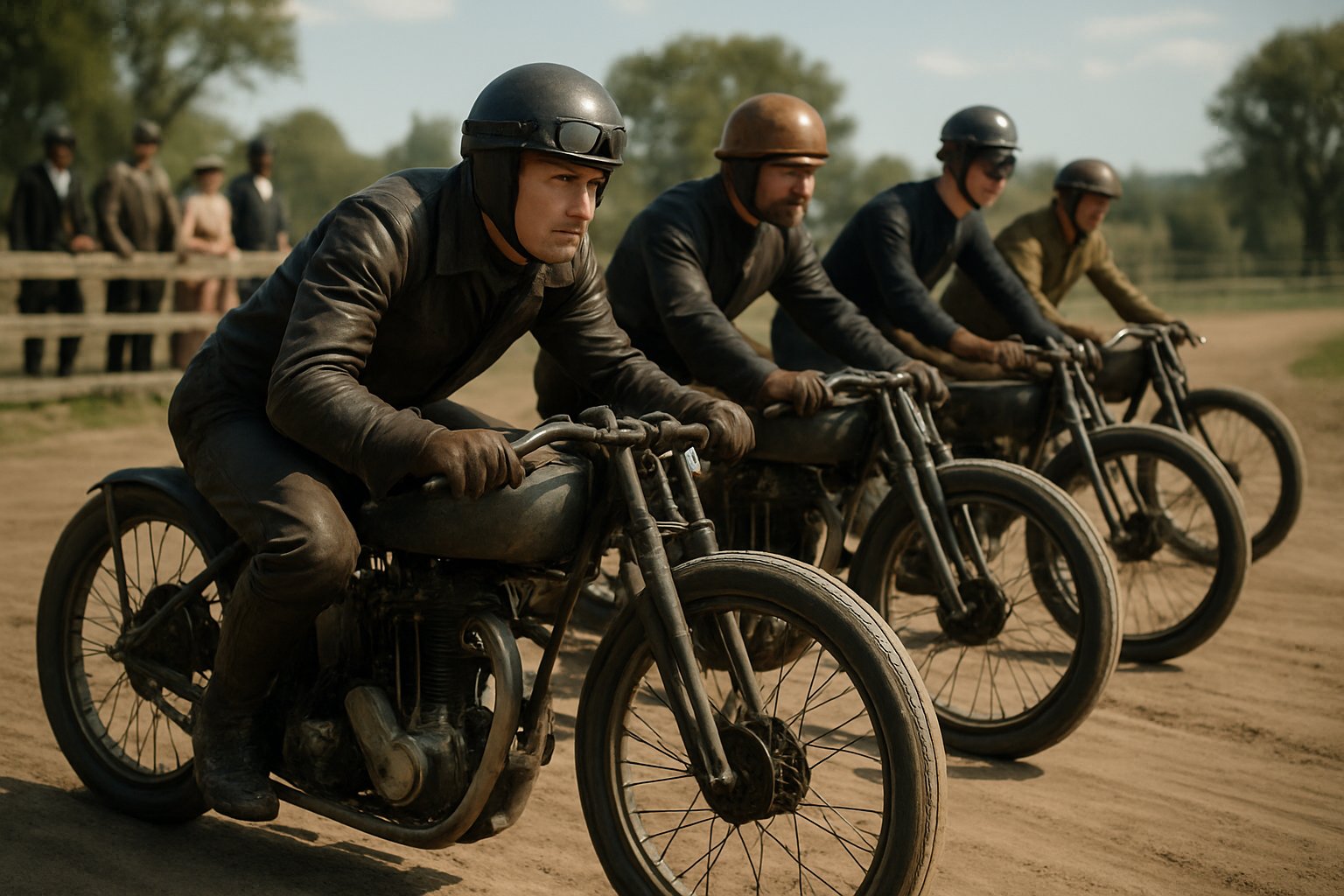
Motorcycle racing emerged in the late 1800s as inventors began attaching engines to bicycles, creating machines that could travel at previously impossible speeds. The sport quickly evolved from informal competitions between riders to organized events that drew crowds and pushed the boundaries of technology.
Gottlieb Daimler created one of the first motorized bicycles in 1885, attaching a small engine to a wooden frame. This invention marked the beginning of motorcycle development and set the stage for competitive racing.
The first recorded motorcycle speed contest in the United States took place on July 31, 1900, at Charles River Race Park in Boston. Charles Metz showcased his motor-driven Orient bicycle at this event. The machine was difficult to control, but it demonstrated the potential of motorized two-wheelers.
Early competitions were informal affairs where inventors and riders tested their machines against each other. These events often took place on public roads or specially designated tracks. Riders faced significant dangers due to poor road conditions and unreliable mechanical systems.
The shift from bicycles to motorcycles happened gradually as inventors experimented with engine placement and power. Early motorcycles were essentially bicycles with small engines attached to the frame. Engineers worked to solve problems with weight distribution, steering, and braking.
By the early 1900s, manufacturers began designing machines specifically for racing rather than simply modifying bicycles. These new motorcycles featured stronger frames, more powerful engines, and improved suspension systems. The internal combustion engine became the standard power source, replacing earlier steam-powered attempts.
Riders needed new skills to handle these faster machines. Unlike bicycles, motorcycles required understanding of throttle control, engine maintenance, and high-speed handling. This created a new breed of competitor who combined mechanical knowledge with riding ability.
The Paris-Rouen race in 1894 stands as one of the earliest formal motorized vehicle competitions, though it primarily featured cars. By 1899, motorcycles had their own dedicated events in Europe.
The Isle of Man Tourist Trophy began in 1907 and became the most prestigious motorcycle race in the world. The event used public roads on the Isle of Man, creating a challenging course that tested both rider skill and machine reliability. This race established many standards for organized motorcycle competition.
Other significant early events included races in France, Germany, and the United States. These competitions attracted manufacturers who saw racing as a way to prove their machines’ capabilities. The events also drew spectators who were fascinated by speed and mechanical innovation. Race organizers began establishing rules for safety and fair competition during this period.
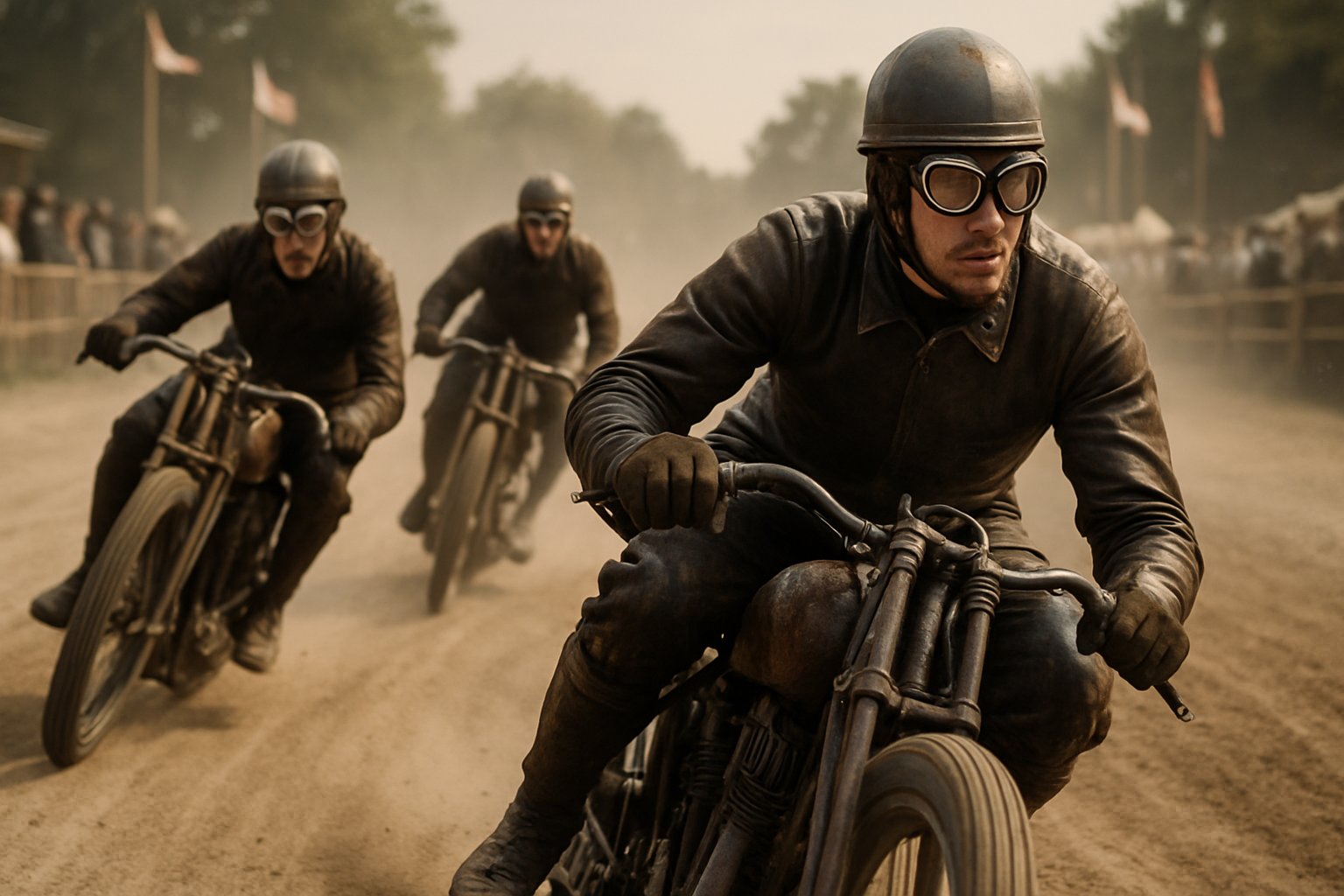
The early motorcycle racing scene was shaped by inventors and manufacturers who turned experimental machines into competitive vehicles. These engineers and companies established the technical foundations that would define motorcycle performance for decades.
Gottlieb Daimler built what many consider the first true motorcycle in 1885. His wooden-framed “riding car” featured a small gasoline engine mounted between two wheels. This machine proved that internal combustion engines could power two-wheeled vehicles effectively.
Daimler’s work focused on creating lightweight, compact engines. His single-cylinder design produced enough power to move a rider at practical speeds. The engine’s vertical mounting position became a standard configuration that later builders would adopt.
While Daimler himself did not race motorcycles, his technical innovations gave other inventors a working model to improve upon. The principles he established in engine design and vehicle balance influenced every motorcycle manufacturer that followed. His patents and designs spread quickly across Europe and America, where mechanics studied and refined his concepts.
Early manufacturers like Orient, Indian, and Harley-Davidson built racing into their business models from the start. These companies understood that racing victories sold motorcycles to the public. They hired skilled riders and invested in faster engines to prove their machines were superior.
Orient became America’s first production motorcycle in 1900. The company used French De Dion-Bouton engines and won multiple early races. Charles Metz, the company president, built racing machines specifically to showcase his brand’s capabilities.
Racing pushed manufacturers to solve real engineering problems. They developed better brakes, stronger frames, and more reliable engines. Each improvement made on the racetrack eventually appeared in motorcycles sold to customers.
Glenn Curtiss stands out as both an engineer and competitor. He built his own engines and rode them to victory in major events. In 1907, he reached 136.3 mph on a V-8-powered motorcycle at Ormond Beach. This achievement demonstrated what was possible when engineering skill combined with racing ambition.
Albert Champion worked as both a rider and spark plug designer. He promoted Orient motorcycles through racing before founding his own spark plug company. His dual expertise in racing and engineering helped him understand what parts needed improvement.
These engineer-riders tested their designs under real racing conditions. They made adjustments based on direct experience rather than theory alone. This hands-on approach accelerated motorcycle development faster than any other method could have achieved.
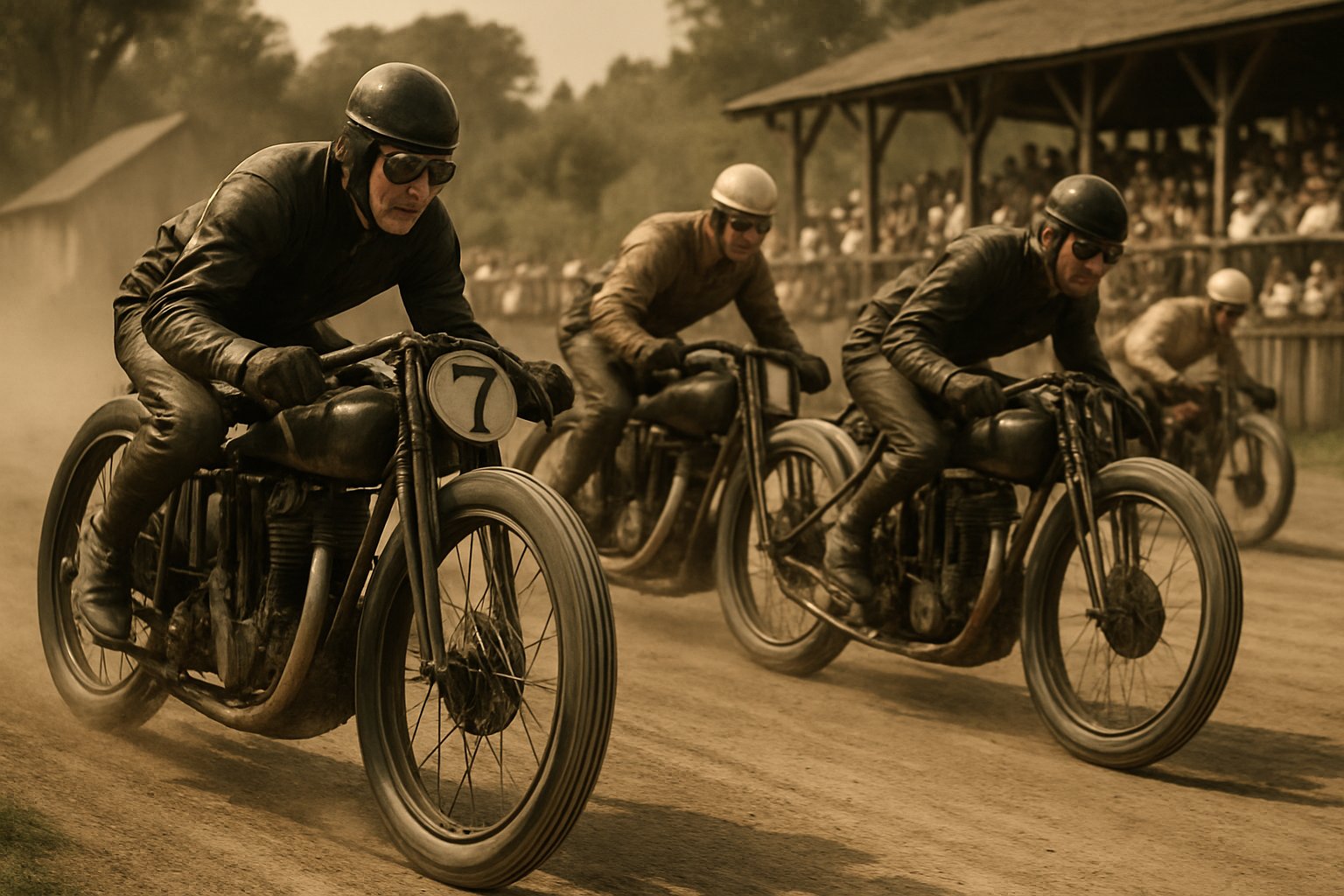
The first motorcycle races took place in the late 1800s and early 1900s on public roads and newly built tracks. These events established the basic formats that would shape motorcycle racing for decades to come.
The Paris-Rouen race in 1894 stands as one of the earliest organized motorized vehicle competitions, though it included both cars and motorcycles. This event covered roughly 78 miles and proved that motorized vehicles could complete long distances reliably.
By 1900, dedicated motorcycle races began to emerge across Europe and America. The Charles River Race Park in Boston hosted what became the first officially recorded motorcycle speed contest in the United States on July 31, 1900. These early competitions took place on a mix of public roads and dedicated racing facilities.
European races dominated the early racing calendar. Events in France, Belgium, and Germany attracted riders who wanted to test their machines against competitors. The races were dangerous, with minimal safety equipment and unpredictable road conditions, yet they drew large crowds fascinated by the new technology.
Two distinct racing formats emerged during this period. Road racing used public roads that were temporarily closed, while track racing occurred on purpose-built circuits with more controlled conditions.
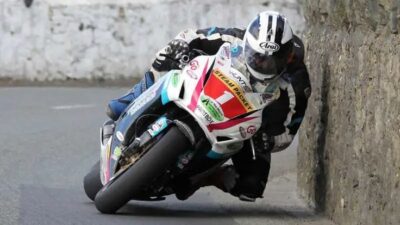
The Isle of Man TT race, established in 1907, became the most prestigious road racing event in the world. The TT used a challenging 37-mile course over public mountain roads on the Isle of Man. Riders faced steep climbs, sharp turns, and stone walls inches from the racing line. The event tested both rider skill and motorcycle reliability in ways that track racing could not match.
Track racing offered better safety and spectator viewing. Dedicated circuits with banked turns and smoother surfaces allowed for higher speeds and closer competition. Both formats attracted different types of riders and manufacturers, each seeking to prove their superiority in their chosen discipline.
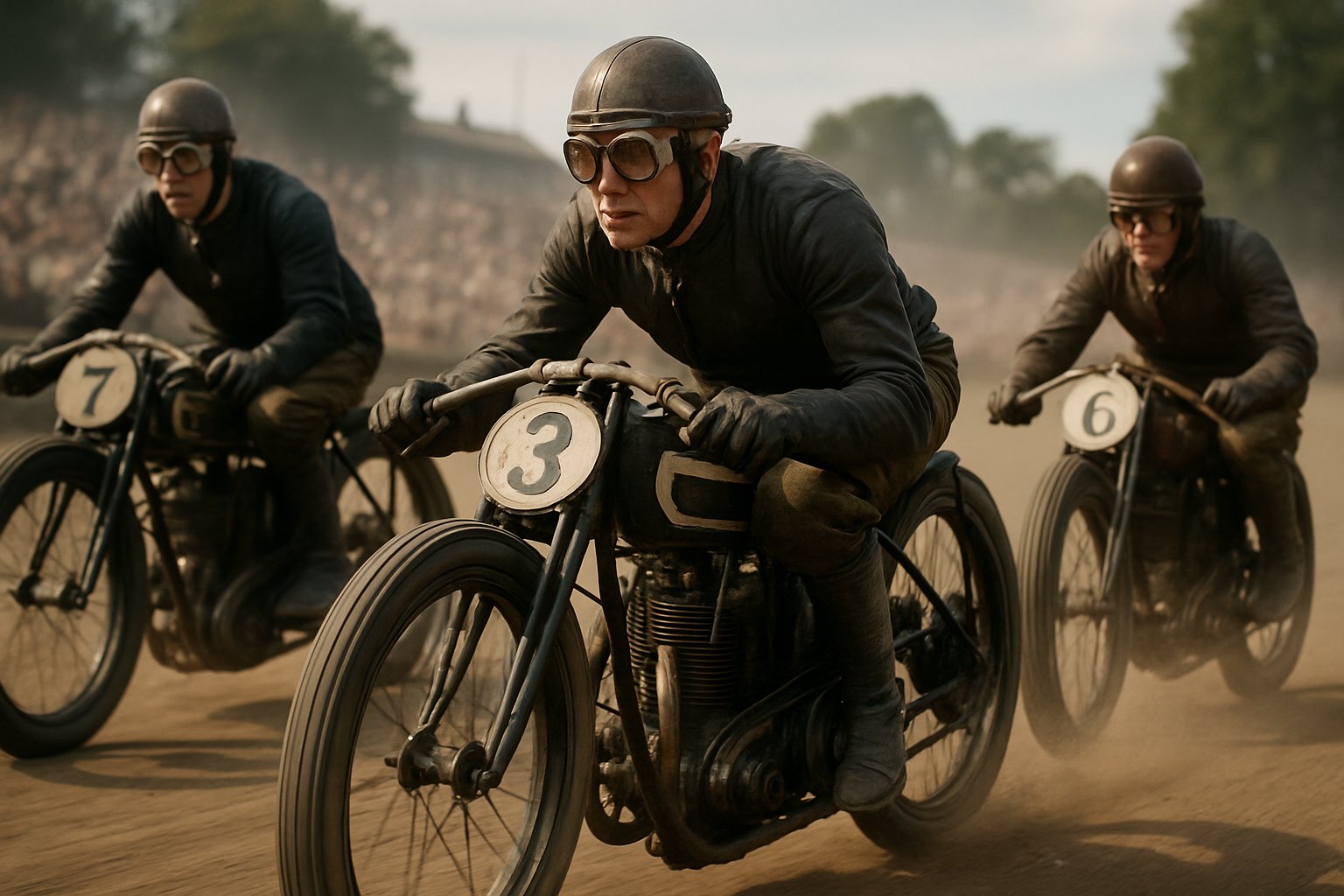
The early era of motorcycle racing produced riders who transformed the sport through extraordinary talent and fearless determination. These legends dominated Grand Prix circuits and helped establish motorcycle racing as a global spectacle.
Mike Hailwood earned his reputation as one of motorcycle racing’s greatest competitors through sheer skill and versatility. He won nine Grand Prix World Championships between 1961 and 1967, racing across multiple classes. His ability to master different bike sizes set him apart from his competitors.
Hailwood’s most famous achievement came at the Isle of Man TT races. He won 14 TT races throughout his career, earning him the nickname “Mike the Bike.” The challenging mountain course suited his smooth riding style and exceptional control.
His career included a brief move to four-wheel racing in Formula One. He returned to motorcycle racing in 1978 after an 11-year absence. At age 38, he won the Formula One TT at the Isle of Man, proving his skills remained sharp despite the long break.
Giacomo Agostini dominated Grand Prix racing during the 1960s and 1970s. The Italian rider accumulated 15 World Championships, a record that stood for decades. He won eight consecutive 500cc titles from 1966 to 1972.
His success came primarily with MV Agusta motorcycles. Agostini won 122 Grand Prix races during his career. He also claimed 10 Isle of Man TT victories before boycotting the dangerous course in 1972.
Career Achievements:
His smooth riding technique and consistent performance made him the benchmark for European riders.
Barry Sheene brought a new level of charisma and media attention to motorcycle racing. The British rider won back-to-back 500cc World Championships in 1976 and 1977. His popularity extended beyond racing fans to mainstream audiences.
Sheene survived several serious crashes that would have ended most careers. A 1975 crash at Daytona left him with multiple broken bones. He returned to racing within weeks, demonstrating remarkable resilience.
His rivalry with American rider Kenny Roberts captivated fans worldwide. Sheene’s outspoken personality and willingness to engage with media helped grow motorcycle racing’s profile. He remained a beloved figure in motorcycle culture until his death in 2003.
T E Lawrence represented motorcycle culture beyond competitive racing. The British war hero owned eight Brough Superior motorcycles, the most prestigious brand of the era. Each bike cost more than an average house in the 1920s.
Lawrence rode his motorcycles at high speeds on narrow country roads. In 1935, he crashed near his cottage in Dorset while swerving to avoid two cyclists. The accident caused fatal head injuries.
His death had lasting consequences for rider safety. Dr. Hugh Cairns, who treated Lawrence, began studying motorcycle head injuries. His research led to mandatory crash helmets for military riders. This work eventually resulted in helmet laws for civilian riders, though the UK didn’t require them until 1973.
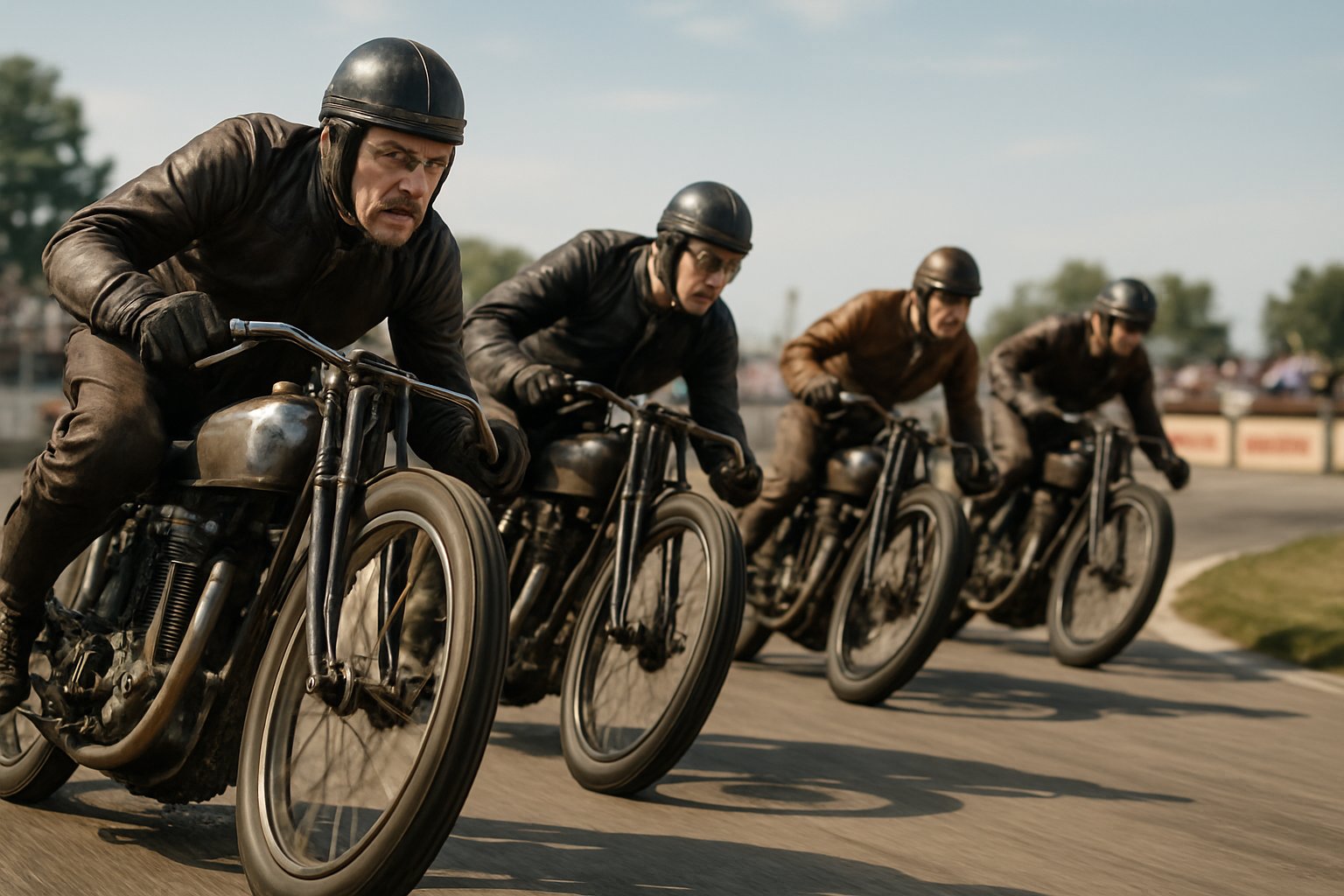
Early motorcycle racing served as a proving ground where manufacturers tested new materials and systems that would change the sport forever. The competitive drive pushed engineers to develop lighter, stronger components and electronic systems that gave riders more control at high speeds.
The shift from heavy steel frames to advanced materials marked a turning point in motorcycle racing performance. Engineers began using aluminum alloys in the 1970s, which reduced weight significantly while maintaining structural strength. This change allowed bikes to accelerate faster and handle more responsively through corners.
Carbon fiber emerged in the 1980s as a game-changing material for fairings, fuel tanks, and eventually chassis components. The material offered exceptional strength-to-weight ratios that steel and aluminum could not match. Racing teams discovered that carbon fiber parts could be shaped into aerodynamic forms that cut through air more efficiently.
Titanium found its place in high-stress components like exhaust systems, suspension springs, and fasteners. The metal resisted heat and corrosion better than steel while weighing roughly 40% less. Top racing teams adopted titanium connecting rods and valves, which allowed engines to rev higher and produce more power. These material innovations trickled down from the track to consumer motorcycles, improving performance and safety for everyday riders.
Traction control systems transformed how riders managed power delivery to the rear wheel. Early electronic systems in the 1990s monitored wheel speed and cut engine power when the rear tire began to spin. Modern systems use multiple sensors to adjust power delivery hundreds of times per second, allowing riders to maintain full throttle even in challenging conditions.
Telemetry gave racing teams the ability to monitor every aspect of bike performance in real time. Engineers collected data on engine temperature, suspension movement, throttle position, and brake pressure during practice sessions and races. Teams analyzed this information to fine-tune settings for specific tracks and weather conditions. The technology helped identify mechanical problems before they caused failures and guided setup decisions that could mean the difference between winning and losing.
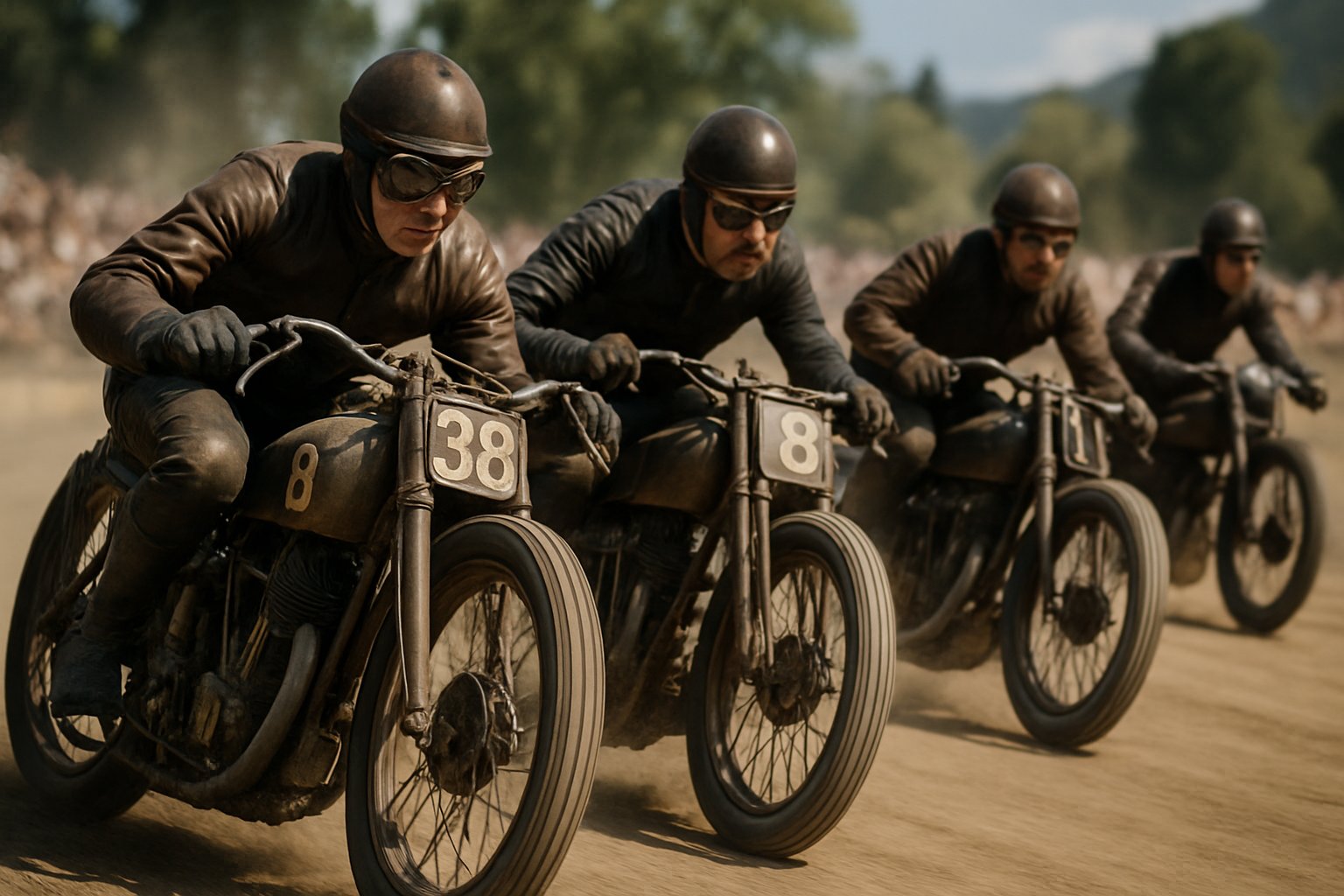
The early days of motorcycle racing established competitions that would define the sport for generations. The Isle of Man TT became the most prestigious race in motorcycling, while organized world championships brought structure and international recognition to competitive racing.
The Isle of Man TT started in 1907 as the first major motorcycle race. The 37.73-mile mountain course challenged riders with over 200 corners and elevation changes across public roads.
Charlie Collier won the first single-cylinder race on a Matchless motorcycle. His brother Harry later took victory in the twin-cylinder class. The race quickly became the ultimate proving ground for manufacturers.
By the 1920s and 1930s, every major motorcycle brand competed at the TT to establish their reputation. Winning at the Isle of Man meant more than any other achievement in motorcycling. The event tested both machine reliability and rider courage in ways no other competition could match.
The TT maintained its status as the premier motorcycle race even as the sport evolved. Riders faced real dangers on the unforgiving course, but the prestige of victory kept bringing the best competitors back year after year.
The FIM organized the first World Championship motorcycle races in 1949. This marked the shift from individual events to a structured season-long competition across multiple countries.
Early championships featured multiple classes based on engine size. The premier 500cc class attracted the fastest riders and most advanced motorcycles. Each race awarded points that counted toward the overall championship.
The series evolved into MotoGP in 2002 with new technical regulations. Four-stroke engines replaced the traditional two-stroke designs. The MotoGP World Championship became the highest level of professional motorcycle road racing.
The Superbike World Championship launched in 1988 for production-based motorcycles. Unlike prototype racing, these bikes started as models available to regular buyers. Manufacturers modified them within strict rules to maintain their connection to street bikes.
The series gave brands like Ducati, Honda, and Yamaha a new platform to showcase their road bikes. Fans could watch machines similar to what they rode compete at the highest level. This made the championship more relatable than prototype racing.
Endurance racing tested motorcycles and riders over extreme distances. Events like the Bol d’Or in France and the Suzuka 8 Hours in Japan pushed machines to their limits over many hours.
The Dakar Rally represented the ultimate endurance challenge. Starting in 1979, riders crossed thousands of miles through deserts and mountains. Success required navigation skills, mechanical knowledge, and physical stamina beyond traditional circuit racing.
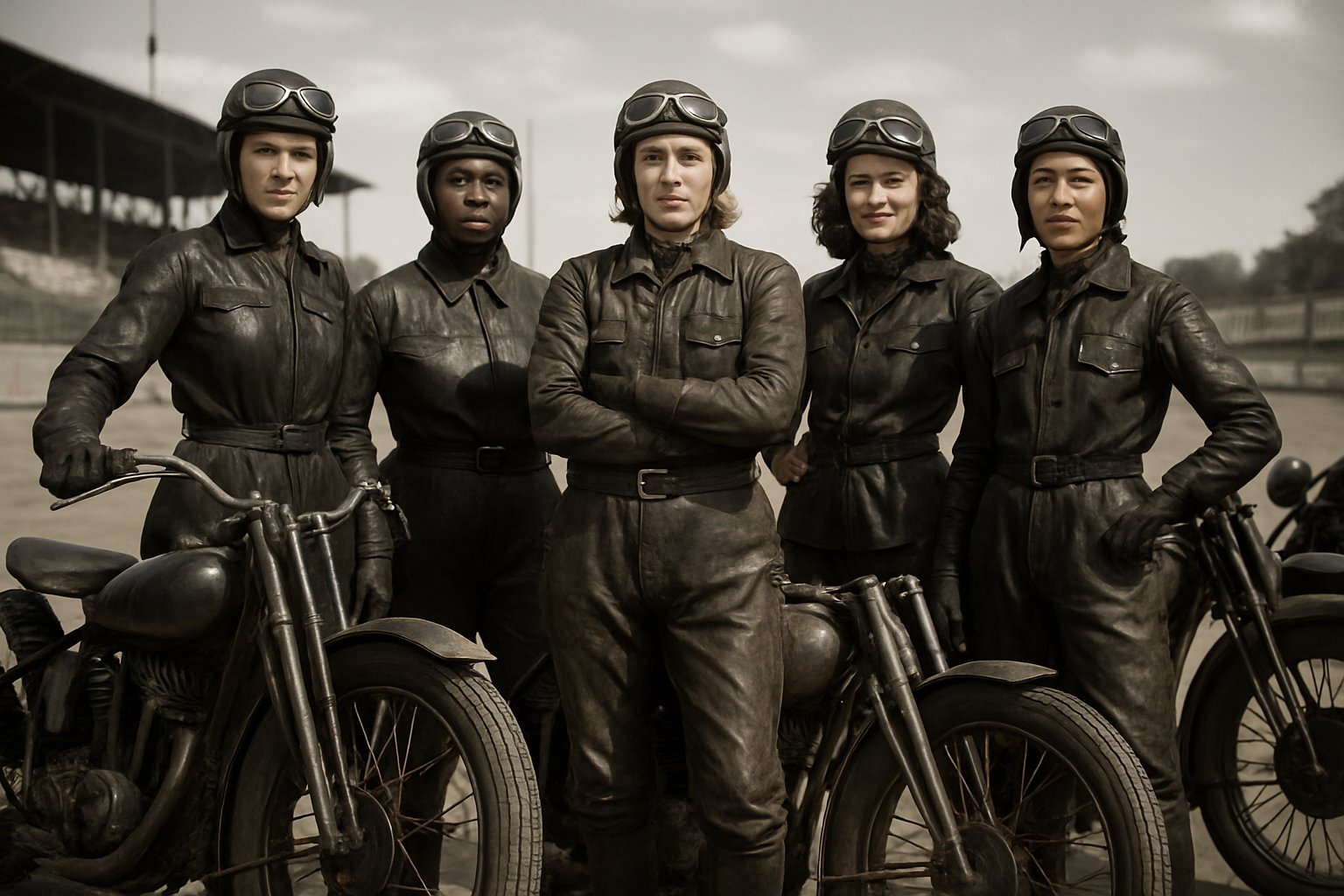
Women carved out their place in motorcycle racing from the sport’s earliest days, facing significant social and institutional resistance. African-American riders like Bessie Stringfield navigated both racial and gender discrimination while establishing themselves as skilled competitors and touring riders.
Dorothy “Dot” Robinson logged her first 100-mile endurance race win in 1930. She became the first woman to compete in Michigan’s 500-mile Jack Pine Motorcycle Run in 1936. Robinson later co-founded Motor Maids, the first women’s motorcycle group in America.
Bessie Stringfield became the first African-American woman to ride solo across the United States in 1930 at age 19. She traveled to all 48 lower states over the next decade despite facing racism and sexism. During World War II, she served as a dispatch rider for the U.S. military. The press later nicknamed her “The Motorcycle Queen of Miami.”
Vivian Bales appeared on the cover of The Harley Davidson Enthusiast in 1929. She then completed a 5,000-mile solo tour across 78 days, visiting major cities and meeting President Herbert Hoover at the White House.
Male-dominated motorcycle clubs and racing organizations actively tried to exclude women from competition throughout the 1930s and 1940s. Robinson faced organized attempts to keep her out of racing events.
Women riders wore military-style uniforms to demonstrate their capabilities and professionalism. The Van Buren sisters attempted to prove women could serve as military dispatch riders in 1916 by riding across America, though the military rejected their applications.
Female pioneers persevered through harsh conditions including extreme weather, poor road conditions, and mechanical failures. Their persistence gradually opened doors for future generations of women in motorcycle culture and racing.
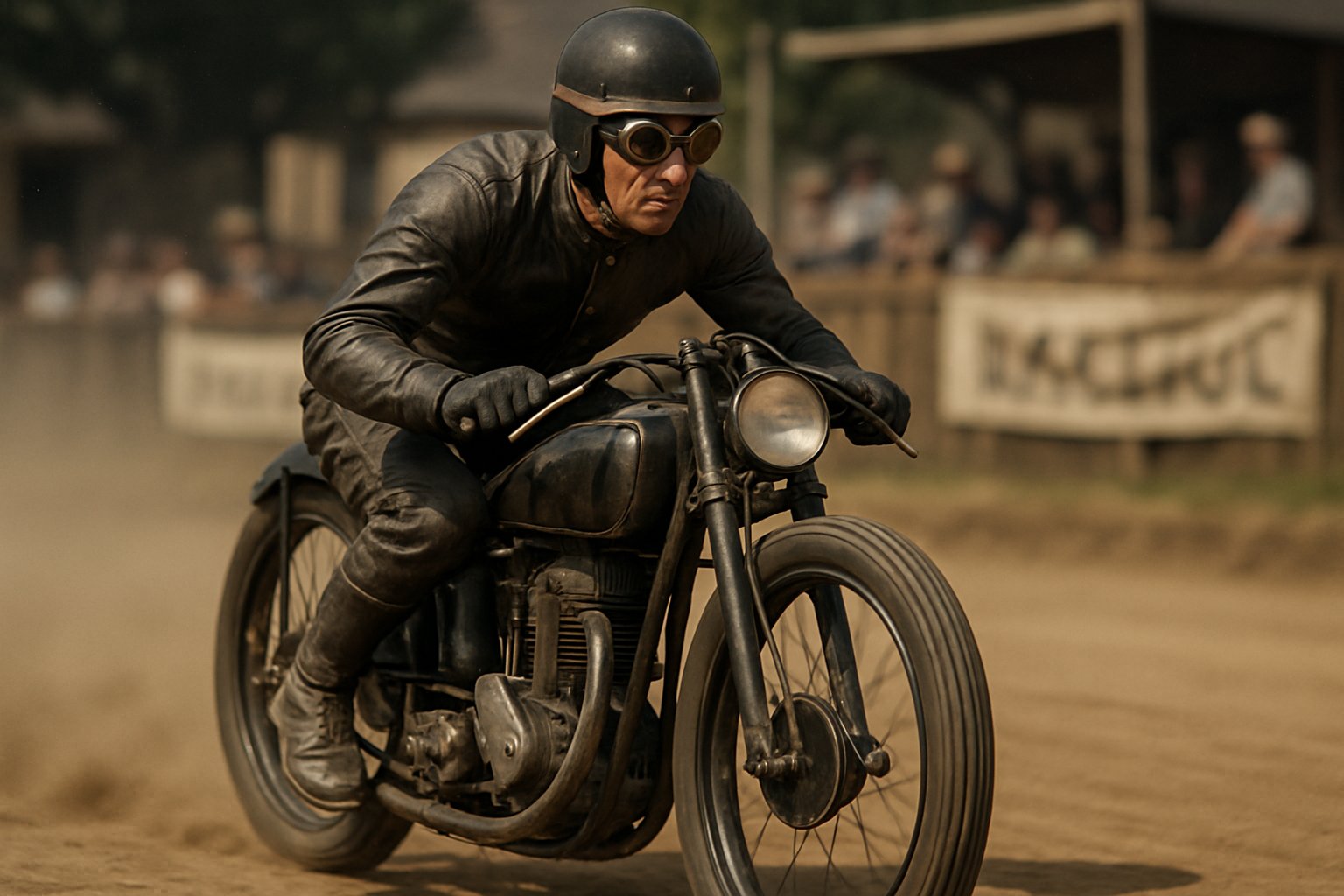
The early pioneers of motorcycle racing established foundations that continue to shape competitive racing today. Their innovations in machine development and racing techniques created standards that modern champions like Valentino Rossi would later build upon.
The early pioneers created the technical and competitive framework that modern motorcycle racing depends on. Riders like Giacomo Agostini and Mike Hailwood developed racing strategies and riding techniques that racing teams still study and apply. Their approach to machine setup and race craft became the blueprint for professional competition.
Modern MotoGP champions acknowledge this debt. Valentino Rossi, known as “The Doctor,” often referenced the groundwork laid by earlier generations. The Grand Prix racing format introduced in 1907 at the Isle of Man TT evolved into today’s MotoGP series. Racing teams at Honda, Ducati, and Yamaha use technology that traces back to innovations tested by these early competitors.
The pioneers proved that motorcycle racing required both mechanical knowledge and riding skill. This dual focus shaped how modern racing teams operate, with engineers and riders working together to push performance limits.
Early motorcycle racing pioneers transformed the sport from a hobby into a global phenomenon. Their courage and determination attracted public attention and established motorcycle racing as legitimate entertainment. These riders became cultural figures who inspired new generations to pursue racing careers.
The legacy extends beyond competition. Museums and racing events honor pioneers like Mike Hailwood and Giuseppe Farina. Their stories motivate current riders and remind fans of racing’s roots. The Isle of Man TT, where many pioneers competed, remains one of the most respected events in motorcycle racing.
Racing manufacturers use these historical connections in their marketing. The heritage built by early competitors gives credibility to modern brands and racing programs.
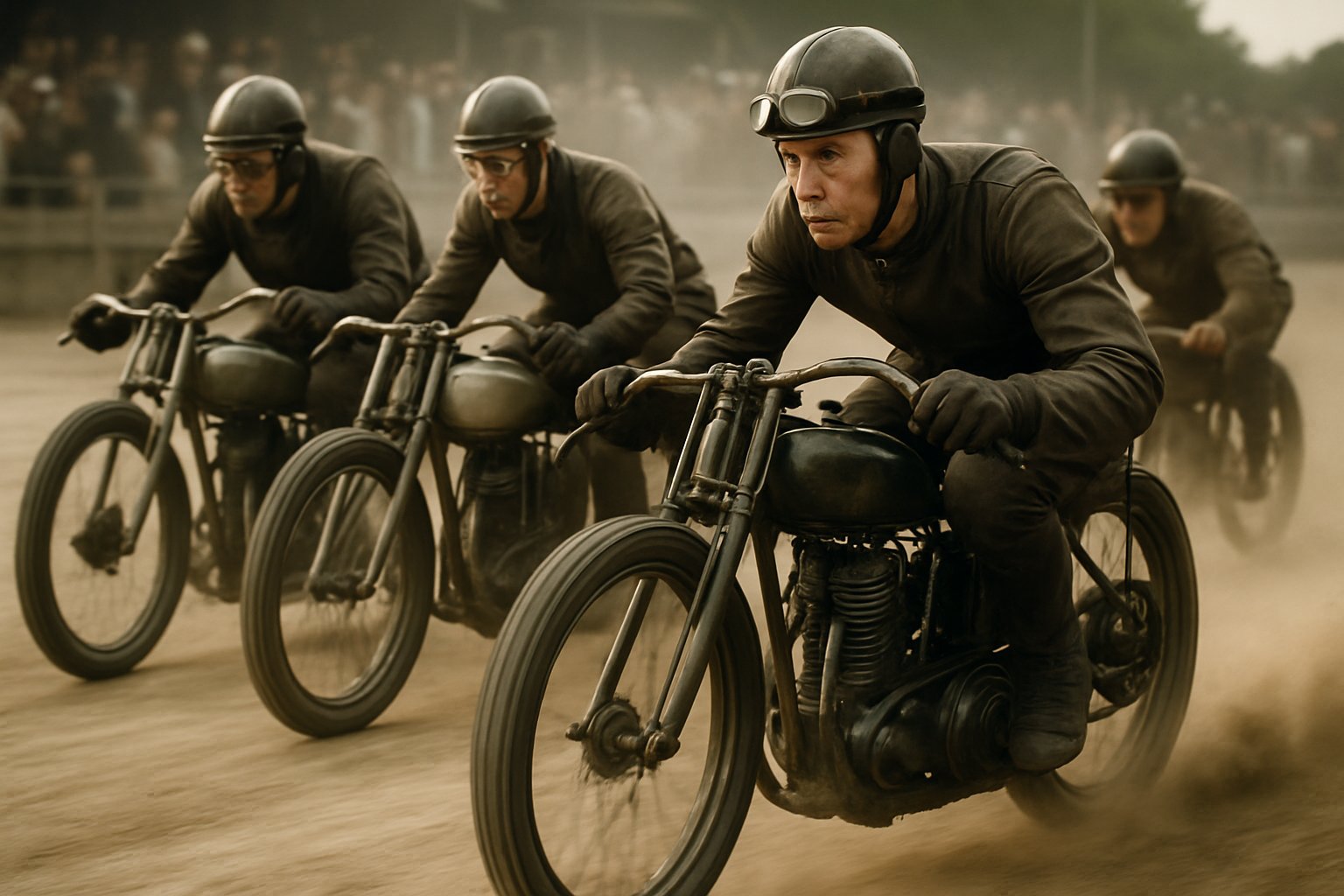
The early days of motorcycle racing saw pioneers like Ralph Hamlin, Glenn Curtiss, and Albert Champion pushing the limits of speed and engineering. These riders competed in the first organized events starting in 1900 and established records that shaped the sport’s foundation.
Ralph Hamlin stands among the first motorcycle racing pioneers. He won the first organized motorcycle race in the western United States in May 1901, riding an Orient motorcycle on a Los Angeles horse racing track.
Glenn Curtiss earned recognition as both an engineer and rider. He set multiple speed records between 1902 and 1907, including a remarkable 136.3 mph run in 1907 using a motorcycle powered by an experimental V-8 motor.
Albert Champion contributed to early motorcycle racing as a French rider brought to America by Charles Metz. He rode in the first officially recorded motorcycle speed contest in the United States on July 31, 1900, at the Charles River Race Park in Boston. Champion later founded the spark plug company that bears his name.
The first officially recorded motorcycle speed contest in the United States took place on July 31, 1900. Albert Champion rode a motor-driven Orient for 5 miles at the Charles River Race Park in Boston, completing the distance in just over 7 minutes.
The first organized motorcycle race in the western United States occurred in May 1901. Ralph Hamlin won the 10-mile contest on a 1-mile horse racing track in Los Angeles, completing the race in 18 and a half minutes on his Orient motorcycle.
The first road race in the United States happened in May 1902. The ten-mile competition ran between Irvington and Milburn, New Jersey, with an Orient motorcycle winning at an average speed of 31 mph.
Charles H. Metz played a foundational role in early motorcycle racing. As president of a Waltham, Massachusetts bicycle company, he began experiments with motorized vehicles in 1898.
Metz created a motorized tandem to pace his Orient bicycle racing team. His success led him to develop motor-driven bicycles powered by De Dion-Bouton engines from France. He showcased his invention at the first officially recorded motorcycle speed contest in 1900.
The industrialist left his company in spring 1902 to design and manufacture his own motorcycle. His Orient motorcycles dominated early American racing events.
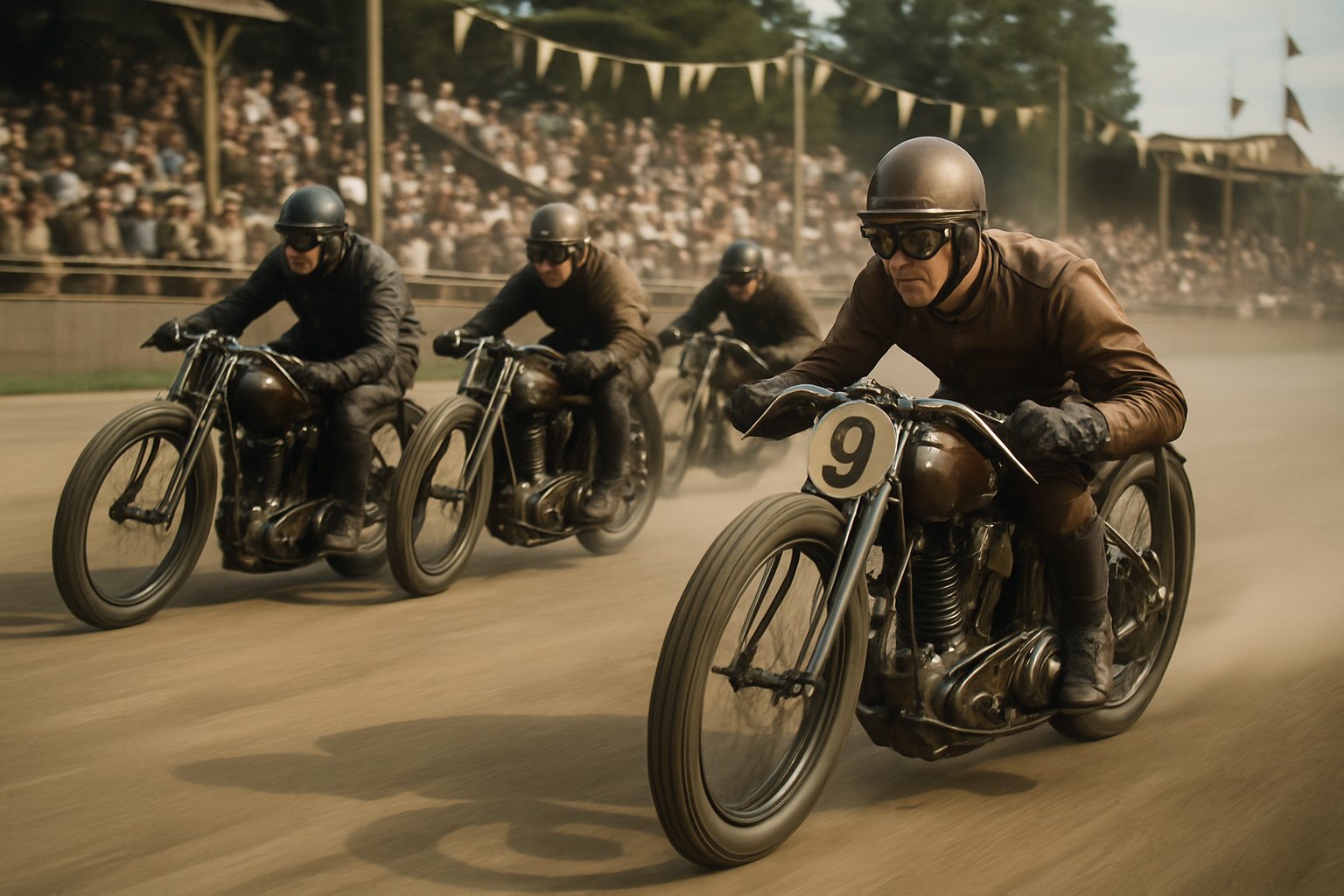
Early motorcycle racing took place on various surfaces including horse racing tracks, dirt roads, and hard-packed beach sand. Riders competed in the early 1900s on machines that combined bicycle frames with motors, often weighing significantly more than modern bicycles.
Safety equipment was minimal during the sport’s early years. Riders wore leather helmets, and protective gear was rarely used on the steeply banked wooden surfaces of board tracks that became popular in the early 20th century.
Technology advanced rapidly from single-cylinder engines to multi-cylinder designs. Glenn Curtiss progressed from setting records with single-cylinder machines in 1903 to riding a twin-cylinder motorcycle in 1905 and finally piloting a V-8-powered motorcycle in 1907.
Early racers pushed the boundaries of speed and engineering. Glenn Curtiss set multiple records that demonstrated the potential of motorcycle technology, including achieving speeds over 130 mph in 1907.
These pioneers tested innovations that manufacturers used to improve their products. Competition served as the proving ground where new designs and mechanical improvements were evaluated under extreme conditions.
The success of riders like Ralph Hamlin and Albert Champion helped establish motorcycles as legitimate vehicles. Their victories in organized races generated public interest and helped transform motorcycles from novelties into practical machines.
Glenn Curtiss emerged as the most record-breaking rider of the early era. He won the first American hillclimb in 1903 and set speed records on both dirt tracks and beach courses. His 136.3 mph run in January 1907 earned widespread acclaim in publications like Scientific American.
Ralph Hamlin demonstrated the reliability of Orient motorcycles through competitive success. His victory in the first western motorcycle race helped establish organized racing on the West Coast.
Albert Champion influenced the sport through both his riding and technical innovations. After competing in early races, he developed an improved spark plug that advanced motorcycle engine performance. His transition from racer to manufacturer showed how early competitors contributed to the industry beyond their racing careers.