How Japanese Motorcycles Conquered the World: Brands, History & Legacy
After World War II, Japan transformed from a war-torn nation into the world’s leading motorcycle manufacturer. The country’s…



British motorcycles reached their peak during the mid-20th century when manufacturers like Triumph, BSA, and Norton ruled the global market. These companies created machines that combined raw power with elegant engineering, earning respect from riders worldwide. British motorcycle history traces back to 1896, but the golden age truly began after World War II.
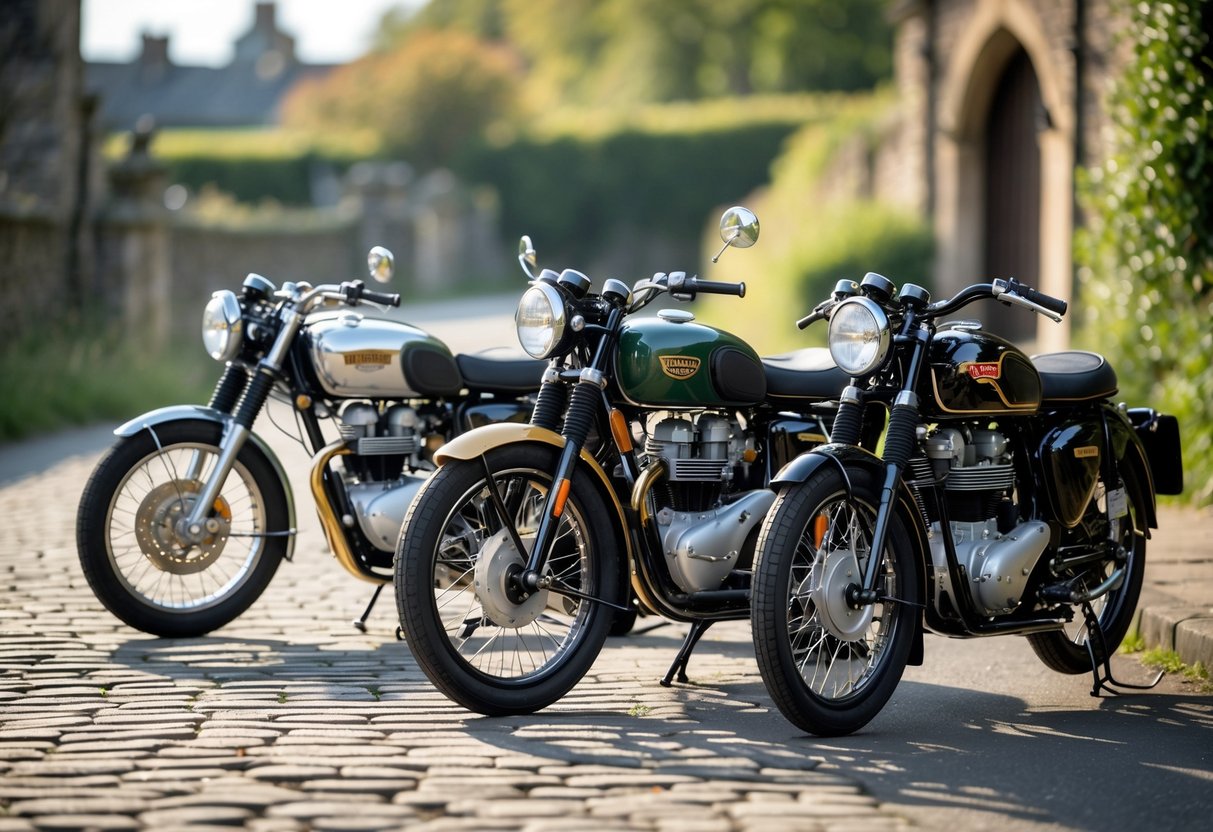
During this era, British manufacturers such as BSA, Triumph, and Norton dominated the global motorcycle market, creating iconic models that emphasized both performance and style. The success of British motorcycles on racing circuits directly influenced their street bikes, as manufacturers developed road machines with racing DNA. Models like the Triumph Bonneville, Norton Commando, and BSA Gold Star became legends that riders still seek today.
The dominance ended when Japanese manufacturers introduced multi-cylinder bikes with modern features like electric start and disc brakes. The last mainstream British bikes appeared in 1975 from the combined Norton-Villiers-Triumph-BSA company. However, these classic British motorcycles left a lasting mark on riding culture that continues to influence motorcycle design and enthusiast passion decades later.
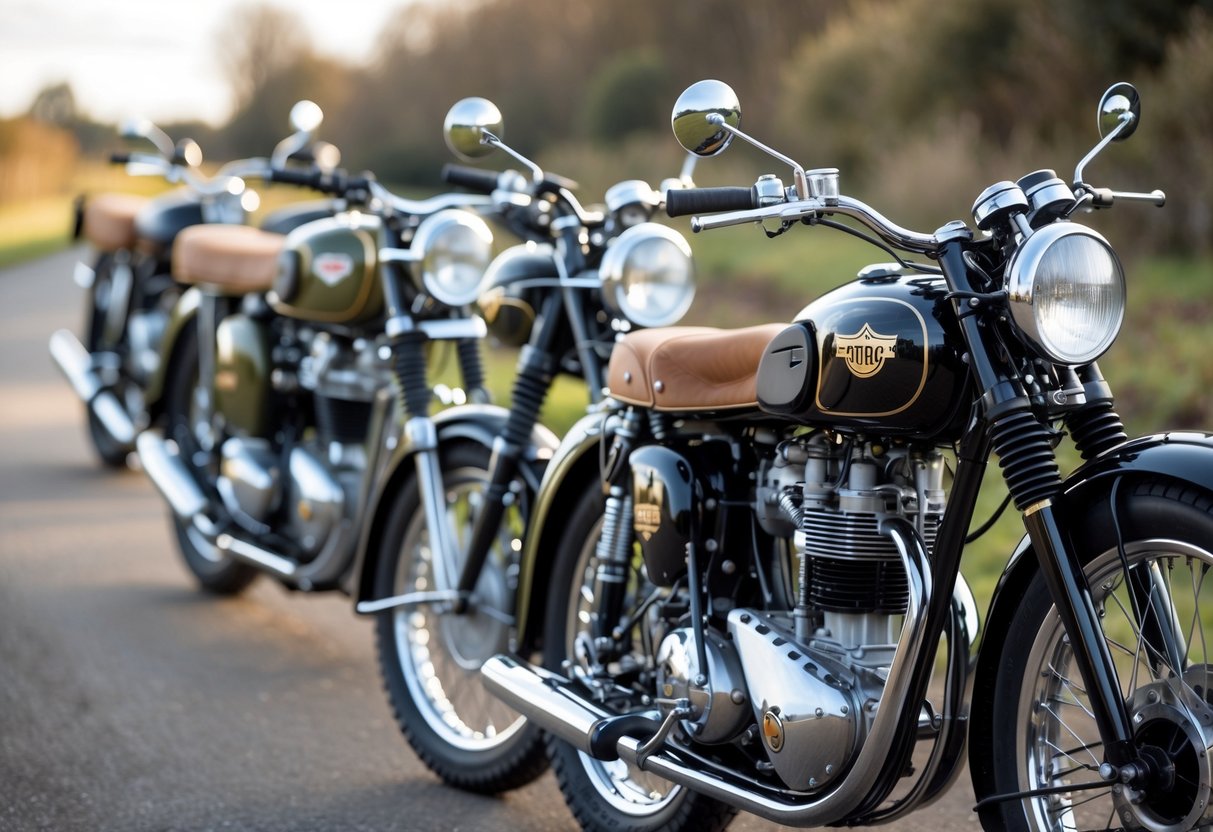
The golden age of British motorcycling spanned roughly from the 1940s through the 1960s, when manufacturers like Triumph, BSA, and Norton dominated global markets. This period marked Britain’s peak influence in motorcycle design, racing success, and cultural impact before decline set in during the 1970s.
The golden age represents the period when British motorcycle manufacturers achieved their greatest commercial success and technical innovation. The golden age of British motorcycles saw engineering meet entertainment as manufacturers developed road bikes with racing DNA.
Key characteristics of this era included superior engineering, distinctive styling, and racing dominance. British bikes featured advanced parallel-twin engines, innovative suspension systems, and lightweight frames.
The “Big Three” manufacturers – Norton, Triumph, and BSA – led global motorcycle production. These companies exported bikes worldwide and set industry standards for performance and reliability.
British motorcycles dominated international racing circuits. The Isle of Man TT races became synonymous with British engineering excellence, with Norton’s Manx racers achieving legendary status.
The golden age timeline spans approximately 25 years of British motorcycle supremacy.
1940s-1950s Period:
Peak Years (1950s-1960s):
British motorcycles of the 1940s and 50s represents this golden period when British bikes ruled roads and tracks globally.
The 1960s marked both the height and beginning of decline. Japanese manufacturers like Honda entered markets with reliable, affordable alternatives.
By 1970, British market share had dropped significantly as quality control issues and outdated manufacturing methods became apparent.
British motorcycles shaped global motorcycle culture and provided significant economic benefits to the UK.
Economic Impact:
Cultural Influence:
British bikes became symbols of freedom and rebellion. Movies, music, and fashion embraced the motorcycle lifestyle that British manufacturers had created.
The classic era of British motorcycles influenced design trends that continue today. The distinctive sound, styling, and performance characteristics became benchmarks for motorcycle enthusiasts.
Racing success elevated British motorcycles to legendary status. Victory at prestigious events like the Isle of Man TT and Grand Prix races reinforced British engineering superiority worldwide.
The cultural impact extended beyond transportation. British motorcycles represented craftsmanship, performance, and national pride during Britain’s post-war recovery period.
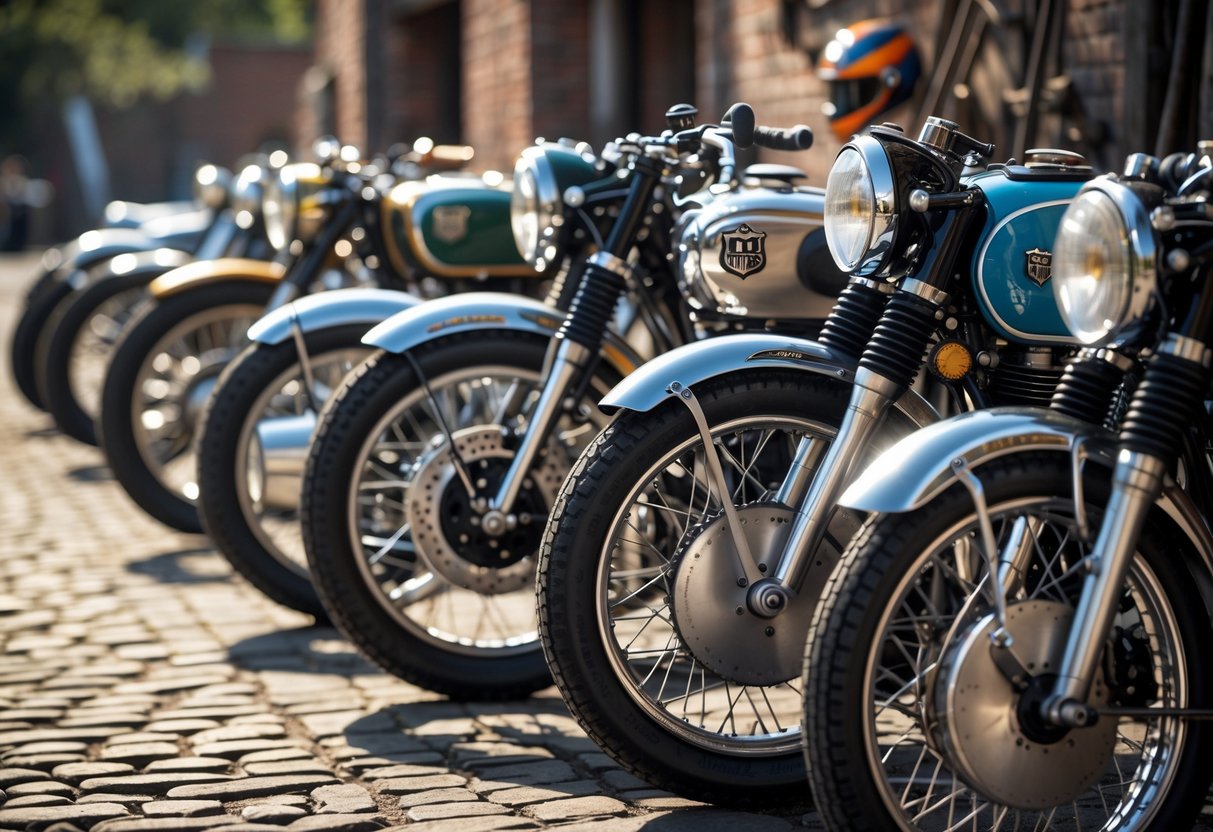
Triumph built its reputation on revolutionary parallel-twin engines, iconic models like the Bonneville, and racing victories at Daytona. The company’s cultural impact reached beyond motorcycles through Hollywood films and celebrity riders.
The Speed Twin launched in 1938 revolutionized motorcycle design with its 500cc parallel-twin engine. This engine layout became the foundation for British motorcycle engineering for decades.

Key Technical Innovations:
The Bonneville T120 arrived in 1959 with a 650cc engine producing 46 horsepower. It could reach 115 mph, making it one of the fastest production motorcycles of its era.

Triumph introduced the Trident in 1968 as Britain’s answer to Honda’s CB750. The 750cc three-cylinder engine produced 58 horsepower and featured electric starting.

The Tiger 90 from 1937 showcased Triumph’s ability to blend performance with reliability. Its 500cc single-cylinder engine became the standard for sporting motorcycles.

Edward Turner joined Triumph in 1936 and designed the Speed Twin that transformed the company. His engineering philosophy focused on simplicity and reliability over complexity.
Turner created the distinctive Triumph styling that included the teardrop fuel tank and chrome accents. These design elements became synonymous with British motorcycles.
Siegfried Bettmann founded the original company in 1885 with his business partner. The company started as a bicycle manufacturer before moving to motorcycles in 1902.
Doug Hele engineered Triumph’s racing engines in the 1960s and 1970s. His work on the Bonneville racing variants led to multiple championship victories.
Notable Engineering Leaders:
Triumph dominated American flat track racing in the 1960s with the Bonneville-based racing machines. The bikes won the Daytona 200 multiple times between 1966 and 1969.
Gary Nixon rode Triumph motorcycles to two AMA Grand National Championships in 1967 and 1968. His success helped establish Triumph’s racing reputation in America.
The company achieved success at the Isle of Man TT races with multiple victories in various classes. These wins demonstrated the reliability of Triumph engines under extreme conditions.
Major Racing Victories:
Triumph’s racing success directly influenced production motorcycle development. Racing innovations like improved valve systems and stronger transmissions appeared in street bikes.
The Bonneville became a Hollywood icon when Marlon Brando rode one in “The Wild One” (1953). This film established the motorcycle as a symbol of rebellion and freedom.
Steve McQueen famously rode a Triumph TR6 Trophy in “The Great Escape” (1963) chase scene. The motorcycle’s performance in the film boosted Triumph’s popularity worldwide.
Celebrity Triumph Riders:
The distinctive sound of Triumph engines became part of motorcycle culture. The parallel-twin’s characteristic beat influenced music and popular culture references.
Triumph motorcycles appeared in countless films and television shows throughout the 1960s and 1970s. This exposure helped establish the brand as representing authentic British motorcycling heritage.
The company’s influence extended to fashion and lifestyle. Leather jackets, boots, and the “cafe racer” style became associated with Triumph ownership and British motorcycle culture.
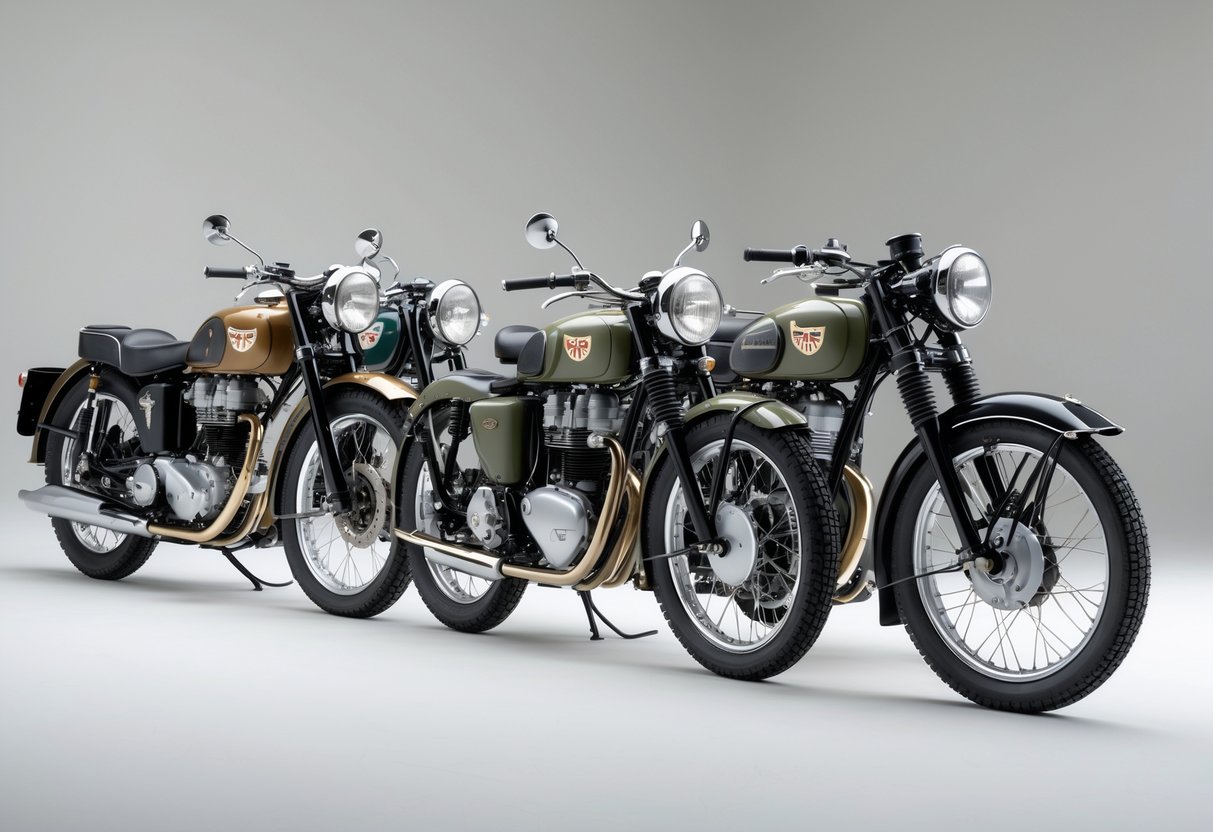
BSA transformed from a gun manufacturer in 1861 to Britain’s largest motorcycle producer by the 1950s. The company built reliable military bikes during both world wars before creating legendary civilian models like the Gold Star and Bantam that dominated British roads.
The Birmingham Small Arms Company started as a gun manufacturer in 1861, founded by gunsmiths who quickly expanded their operations. By 1880, they had become Europe’s largest arms manufacturer.
BSA entered the motorcycle market in 1910 with their first complete machine, the 3½ HP model. This bike was displayed at the 1910 Olympia Show in London and proved immediately popular.
The entire BSA production sold out in 1911, 1912, and 1913. This early success convinced company leaders that motorcycles represented a profitable venture beyond their traditional firearms business.
Key Early Models:


In 1919, BSA created a dedicated motorcycle subsidiary called BSA Cycles Ltd. The Small Heath factory in Birmingham was converted entirely to motorcycle production to meet growing demand.
BSA built motorcycles that became legends among British riders. The company focused on reliable, affordable machines that offered good performance for everyday users.
The Gold Star became BSA’s most famous model. This single-cylinder machine earned its reputation on racetracks and country roads alike. It featured excellent handling and strong performance that attracted both racers and enthusiasts.
The Bantam series represented BSA’s entry-level offerings. These lightweight motorcycles used a German DKW design obtained as war reparations. The Bantam became popular with new riders and fleet buyers.
Popular BSA Models:
| Model | Engine Size | Key Features |
|---|---|---|
| Gold Star | 500cc | Racing heritage, single cylinder |
| Bantam | 125-175cc | Lightweight, beginner-friendly |
| A10 Golden Flash | 650cc | Twin cylinder, touring capability |
| Rocket 3 | 750cc | Three-cylinder performance |


BSA’s A-series twins included the A7 Shooting Star and A10 models. These parallel-twin engines provided smooth power delivery and became the backbone of BSA’s lineup through the 1950s and 1960s.
Fleet buyers across Britain chose BSA motorcycles for commercial use. The Post Office used Bantams for telegram delivery, while the AA employed BSA combinations for roadside assistance patrols.
BSA played a crucial role in Britain’s war effort by producing thousands of military motorcycles. The company’s experience with firearms manufacturing translated well to building rugged military machines.
The M20 became the standard British Army motorcycle during World War II. This 500cc side-valve machine proved incredibly reliable under harsh conditions. Its simple design made field repairs easier for military mechanics.

BSA also produced the M21, a 600cc version of the M20 design. Both models featured robust construction that could handle rough terrain and heavy loads.

Military Production Numbers:
The war years established BSA’s reputation for building dependable motorcycles. Military riders appreciated the bikes’ durability and ease of maintenance in combat conditions.
After 1945, BSA capitalized on surging demand for affordable transportation as soldiers returned home and young people sought mobility. The company adapted military designs for civilian use.
BSA marketed their motorcycles as reliable transport for working people. Their advertising claimed “one in four is a BSA,” highlighting the brand’s mass market appeal during Britain’s economic recovery.
The 1950s marked BSA’s peak years. At its height, BSA became the world’s largest motorcycle producer, including their ownership of Triumph from 1951.
Export Success:
However, Japanese competition began eroding BSA’s market share by the mid-1960s. Companies like Honda offered more reliable, modern designs with electric starting and better build quality.
Poor management decisions and failure to innovate led to BSA’s decline. The company merged with Norton-Villiers in 1972, but the last BSA motorcycle rolled off the production line in 1973.
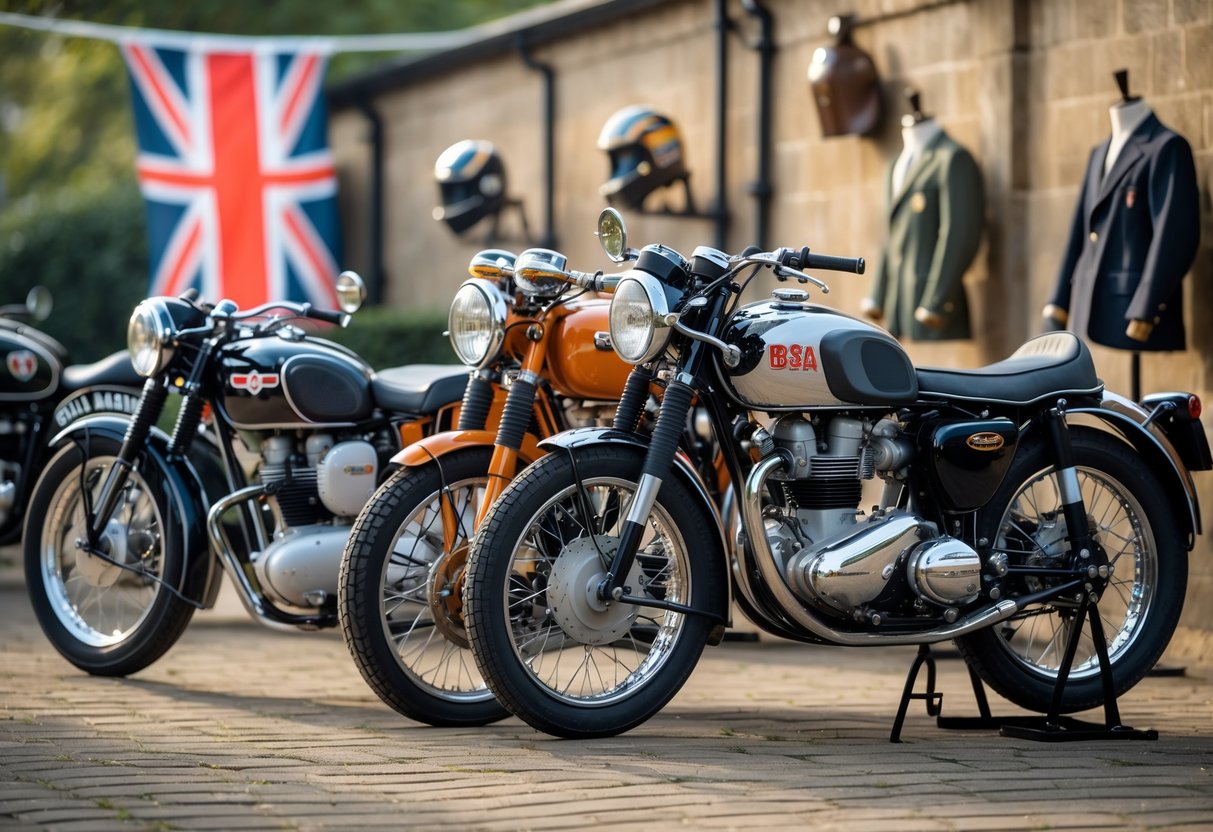
Norton established its racing dominance through the work of development engineer Joe Craig from 1930-1955, winning over 70 Grand Prix races and 10 European Championships. The company’s focused approach to single-cylinder engine development and innovative engineering created legendary models like the Manx and Commando.
Norton’s racing success began early with the first Isle of Man TT victory in 1907. This achievement marked the start of decades of racing excellence.
Joe Craig transformed Norton’s competitive fortunes after 1930. As development engineer and team manager, he guided Norton through its most successful period until 1955.
Between 1930-1938, Norton achieved remarkable success. The company won more than 70 Grand Prix races and 10 European Championships during this golden age.
Norton’s racing approach differed from competitors. While other manufacturers explored multi-cylinder and supercharged engines, Norton focused on reliability and handling with single-cylinder designs.
Key Racing Achievements:
Craig’s talent for spotting riders and tactical expertise earned Norton a reputation for being “unapproachable” on the track.
The CS1 marked Norton’s entry into overhead camshaft racing in 1928. Walter Moore designed this early OHC racer that established Norton’s technical direction.
The Norton International became one of the most successful racing machines of the 1930s. This model formed the backbone of Norton’s Grand Prix campaign during their golden age.
The Manx represented Norton’s ultimate racing development. Joe Craig continuously refined this single-cylinder design through 1955, creating the Type F outside-flywheel version as his final project.
Norton Commando defined Norton’s street presence. This classic model offered a perfect blend of power, style, and handling with its parallel-twin engine and innovative Isolastic frame.
The Commando’s Isolastic system isolated the engine vibration from the frame. This breakthrough made the powerful parallel-twin much more comfortable for riders.
Norton produced catalogued racers after 1955. Models like the production Manx allowed privateer racers to buy competitive Norton machinery directly from the factory.
Norton’s engine development centered on Arthur Carroll’s design improvements to Walter Moore’s original concept. Carroll and Joe Craig worked together starting in 1930 to address the limitations of Moore’s engine.
The Manx engine underwent continuous refinement over 25 years. Craig’s methodical approach produced incremental improvements that kept the single-cylinder design competitive against multi-cylinder rivals.
Norton’s focus on handling and reliability set them apart from speed-focused competitors. While Gilera fours and BMW twins achieved higher top speeds, Norton machines excelled in long-distance and road racing events.
Key Technical Features:
The company’s engineering philosophy emphasized proven concepts over experimental technology. This conservative approach delivered consistent racing results when other manufacturers struggled with complex designs.
Norton’s development timeline spanned decades with the same basic architecture. Few manufacturers matched this sustained focus on perfecting a single engine design.
Norton’s impact on racing was outsize compared to larger manufacturers like Triumph, BSA, BMW, and DKW. The small Birmingham company achieved global recognition through racing success.
European Grand Prix circuits showcased Norton’s capabilities throughout the 1930s. The International and Manx models became synonymous with British racing excellence across continental Europe.
Norton faced challenges on high-speed circuits like Monza. The single-cylinder engines were 20mph slower than supercharged competitors, limiting success at pure speed venues.
Global Racing Presence:
The company’s reputation attracted top international riders. Stars like Stanley Woods helped establish Norton as a premier racing brand worldwide.
Norton’s engineering influence extended beyond racing. Street motorcycles from competitors adopted handling and reliability lessons learned from Norton’s track success.
British manufacturers like BSA and Triumph developed road bikes with racing DNA, following Norton’s example of transferring competition technology to production models.
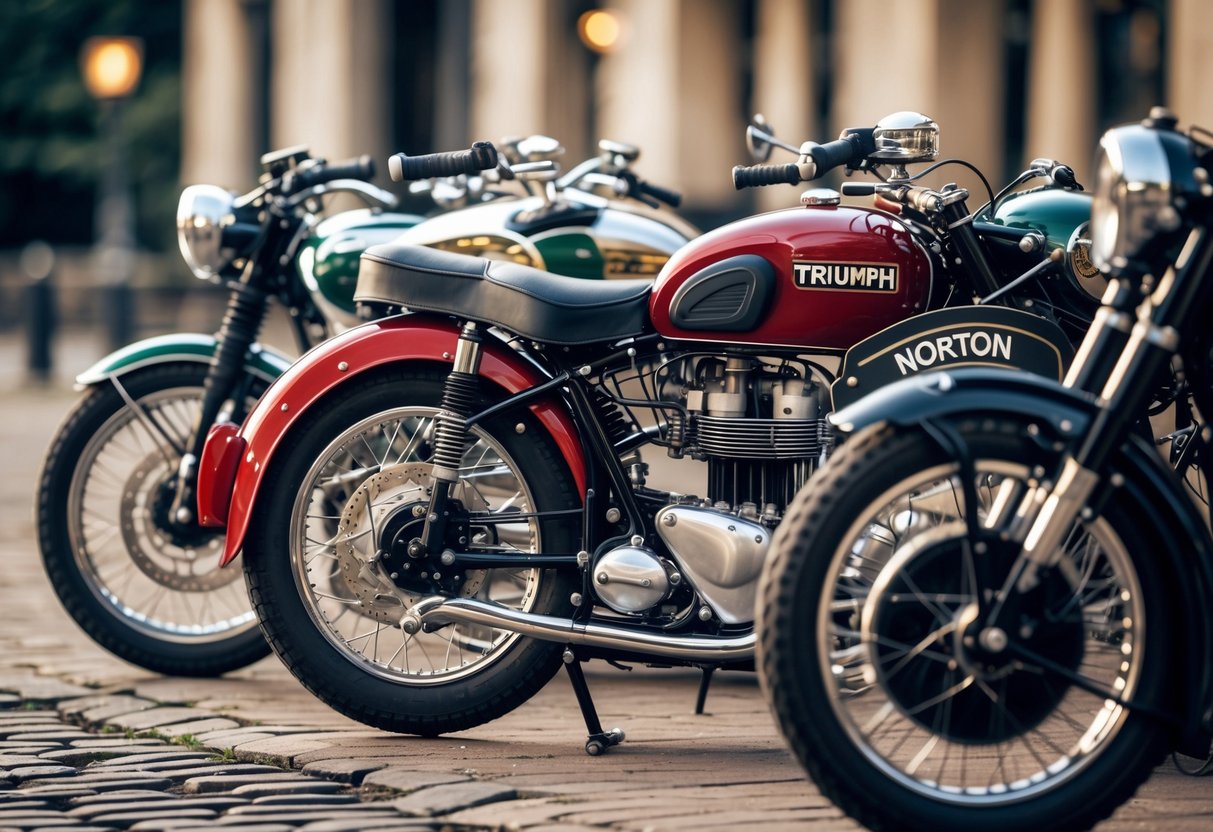
British motorcycles from the golden era combined bold visual design with practical engineering solutions. These machines featured unique styling elements, groundbreaking technical advances, and performance standards that set them apart from competitors worldwide.
Classic British motorcycles developed recognizable visual signatures that became industry standards. The teardrop fuel tank shape appeared across most British brands, creating an elegant profile that balanced form and function.
Chrome-plated components dominated the aesthetic approach. Manufacturers used extensive chrome finishing on exhaust pipes, engine cases, and trim pieces. This created a premium appearance that distinguished British bikes from utilitarian alternatives.
Paint schemes typically featured solid colors with contrasting pinstripes or graphics. Black, red, and British Racing Green became signature colors. Tank badges and company logos used distinctive fonts and heraldic designs.
The riding position emphasized comfort and control. Handlebars positioned riders upright rather than in aggressive racing positions. Seat designs prioritized long-distance comfort with thick padding and proper ergonomics.
Wire-spoke wheels with chrome rims remained standard equipment. These wheels provided both visual appeal and practical benefits like easier tire changes and maintenance access.
British manufacturers pioneered several key technical innovations during the golden age. Parallel-twin engines became the defining powerplant configuration, offering smooth power delivery and manageable maintenance requirements.
The unit construction design integrated the engine and transmission into a single unit. This approach reduced weight, improved rigidity, and simplified manufacturing processes. BSA and Triumph widely adopted this engineering solution.
Electrical systems saw significant improvements with Lucas components becoming industry standard. The Lucas Magdyno system combined magneto ignition with dynamo charging in a compact unit.
Suspension technology advanced with telescopic front forks replacing older girder designs. Rear suspension systems evolved from rigid frames to swinging-arm configurations with twin shock absorbers.
Braking systems improved through larger drum designs and better lining materials. Front drums grew from 6-inch to 8-inch diameters, providing increased stopping power for heavier, faster motorcycles.
British motorcycle manufacturers established performance benchmarks that defined the era. The Norton Commando delivered 60 horsepower from its 750cc engine, setting power standards for the early 1970s.
Reliability varied significantly between models and years. Early production runs often suffered from quality control issues, while later versions incorporated improvements based on field experience.
Service intervals typically required attention every 1,000 to 2,000 miles. Oil changes occurred every 1,000 miles, with valve adjustments needed every 5,000 miles. This maintenance schedule exceeded modern standards but was acceptable for the period.
Top speed capabilities ranged from 90 mph for smaller displacement models to over 115 mph for flagship machines. The Triumph Bonneville achieved 105 mph in standard trim, making it competitive with international rivals.
Fuel economy averaged 45-55 miles per gallon under normal riding conditions. This efficiency helped offset the performance focus and made daily transportation practical for many riders.
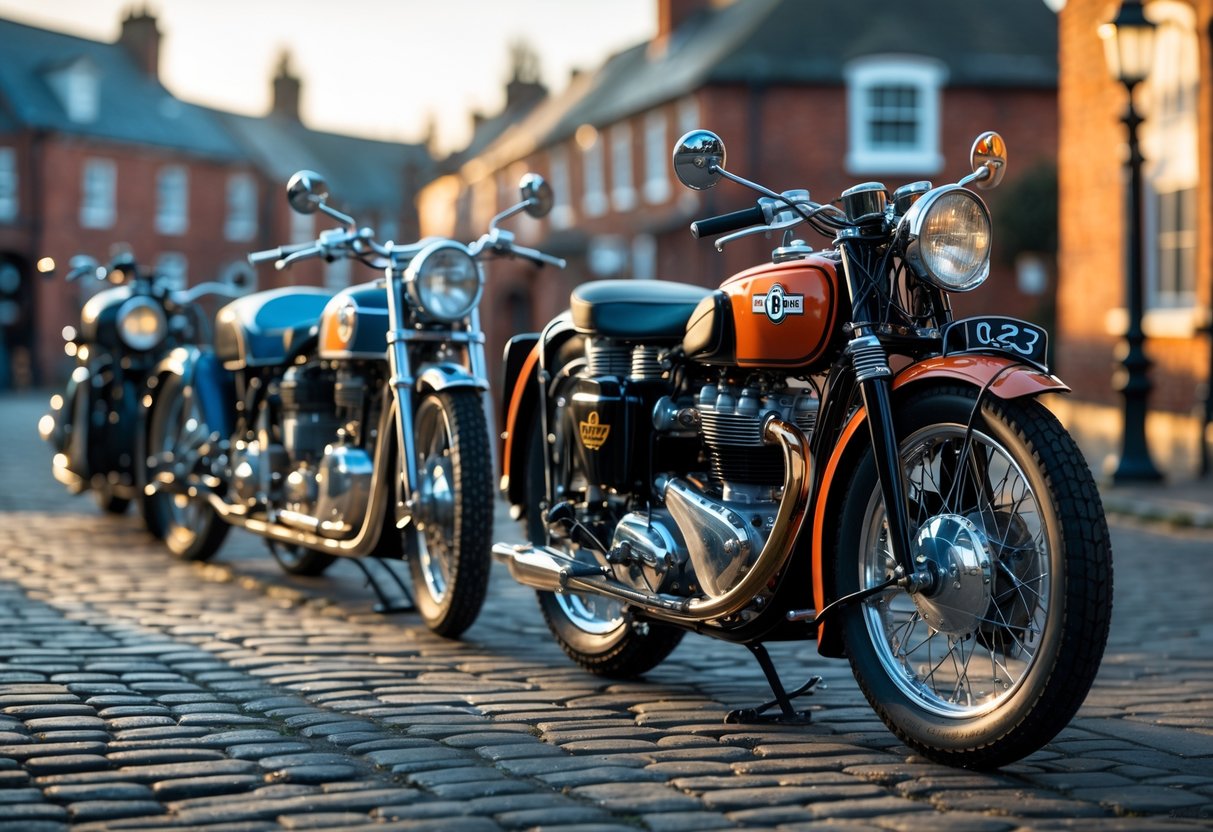
British motorcycles from Triumph, BSA, and Norton created design standards that shaped the global motorcycle industry for decades. These machines became highly sought-after collector’s items and continue influencing popular culture worldwide.
British manufacturers pioneered several key technologies that became industry standards. BSA, Triumph, and Norton introduced the first overhead valve engines in the early 1900s. They also developed telescopic front forks, which improved handling significantly.
The parallel-twin engine layout became a global standard after Triumph’s success. This design influenced manufacturers in Japan, Italy, and Germany. Modern bikes still use variations of these British innovations.
British styling elements spread worldwide too. The classic “naked bike” look originated with Norton and BSA models. Chrome fuel tanks, exposed engines, and upright riding positions became universal design themes.
Key British Innovations:
Japanese manufacturers studied British designs closely in the 1960s. Honda, Yamaha, and Kawasaki adopted many British engineering concepts. They improved reliability while keeping the core design principles.
British vintage motorcycles are sought-after collector’s items due to their unique designs and historical significance. Triumph Bonnevilles, Norton Commandos, and BSA Gold Stars command high prices at auctions.
Restoration has become a thriving industry. Specialized shops focus entirely on British bike rebuilds. Original parts are extremely valuable, with some engine components selling for thousands of dollars.
Most Collectible Models:


The restoration community shares knowledge through clubs and online forums. Many owners restore bikes to original specifications using period-correct parts. Others modify them with modern components while keeping the classic look.
Values continue rising for well-maintained examples. A restored 1969 Triumph Bonneville can sell for $15,000 or more. Rare models like the Vincent Black Shadow reach six-figure prices.
British bikes maintain strong cultural influence through films, television, and literature. The Triumph Bonneville appeared in countless movies since the 1960s. Steve McQueen’s chase scene in “The Great Escape” featured a Triumph disguised as a German bike.
Modern Triumph has capitalized on this heritage successfully. The British motorcycle industry experienced rebirth when Triumph was resurrected in the 1990s. New models blend classic styling with modern technology.
Television shows regularly feature British motorcycles as symbols of rebellion and freedom. The distinctive sound of a Norton Commando or BSA twin remains instantly recognizable to motorcycle enthusiasts.
Cultural Appearances:
Motorcycle clubs dedicated to British bikes exist worldwide. The BSA Owners Club and Norton Owners Club have chapters across multiple continents. These groups preserve the riding culture and mechanical knowledge associated with classic British motorcycles.
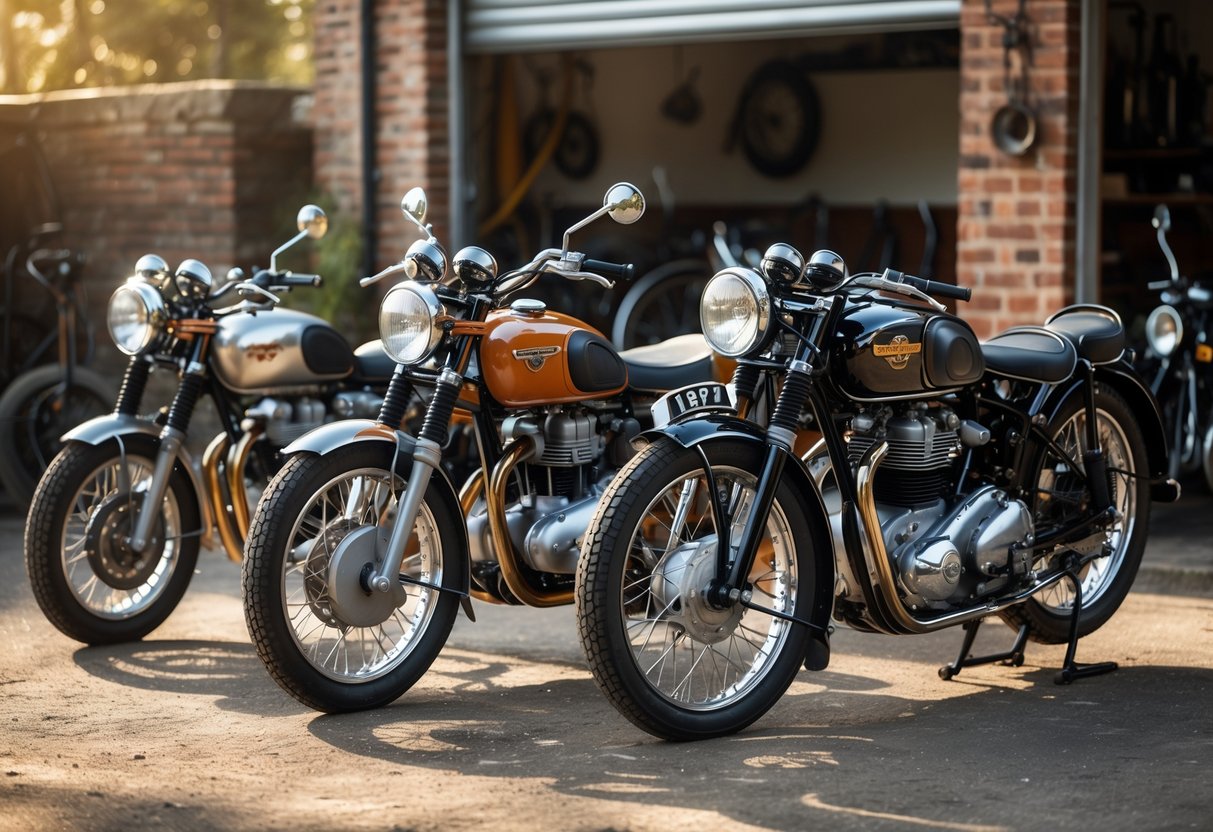
British motorcycle manufacturers introduced key innovations like telescopic forks and alloy materials during the 1920s and 1930s. These companies shaped global motorcycle culture through racing success and distinctive engineering approaches.
The golden age of British motorcycles saw major innovations during the 1920s and 1930s. Manufacturers introduced telescopic forks, which improved handling and rider comfort compared to older suspension systems.
British engineers pioneered the use of alloy materials in motorcycle construction. This reduced weight while maintaining strength and durability.
Norton developed advanced engine designs with improved valve timing systems. BSA created reliable transmission designs that became industry standards.
Triumph engineers focused on parallel-twin engine configurations. These designs provided smooth power delivery and distinctive sound characteristics.
British motorcycle brands like Triumph, Norton, and BSA set performance standards that influenced manufacturers worldwide. Their engineering excellence became the benchmark for quality and craftsmanship.
These motorcycles gained popularity in café racer culture during the 1950s and 1960s. Young riders modified British bikes for speed and style, creating a lasting cultural movement.
British vintage motorcycles became sought-after collector items due to their unique designs and historical significance. This collector interest spread globally and continues today.
The distinctive sounds of these engines became iconic. The Norton Commando’s roar and Triumph Bonneville’s thump created recognizable audio signatures that defined motorcycling culture.
Britain’s strong industrial base provided the foundation for motorcycle manufacturing growth. The country had established metalworking skills and engineering expertise from other industries.
Post-World War I demand for affordable transportation boosted motorcycle sales. Many people needed economical alternatives to expensive automobiles.
Access to raw materials and established supply chains gave British manufacturers advantages. Steel and other materials were readily available from domestic sources.
Government policies supported industrial growth and exports. This helped British motorcycle companies expand into international markets during their peak years.
Rivalry between these manufacturers pushed each company to innovate constantly. Norton focused on racing technology that improved street bike performance.
BSA emphasized reliability and practical features for everyday riders. This forced competitors to match their quality standards and durability.
Triumph developed distinctive styling that set trends in motorcycle design. Other manufacturers had to create equally appealing visual designs to compete.
Competition drove engineers like Val Page, Edward Turner, and Bert Hopwood to develop new technologies. These innovations included improved engine designs and better electrical systems.
The Triumph Bonneville and Norton Commando represent classic British motorcycling. These models combined engineering excellence with distinctive design elements.
The BSA Gold Star gained legendary status for its performance capabilities. Racing success made this model highly desirable among enthusiasts.
The BSA Gold Star and Triumph Bonneville became synonymous with quality and performance. Their names represent the best of British motorcycle engineering.
These models featured distinctive sounds and handling characteristics. The Norton Commando’s powerful engine and Triumph’s parallel-twin design created unique riding experiences.
Japanese manufacturers introduced more reliable motorcycles with better electrical systems. Triumph motorcycles were known for oil leaks, vibrations, and electronic problems during the 1950s and 1960s.
Japanese companies offered better value for money with improved quality control. Honda, Yamaha, and Suzuki produced motorcycles that required less maintenance.
British manufacturers struggled with outdated production methods. They failed to modernize manufacturing processes quickly enough to compete effectively.
Economic challenges in Britain affected investment in research and development. Limited resources prevented necessary improvements to designs and manufacturing techniques.
Consumer preferences shifted toward reliability over character. Many riders chose dependable Japanese motorcycles over traditional British machines.