The Golden Age of British Motorcycles: Triumph, BSA, Norton Explored
British motorcycles reached their peak during the mid-20th century when manufacturers like Triumph, BSA, and Norton ruled the global market.…



Indian Motorcycle Company was founded in 1901 by George M. Hendee and Carl Oscar Hedström in Springfield, Massachusetts, making it America’s first motorcycle company. Originally called the Hendee Manufacturing Company, the business started when these two men saw the potential to combine a motor with a bicycle frame to create a new form of transportation.
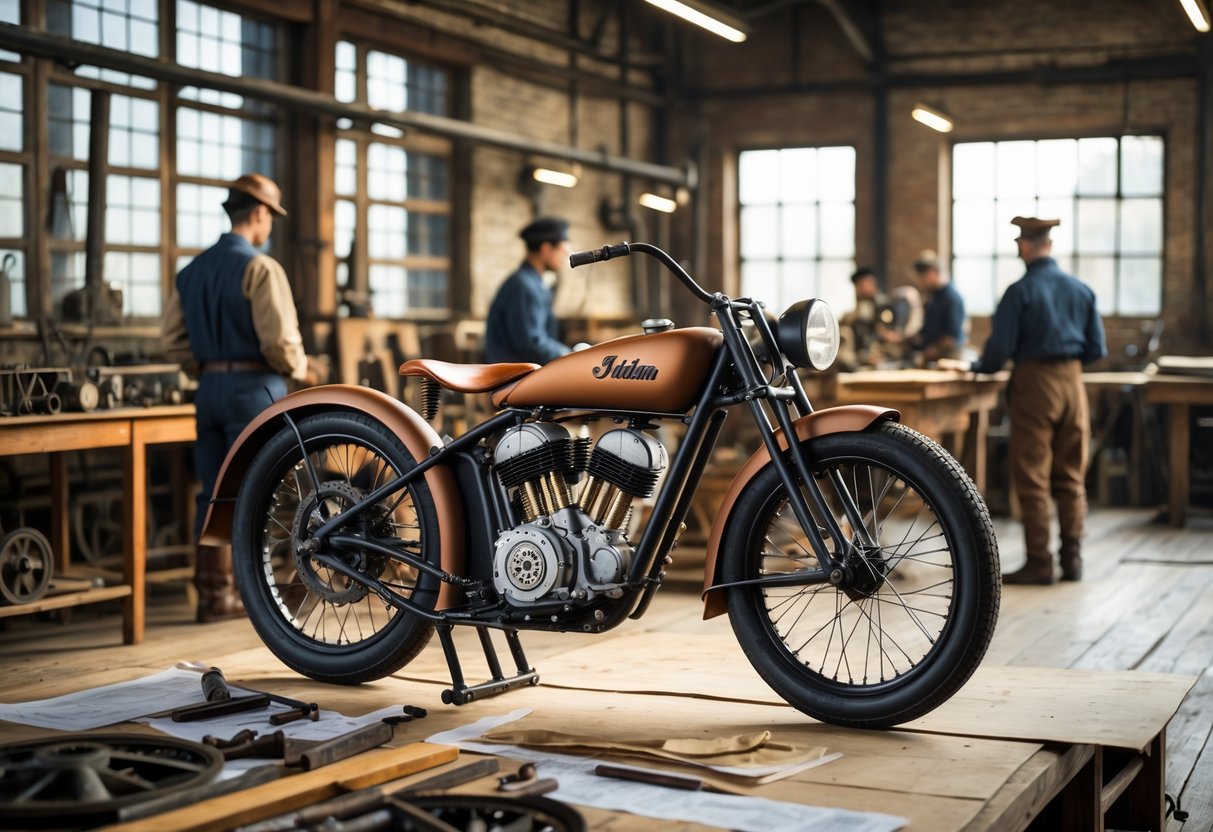
The company’s impact was immediate and impressive. Just two years after its founding, Hedström set a world speed record of 56 mph with an Indian motorcycle. This early success in performance helped establish the brand’s reputation for quality and innovation in the growing motorcycle industry.
The story of Indian Motorcycle begins with two visionary men who recognized an opportunity in the early 1900s. Their partnership would create a legendary American brand that influenced motorcycle design, racing, and culture for decades to come.
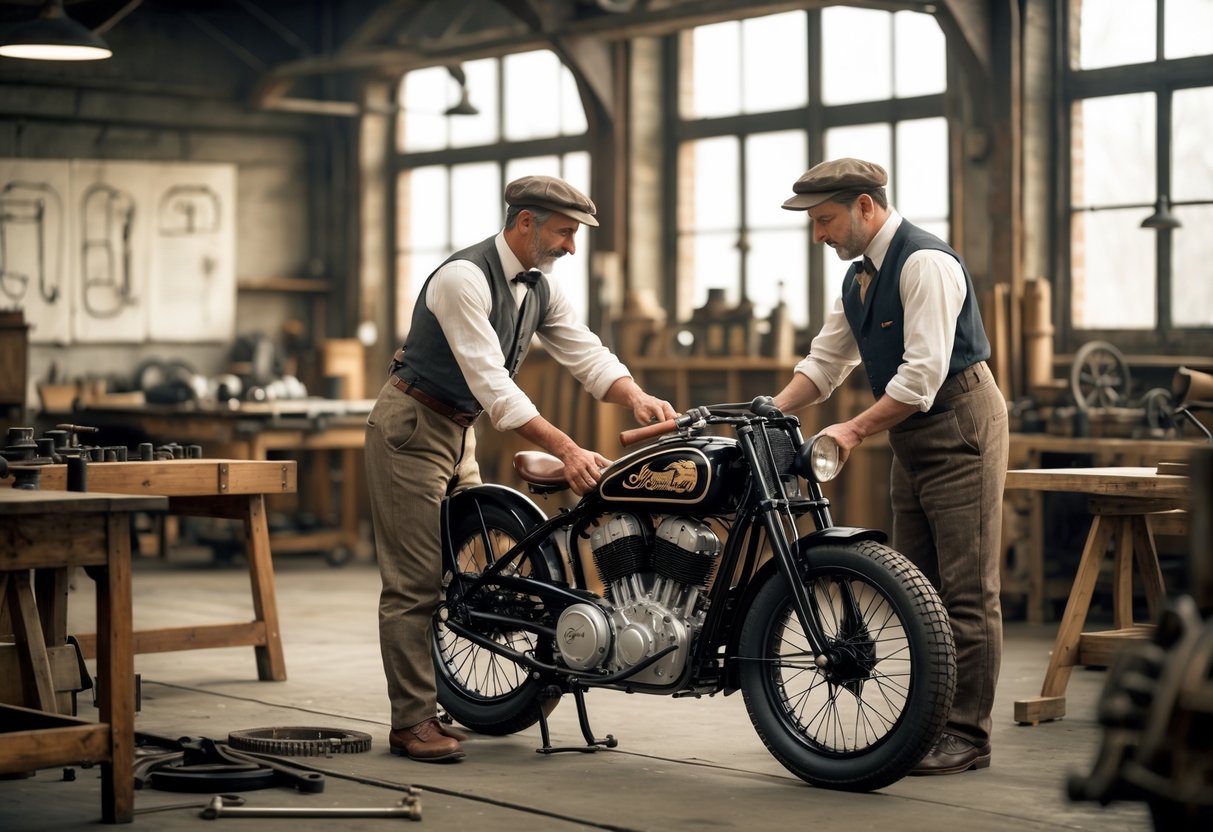
The founding of Indian Motorcycle Company began in 1897 when George M. Hendee established the Hendee Manufacturing Company as a bicycle manufacturer, later partnering with engineer Oscar Hedstrom to create America’s first successful motorcycle prototype in 1901.
George M. Hendee founded the Hendee Manufacturing Company in 1897 to produce bicycles in Springfield, Massachusetts. Before starting his company, Hendee was an accomplished bicycle racer and manufacturer from Watertown, Massachusetts.
The company initially produced bicycles under the brand names Silver King and Silver Queen. However, Indian Motorcycle traces its roots back to 1897 when George M. Hendee founded the Hendee Manufacturing Company, which soon adopted the Indian name for better brand recognition.
Hendee’s background as a competitive cyclist gave him deep knowledge of what riders wanted. His experience in bicycle manufacturing provided the foundation for what would become America’s first motorcycle company.
In 1901, Hendee made a crucial decision to hire Oscar Hedstrom to build gasoline-powered bikes. This partnership would transform his bicycle company into a motorcycle manufacturer.
Carl Oscar Hedstrom co-founded the Hendee Manufacturing Company, serving as chief engineer until his resignation in 1913. Hedstrom came from the small parish of Lonneberga, Sweden, bringing European engineering knowledge to American manufacturing.
Key Engineering Achievements:
Hedstrom’s initial design of the motorized pacing bicycle laid the groundwork for the company’s rapid growth. His engineering skills focused on creating powerful and reliable machines that could outperform competitors.
The Swedish engineer’s technical expertise complemented Hendee’s business knowledge perfectly. Together, they created motorcycles that established the company’s reputation for outstanding performance and reliability.
The first Indian prototype rolled out in May 1901, marking the birth of America’s first motorcycle company. Hendee and Hedstrom opened their first factory in downtown Springfield, Massachusetts that same year.
The prototype featured Hedstrom’s innovative gasoline engine design mounted on a bicycle frame. The machine proved both powerful and reliable, setting Indian apart from other early motorcycle attempts.

First Prototype Specifications:
The success of this first motorcycle exceeded expectations. Just two years later, Hedstrom set a world speed record of 56 mph on one of their motorcycles.
This prototype established the foundation for what would become Indian Motorcycle Company, America’s oldest motorcycle brand. The machine’s reliability and performance proved that motorcycles could be more than experimental devices.
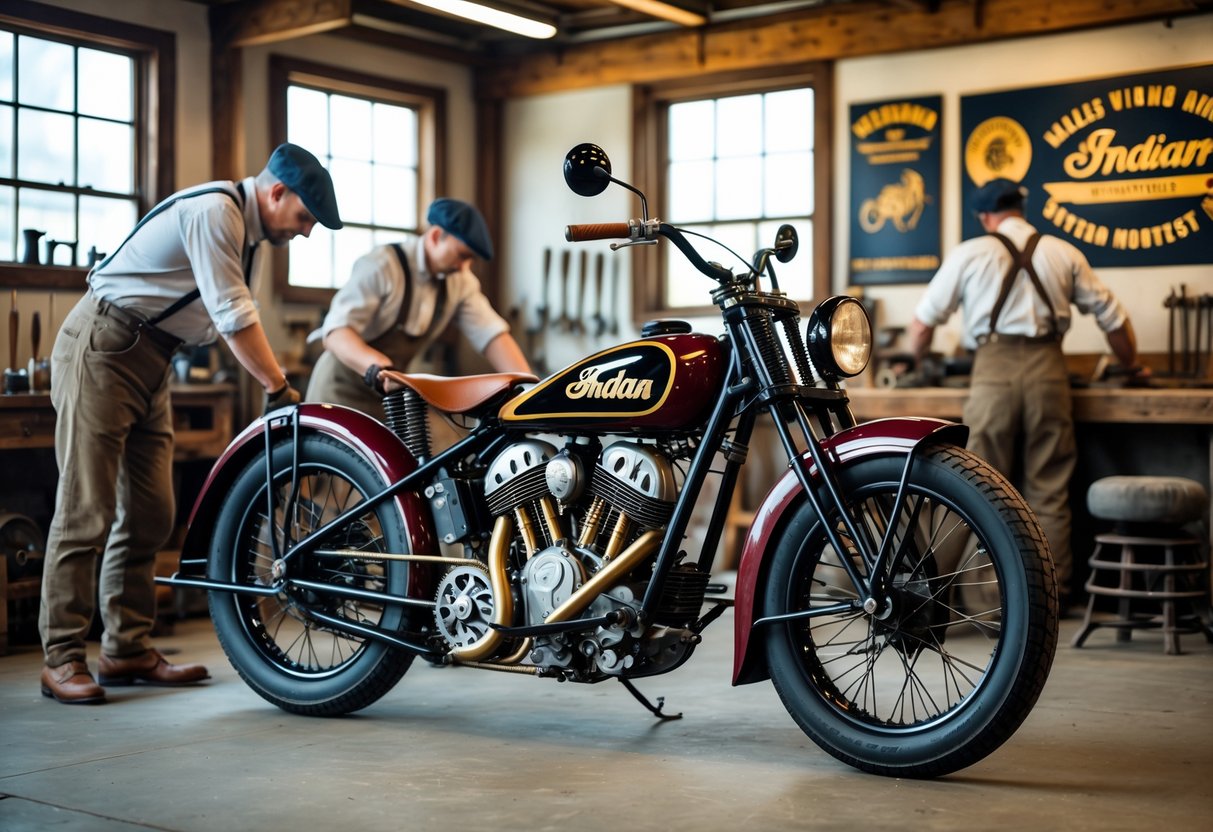
Indian Motorcycle quickly became America’s leading motorcycle manufacturer through strategic brand development and groundbreaking engine innovations. The company’s introduction of the first American V-twin production engine and iconic deep red motorcycles established their dominance in the early 1900s market.
Indian Motorcycle built its reputation on performance and reliability from the very beginning. The company’s early commitment to performance and engineering excellence helped establish trust with riders across America.
The brand chose a distinctive deep red color as its signature paint scheme. This bold color choice made Indian motorcycles instantly recognizable on roads and racetracks.
Racing success became central to Indian’s identity. In 1903, co-founder Oscar Hedstrom set a world speed record of 56 miles per hour while winning an endurance race from New York City to Springfield, Massachusetts.
The company proved its motorcycles’ durability through long-distance rides. In 1906, dealers George Holden and Louis J. Mueller rode an Indian motorcycle from San Francisco to New York City in just 31 days without any mechanical problems.
Indian Motorcycle made motorcycle history in 1906 when they built the first V-twin factory race bike. This innovation changed American motorcycling forever.
The company introduced the racing V-twin engine to consumer models for the 1907 model year. The 39-cubic-inch (633 cc), 42-degree V-twin became the first American V-twin production motorcycle engine.

This V-twin engine gave Indian motorcycles more power than single-cylinder competitors. The twin-cylinder design provided smoother operation and better performance on both streets and racetracks.

The V-twin factory racer proved so successful that it became the foundation for Indian’s future motorcycle designs. Other American manufacturers soon followed with their own V-twin engines.
Indian Motorcycle dominated the American motorcycle market in the early 1900s. The company’s focus on quality and performance attracted riders nationwide.
The Indian Scout launched in 1920 as a fast, reliable, and maneuverable motorcycle. This model enticed many people to start riding and expanded the motorcycle market significantly.
Following the Scout’s success, Indian released the Indian Chief. This new platform provided a sturdy foundation for the company’s continued growth in motorcycle production.
The Indian Ace joined the lineup after Indian acquired the Ace Motor Corporation. This model quickly became an important part of Indian’s expanding motorcycle lineup.
By the 1920s, Indian had established itself as the dominant manufacturer for the first two decades of the century. The company’s innovative approach to motorcycle design and manufacturing set the standard for the entire industry.
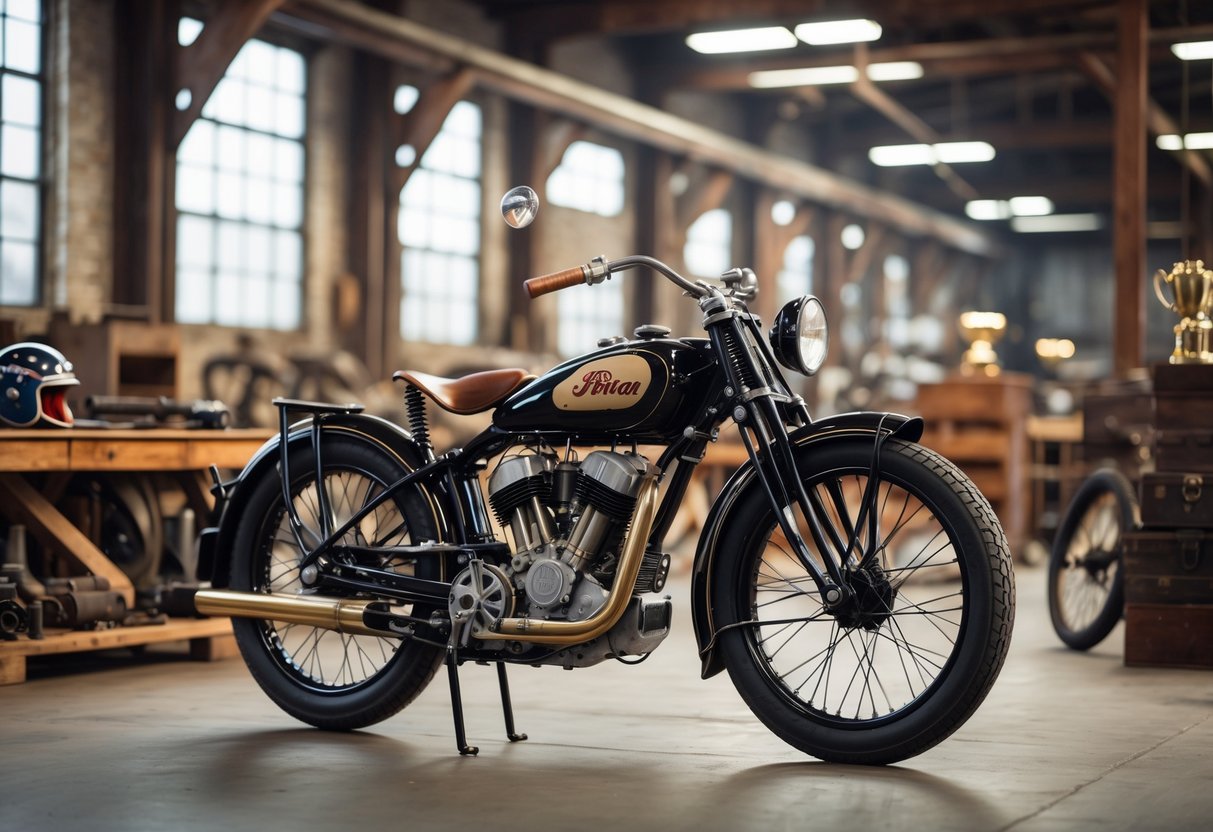
Indian Motorcycle established dominance through groundbreaking speed records and championship victories that shaped American motorcycling. The company’s racing achievements at prestigious events like the Isle of Man TT and formation of the legendary Wrecking Crew demonstrated engineering excellence that defined early motorcycle competition.
Oscar Hedstrom set the foundation for Indian’s racing reputation by achieving a world speed record of 56 mph just two years after the company’s founding. This early success demonstrated the performance potential of American-built motorcycles.
The 1911 Isle of Man TT Victory
Indian’s factory racing team stunned the world by sweeping the podium at the Isle of Man TT in 1911. This complete domination of the world’s most challenging motorcycle race established Indian as a global racing powerhouse.

The Isle of Man triumph featured Indian motorcycles capturing first, second, and third place. This sweep proved that American engineering could compete with and defeat European manufacturers on their home turf.
This victory cemented Indian’s place in motorcycling history and attracted international attention to the Springfield-based manufacturer.
Indian motorcycles played a crucial role in establishing American motorcycling traditions through competitive racing events. The company’s involvement in early American racing circuits helped develop the sport’s infrastructure and popularity.
Daytona 200 Participation
Indian motorcycles competed in early iterations of what became the Daytona 200. These high-speed endurance races tested both machine reliability and rider skill over extended distances.
The company’s success in American racing events helped establish motorcycling as a legitimate sport. Indian’s victories demonstrated that American-made motorcycles could achieve both speed and durability.
Building American Motorcycling Culture
Indian became involved in all kinds of racing and setting speed and endurance records from the beginning. This comprehensive approach to competition helped create the foundation for American motorcycle racing.
The company’s racing success inspired other manufacturers and riders. Indian’s achievements proved that motorcycles could be serious transportation and sporting machines.
The Indian Motorcycle Wrecking Crew represented the pinnacle of early American motorcycle racing teams. This elite group of factory-sponsored riders dominated competitions across multiple racing disciplines.
Formation and Purpose
Indian assembled the Wrecking Crew to compete in professional racing events nationwide. The team featured the company’s best motorcycles paired with skilled professional riders.
The Wrecking Crew competed in various racing formats including dirt track, board track, and endurance events. Their versatility showcased Indian motorcycles’ adaptability across different racing conditions.
Racing Dominance
The team earned its intimidating name through consistent victories that “wrecked” the competition’s chances of winning. Their success rate made Indian motorcycles synonymous with racing excellence.
Wrecking Crew members set numerous speed and distance records. These achievements provided valuable publicity and demonstrated the performance capabilities of Indian motorcycles to potential customers.
The team’s success contributed to Indian’s reputation as America’s premier motorcycle manufacturer during the early 20th century.
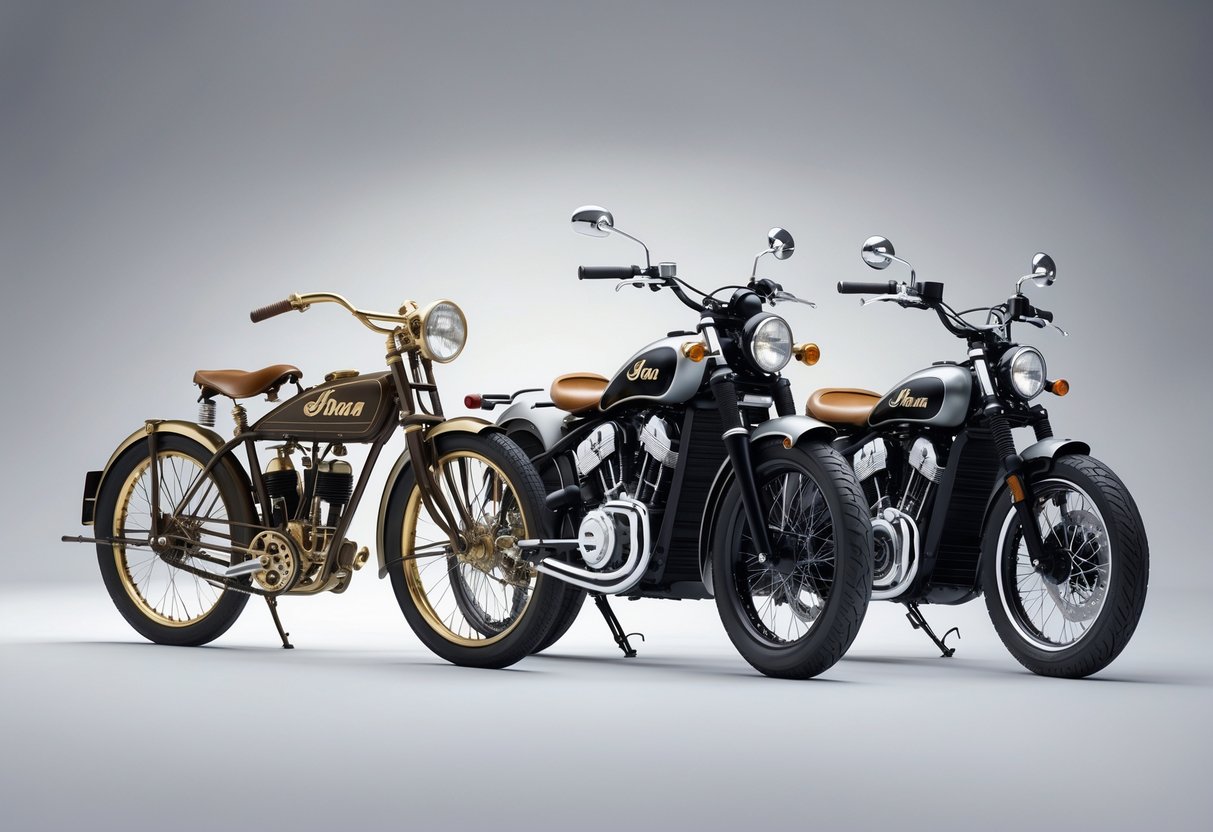
Indian Motorcycle transformed from simple motorized bicycles into sophisticated machines through groundbreaking models like the Scout and Chief, while engineering innovations such as the Powerplus engine established new performance standards.
The Indian Scout debuted in 1920 as a revolutionary middleweight motorcycle. It featured a 600cc V-twin engine that delivered impressive power for its size.

The Scout’s low-slung frame and balanced weight distribution made it incredibly nimble. Riders praised its superior handling compared to heavier competitors.
Key Scout Models:
The Indian Chief arrived in 1922 as Indian’s flagship heavyweight motorcycle. Its massive 1000cc engine produced substantial torque for long-distance touring.

The Chief’s distinctive styling included flowing fenders and a prominent fuel tank. These design elements became iconic symbols of American motorcycle craftsmanship.
The Powerplus engine marked a significant leap in Indian’s engineering capabilities. This 1000cc side-valve V-twin delivered smooth, reliable power that outperformed many competitors.
Indian engineers designed the Powerplus with improved cooling and lubrication systems. These enhancements reduced maintenance requirements and increased engine longevity.
The Scout 101 represented the pinnacle of Scout development in 1928. It featured a refined 750cc engine with better performance than earlier models.

Scout 101 Improvements:
The Scout 101’s advanced engineering influenced modern Indian motorcycles. Today’s Indian Chief Classic and Chief Vintage draw inspiration from these early innovations.
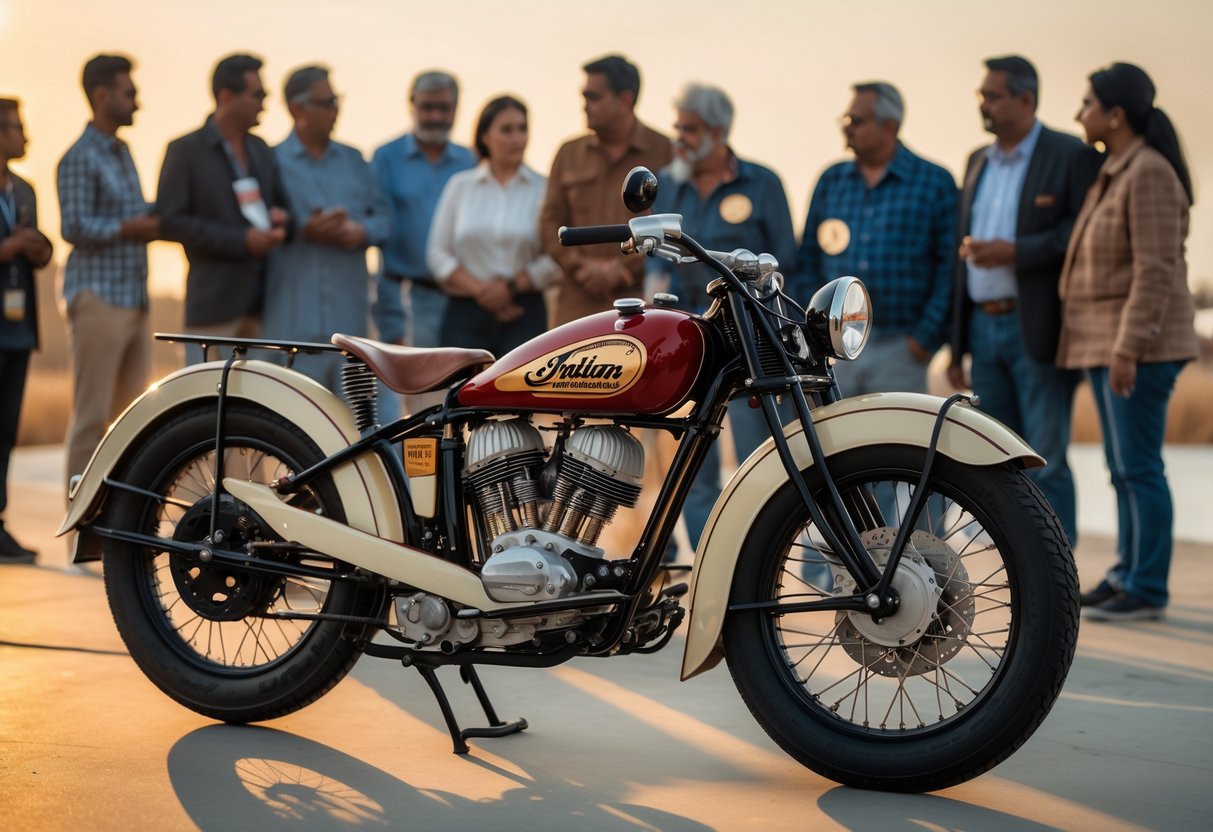
Indian Motorcycle’s legacy extends far beyond manufacturing through the remarkable story of Burt Munro and his modified 1920 Indian Scout. His speed records and the subsequent film adaptation transformed the brand into a global symbol of determination and engineering excellence.
Burt Munro, a motorcycle enthusiast from New Zealand, achieved legendary status with his heavily modified 1920 Indian Scout Streamliner. He set multiple land speed records at the Bonneville Salt Flats between 1962 and 1967.
Munro’s most famous achievement came in 1967. He rode his Indian Scout Streamliner to a speed of 183.586 mph in the under-1000cc category. This record stood for decades and demonstrated the potential of Indian engineering.

The motorcycle itself represented pure dedication. Munro spent years modifying the original Indian Scout with handmade parts. He created custom pistons, reworked the engine, and built an aerodynamic shell.
His story became a testament to individual determination. A man from a small New Zealand town traveled thousands of miles to pursue his dream. The Indian Scout became the vehicle for this remarkable journey.
The 2005 film “The World’s Fastest Indian” starring Anthony Hopkins brought Munro’s story to international audiences. The movie showcased both the man and his Indian Scout to millions of viewers worldwide.
The film emphasized several key themes. It highlighted the enduring quality of Indian motorcycles and their ability to perform decades after manufacture. Hopkins’ portrayal made Munro a folk hero.
Key Impact Areas:
The movie transformed a relatively unknown speed record into cultural phenomenon. It connected Indian Motorcycle’s heritage to broader themes of perseverance and achievement.
Munro’s achievements with the Indian Scout created lasting cultural impact across multiple countries. New Zealand celebrates him as a national hero, while American motorcycle culture embraced his story.
The Bonneville Salt Flats became synonymous with Indian motorcycles through Munro’s records. Annual speed trials continue to attract Indian riders seeking to honor his legacy. Vintage Indian Scouts gained significant collector value.
Museums worldwide display replicas of Munro’s streamliner. The original motorcycle resides in New Zealand, drawing thousands of visitors annually. His story appears in motorcycle literature and documentaries regularly.
Modern Indian Motorcycle Company references Munro’s achievements in marketing materials. The brand leverages his story to demonstrate their motorcycles’ performance capabilities and engineering heritage.
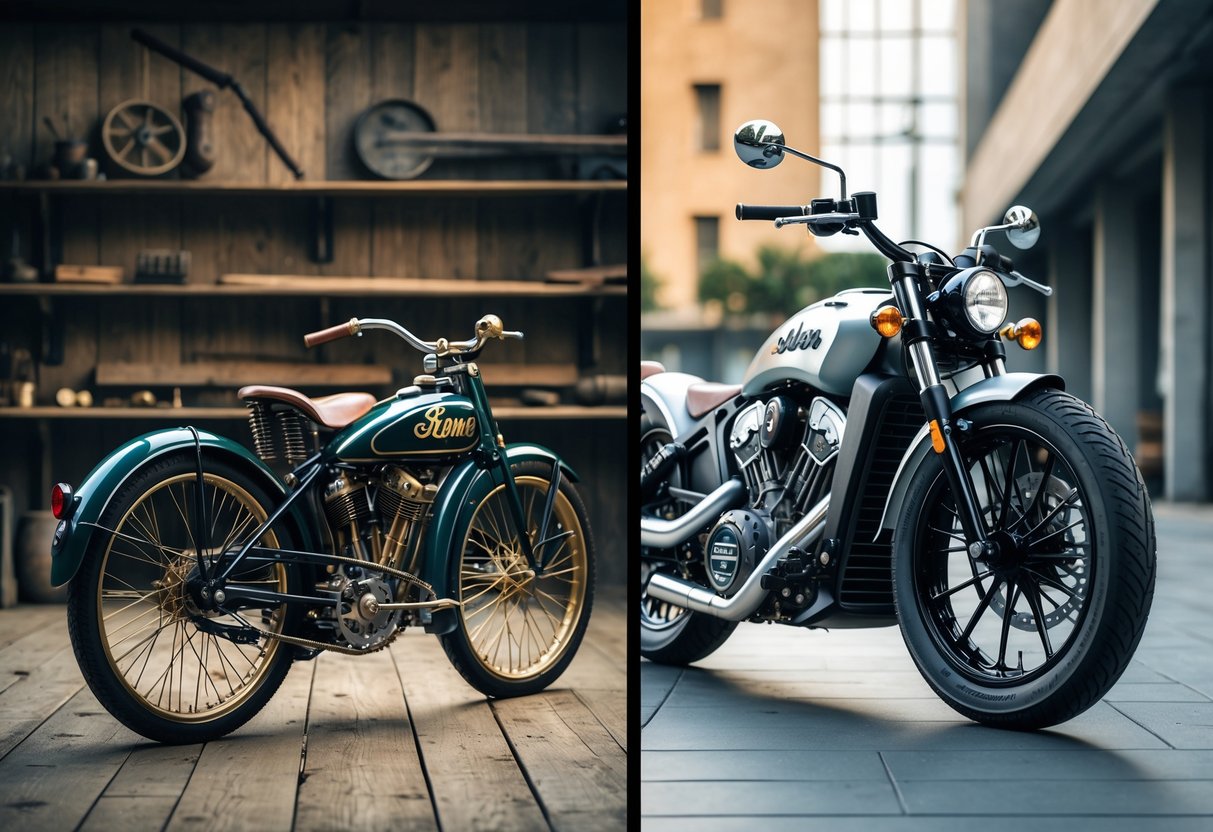
After decades of innovation and market leadership, Indian Motorcycle faced significant ownership changes and periods of dormancy before experiencing a remarkable revival. The company’s journey through various acquisitions, from Ace Motor Corporation to Polaris Industries, shaped its ultimate return to prominence in the modern motorcycle industry.
Indian Motorcycle acquired Ace Motor Corporation in 1927, bringing the acclaimed Ace four-cylinder motorcycle into its lineup. This acquisition introduced the Indian Ace to the market, which evolved into the legendary Indian 401 four-cylinder model.

The Indian 401 became one of the company’s most sophisticated motorcycles. It featured a 1,265cc inline four-cylinder engine that delivered smooth power delivery and impressive performance for its era.
However, production challenges and high manufacturing costs made the 401 financially unsustainable. The complex four-cylinder design proved expensive to produce compared to simpler V-twin models offered by competitors like Harley-Davidson.
By the early 1940s, Indian discontinued the four-cylinder models to focus resources on their more profitable Scout and Chief V-twin motorcycles. Indian ceased production in 1953, ending the original company’s manufacturing era.
Brockhouse Engineering acquired Indian’s assets in 1953 and began importing Royal Enfield motorcycles from Britain. These bikes were rebadged as Indians but lacked the authentic American character of original Springfield-built machines.
The Associated Motorcycle Company continued this arrangement, selling British motorcycles under the Indian name throughout the late 1950s. This period created confusion among enthusiasts about authentic Indian motorcycles versus imported models.
Floyd Clymer obtained rights to use the Indian name in the 1960s and began importing Italian-made motorcycles. Clymer’s Indian Motorcycle Company of America sold these bikes as Indians, though they bore little resemblance to traditional Indian designs.
After Clymer’s death in 1970, Stellican acquired the brand and continued importing motorcycles from various manufacturers. These efforts failed to capture the original Indian spirit, and the company declared bankruptcy in 1977.
Polaris Industries purchased Indian Motorcycle in 2011, marking the beginning of authentic American production after decades of dormancy. Polaris had previously owned Victory Motorcycles and brought significant manufacturing expertise to the Indian revival.
The company established a new factory in Spirit Lake, Iowa, and began producing modern versions of classic Indian models. The new Chief, Scout, and Chieftain models combined traditional Indian styling with contemporary technology and reliability.
Polaris introduced the FTR 1200 in 2019, a flat-track-inspired street bike that expanded Indian’s appeal to younger riders. This model demonstrated Indian’s commitment to innovation while honoring its racing heritage.

The modern Indian lineup has achieved remarkable success in the heavyweight motorcycle market. Indian Motorcycles remains a symbol of American craftsmanship and continues attracting riders who value both heritage and performance.
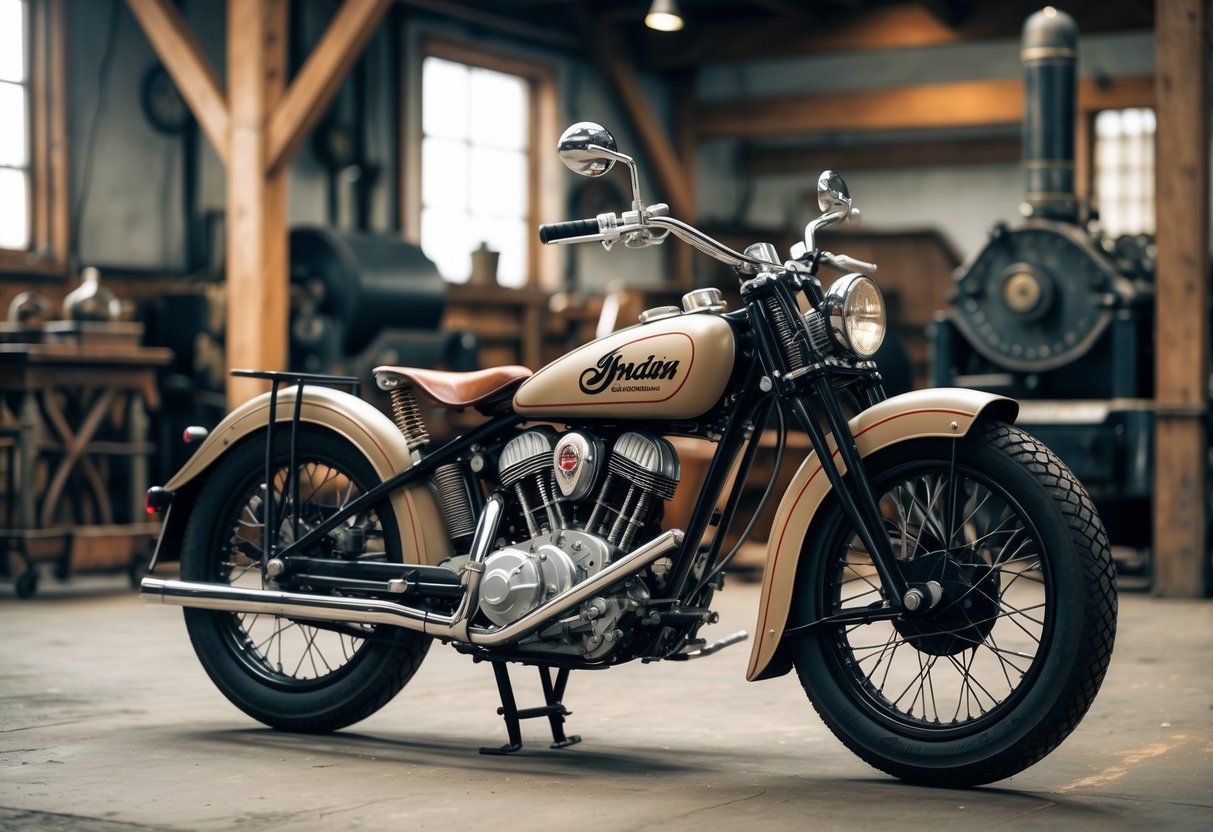
Indian Motorcycle’s founding story begins in 1901 with two visionary entrepreneurs who created America’s first motorcycle company. The brand has changed hands multiple times throughout its history and holds a unique place in American motorcycling heritage.
The Indian Motorcycle Company was founded in 1901 in Springfield, Massachusetts. The company began as Hendee Manufacturing Company before becoming the Indian Motocycle Company in 1923.
Their first prototype rolled out in May 1901, marking the birth of what would become a legendary motorcycle brand. This made Indian America’s first motorcycle company.
George M. Hendee and Carl Oscar Hedström founded Indian Motorcycles in 1901. Hendee had previously started a bicycle company in 1897, while Hedström brought engineering expertise to the partnership.
The two men combined their skills to create innovative motorized bicycles. Their collaboration resulted in motorcycles that were reliable, fast, and groundbreaking for their time.
The first Indian model was a motorized bicycle that emerged from their 1901 prototype. This early machine combined bicycle technology with a small engine to create what would become the modern motorcycle.
The initial design was innovative, reliable, and fast. It set the foundation for all future Indian motorcycle models and established the company’s reputation for quality engineering.
Indian was originally produced from 1901 to 1953 by the original company in Springfield, Massachusetts. The brand went through various ownership changes after the original company ceased operations.
In 2011, Polaris Industries purchased Indian and began manufacturing motorcycles again. Today, Indian Motorcycle is owned and produced by Polaris Inc., which has revived the brand for modern riders.
Indian holds the distinction of being America’s first motorcycle company, making it a foundational brand in American motorcycling history. The company established many early standards and innovations in motorcycle design and manufacturing.
Indian is the most popular motorcycle brand after Harley Davidson in the US. The brand represents over a century of American motorcycle heritage and engineering excellence.
Just two years after founding, Hedstrom set a world speed record of 56 mph in 1903. This early achievement demonstrated Indian’s commitment to performance and innovation.
The company name changed from Hendee Manufacturing Company to Indian Motocycle Company in 1923. Indian motorcycles were also used by the United States Army in World War II and by Commonwealth forces under the Lend/Lease Program.