


When to Change a Car Air Filter: Essential Guide to All Types and Maintenance Schedules

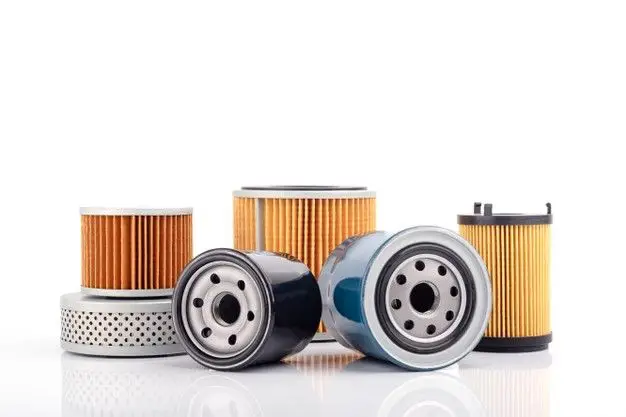
Assorted car oil filters isolated on white background, featuring various sizes and types for vehicle maintenance.

Your car’s air filter plays a crucial role in keeping your engine running smoothly by preventing dirt, debris, and contaminants from entering. Many drivers overlook this simple maintenance item, not realizing how it affects performance and fuel efficiency. You should typically change your car’s air filter every 15,000 to 30,000 miles, though this interval varies based on driving conditions and environment.

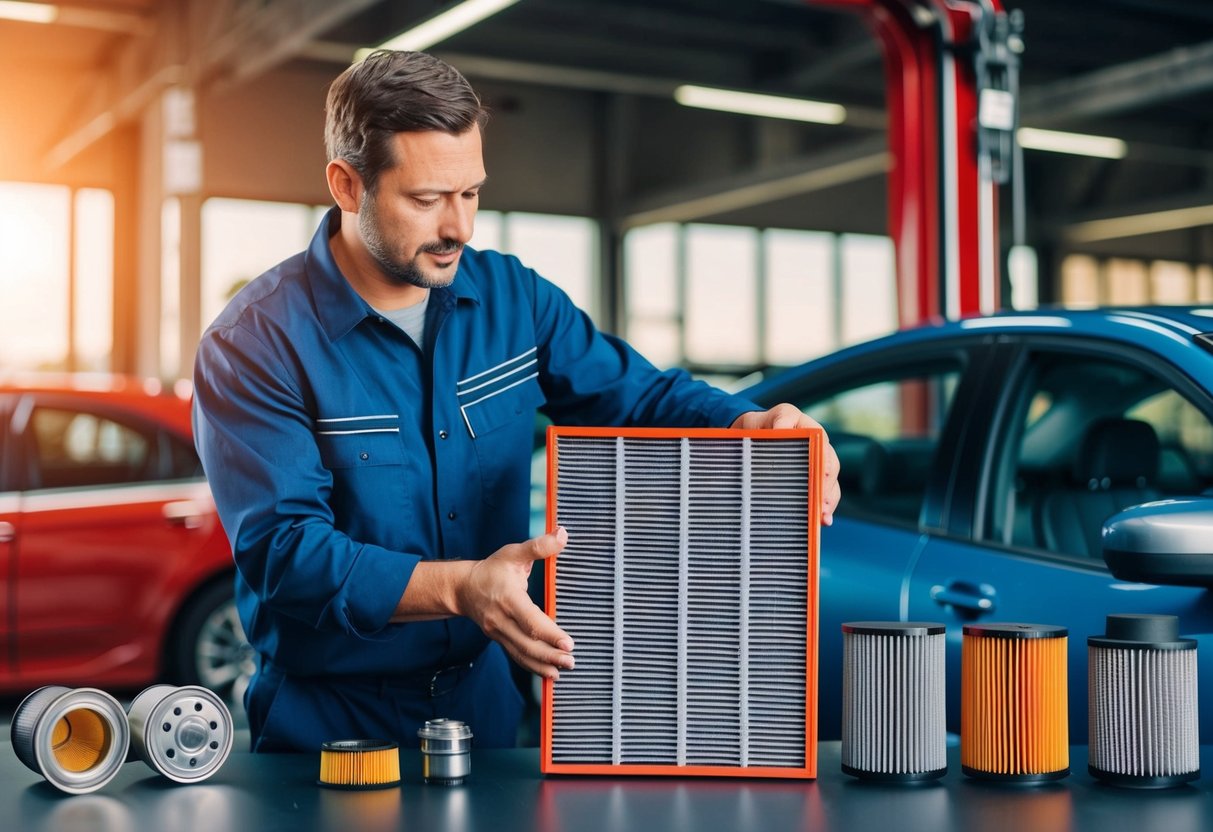
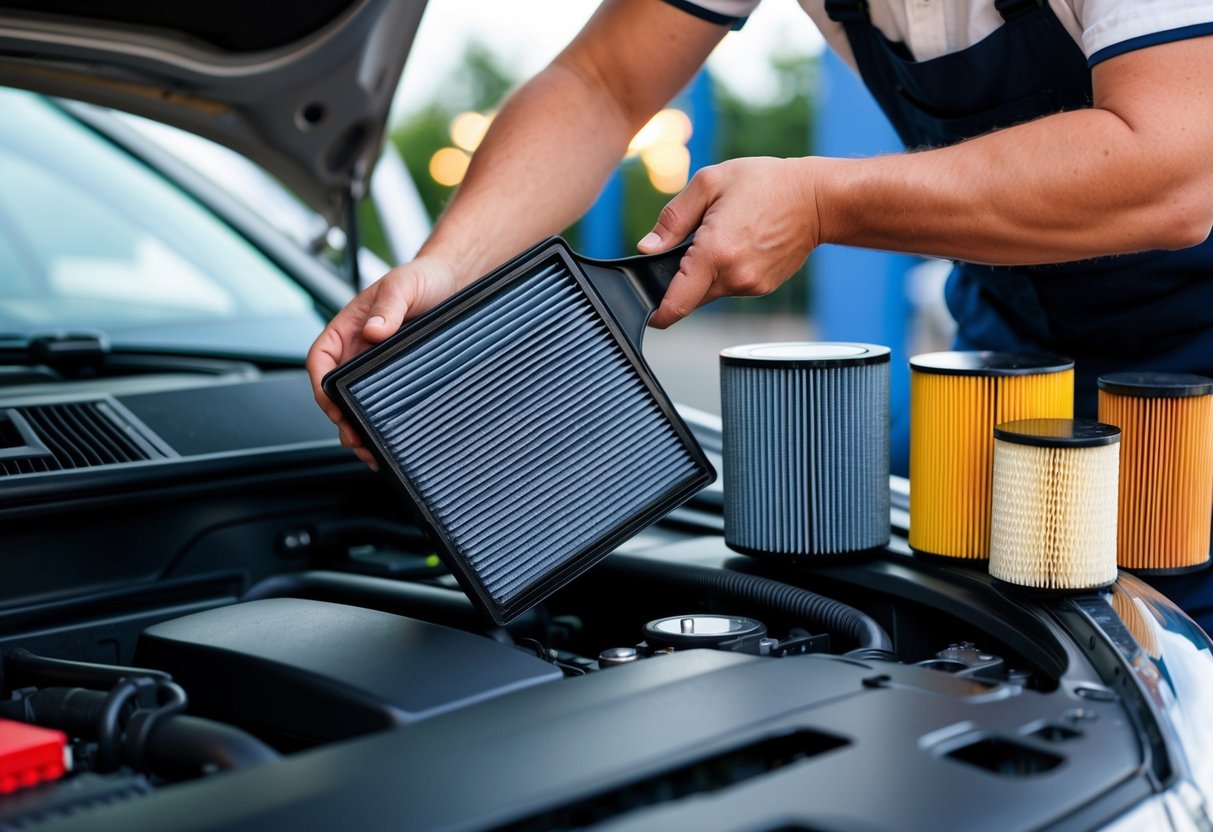
A mechanic replacing a car air filter with various types of filters displayed nearby

Different types of air filters offer varying levels of protection and performance benefits. From standard paper filters to washable performance options, selecting the right one depends on your vehicle’s specifications and your driving habits. Dusty rural areas or heavy city pollution may require more frequent replacements than clean suburban environments.

Key Takeaways

  • Air filters should be inspected annually or every 15,000-30,000 miles, with more frequent changes needed in dusty environments.
  • Dirty air filters can cause power loss, reduced fuel efficiency, and potentially damage engine components over time.
  • Regular air filter maintenance is a simple, cost-effective way to extend engine life and maintain optimal vehicle performance.

Importance of Changing Your Car Air Filter

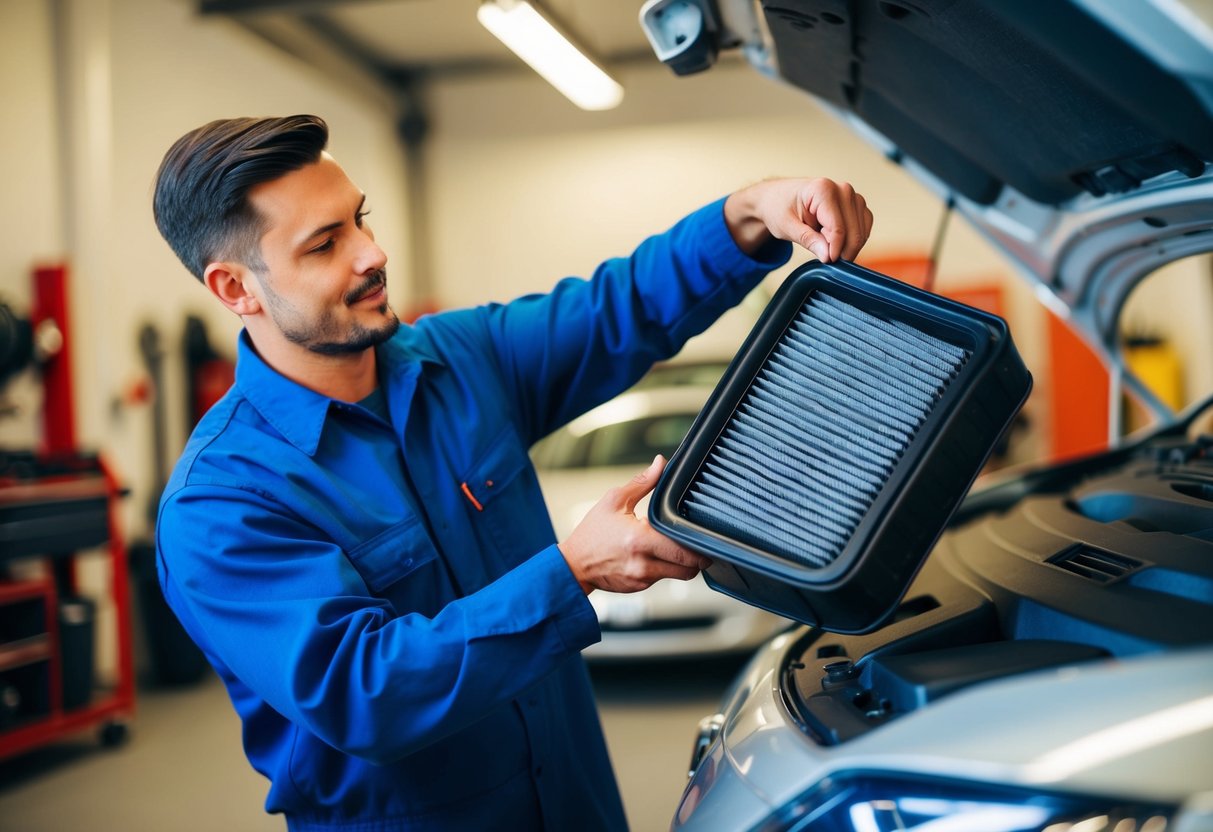
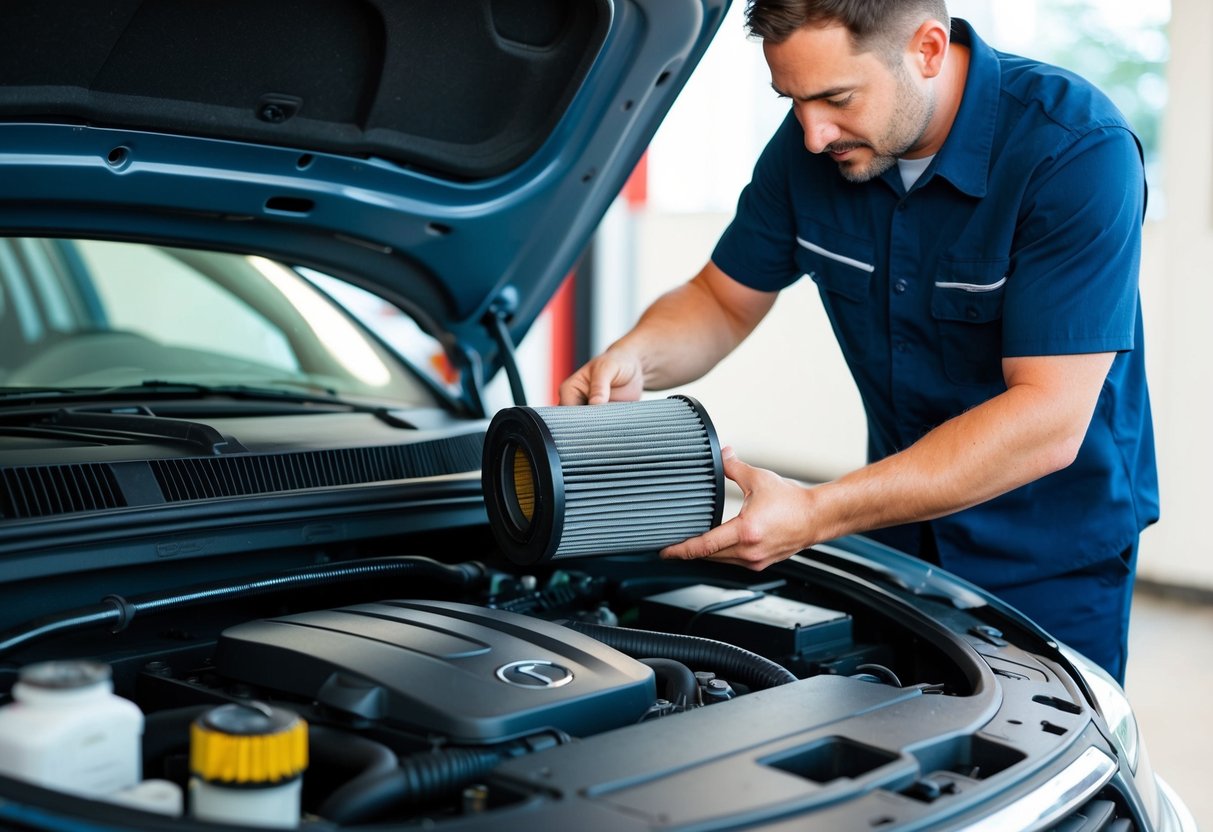
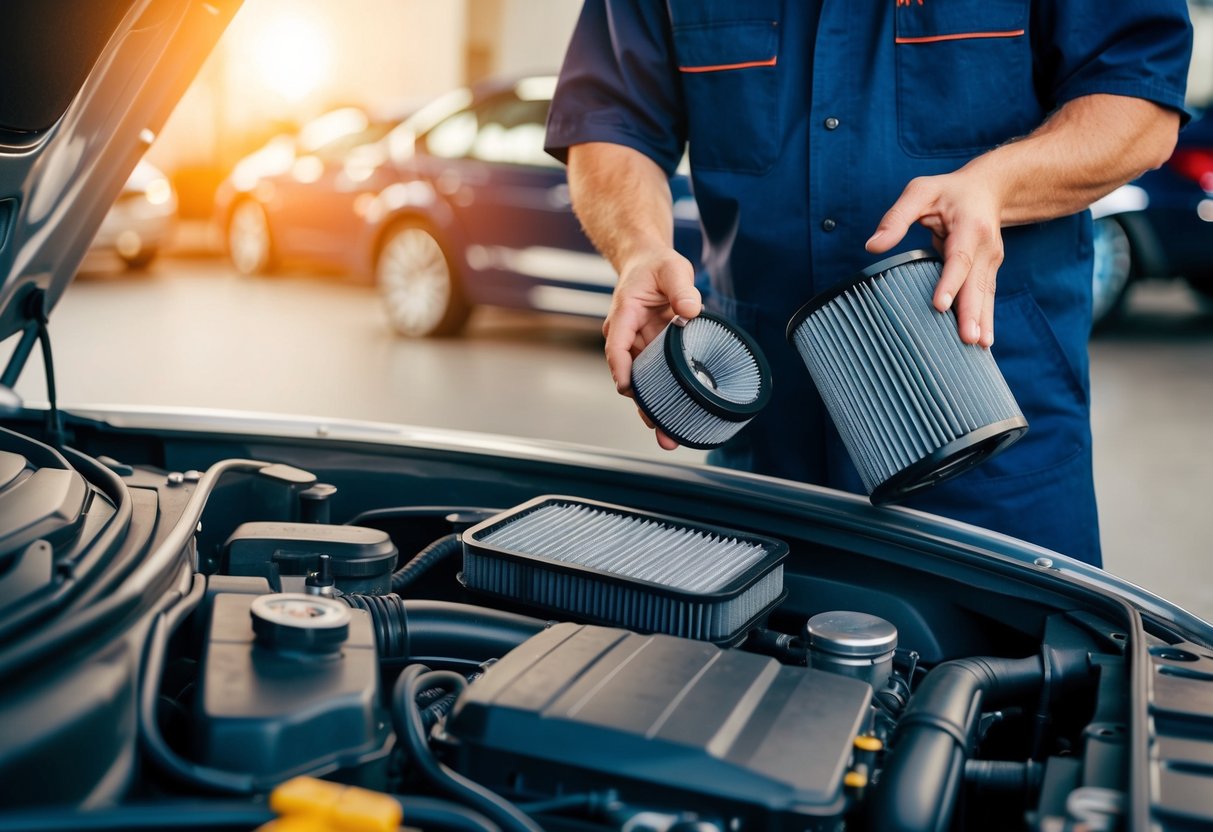
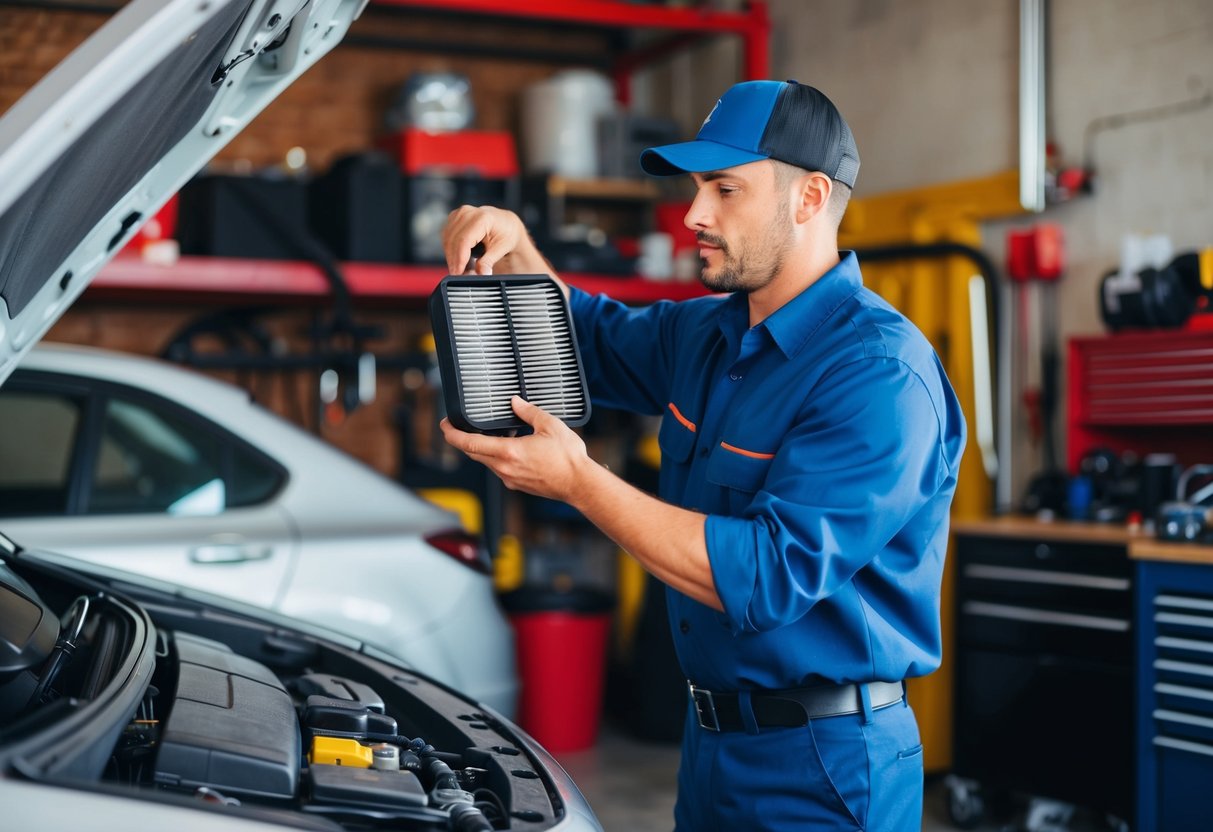
A mechanic replacing a dirty car air filter with a new one in a well-lit garage

Your car’s air filter plays a crucial role in your vehicle’s performance and longevity. Regular replacement ensures optimal engine function and prevents costly damage over time.

Protecting Your Engine from Contaminants

The primary purpose of an engine air filter is to prevent harmful particles from entering the engine. It acts as a barrier against dirt, dust, pollen, and other debris that could cause internal damage.

When driving, your car takes in large volumes of air that mix with fuel in the combustion chamber. Without proper filtration, abrasive particles can wear down engine components prematurely.

Over time, filters become clogged with trapped contaminants. A visual inspection often reveals a filter that has changed from white or light tan to dark gray or black when it needs replacement.

Experts recommend changing the air filter every 12,000 to 15,000 miles or about once a year, though this varies based on driving conditions. Dusty environments or unpaved roads may require more frequent changes.

Enhancing Fuel Efficiency and Acceleration

A clean air filter directly impacts your vehicle’s performance. When airflow becomes restricted due to a clogged filter, the engine must work harder to draw in sufficient air.

This increased effort leads to decreased fuel efficiency and reduced power output. Studies show that replacing a dirty air filter can improve acceleration and gas mileage, especially in older carbureted engines.

Modern fuel-injected engines can compensate somewhat for restricted airflow, but they still suffer performance losses with extremely clogged filters. Drivers might notice sluggish acceleration or reduced power when climbing hills.

The simple act of replacing a dirty filter can result in noticeable improvements in throttle response and overall driving experience. It’s one of the most cost-effective maintenance tasks for performance benefits.

Impact on Combustion Chamber and Spark Plugs

The combustion process requires the right balance of air and fuel. A dirty air filter disrupts this balance by limiting the oxygen available for combustion.

When insufficient air reaches the combustion chamber, the fuel mixture becomes “rich” (too much fuel, not enough air). This incomplete combustion creates carbon deposits on spark plugs and other engine components.

Fouled spark plugs fail to ignite the fuel mixture properly, causing misfires, rough idling, and starting problems. These issues compound over time, potentially leading to more serious engine troubles.

Regular air filter replacement helps maintain optimal combustion conditions, extending the life of spark plugs and preventing carbon buildup throughout the engine. This keeps the engine running smoothly and efficiently for many miles.

Types and Varieties of Air Filters for Cars and Car Engines

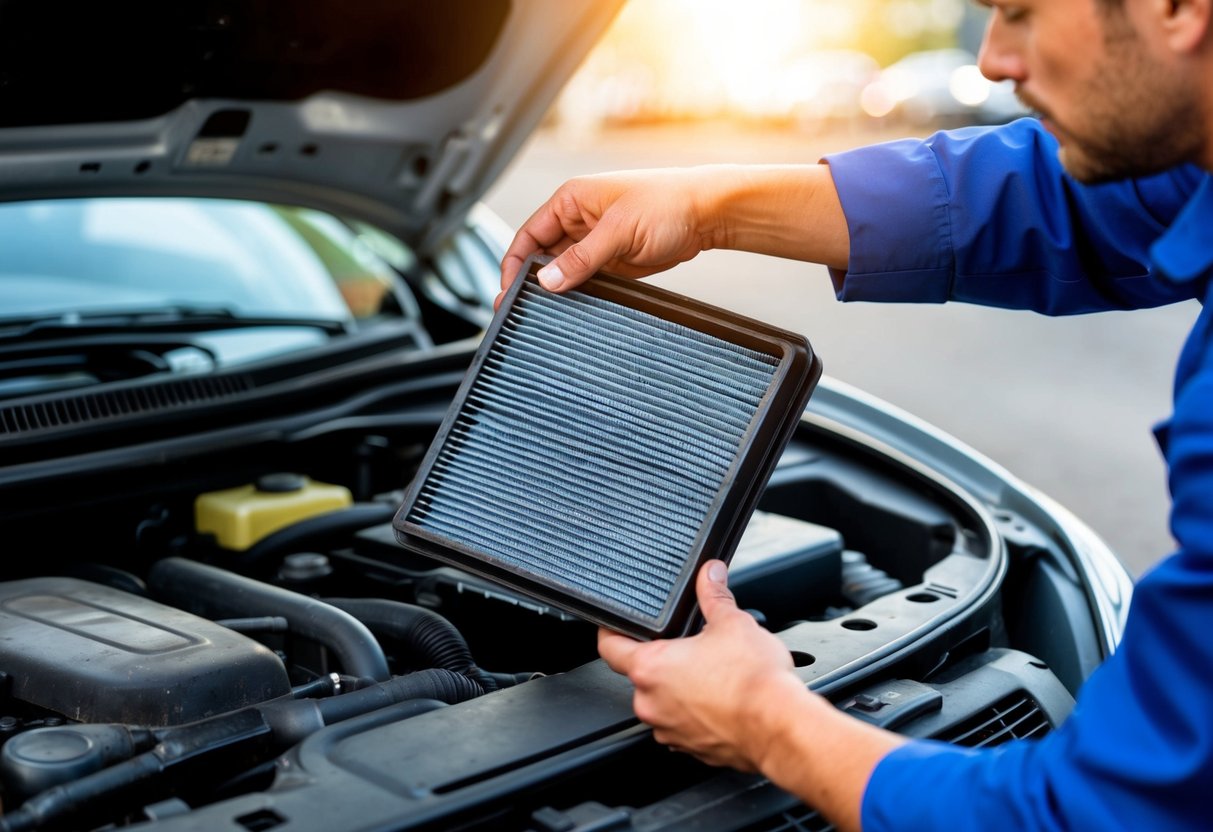
A mechanic replacing a dirty air filter with a new one inside the engine compartment of a car

Car air filters come in several different materials and designs, each with specific benefits for engine protection and performance. Understanding these options helps car owners make better choices for their vehicles.

Paper Air Filters

Paper air filters are the most common type found in modern vehicles. These filters are made from specially treated paper that’s folded into pleats to increase surface area. The pleated design allows more air to flow through while capturing contaminants effectively.

Paper filters are generally affordable and perform well under normal driving conditions. They can trap particles as small as 10 microns, preventing dust and debris from entering the engine.

Most manufacturers recommend replacing paper air filters every 15,000 to 30,000 miles, depending on driving conditions. Drivers in dusty or polluted areas should change them more frequently.

Paper filters cannot be cleaned effectively and must be completely replaced when dirty. While this creates more waste, their affordability makes them a practical choice for most drivers.

Foam Air Filters

Foam air filters use polyurethane foam material to trap dirt and dust particles. These filters are especially effective in extremely dusty environments because they can hold more dirt than paper filters before airflow is restricted.

The foam material is typically treated with a special oil that helps catch tiny particles while allowing sufficient airflow to the engine. This design makes them particularly popular for off-road vehicles and motorcycles.

Foam filters generally provide less precise filtration than paper filters but offer better protection in harsh conditions. They can be cleaned and reused several times before needing replacement.

To clean a foam filter, it must be washed with a specific cleaning solution, dried thoroughly, and then re-oiled before reinstallation. This maintenance process requires more effort but results in lower long-term costs.

Cotton Gauze and High-Performance Filters

Cotton gauze filters, often called performance filters, are designed to increase airflow while maintaining good filtration. These filters use cotton gauze material layered between wire mesh screens.

High-performance filters can increase horsepower and torque by allowing more air into the engine. The cotton material is typically coated with oil to trap particles while maintaining maximum airflow.

Popular brands like K&N offer cotton gauze filters with claims of improved performance and gas mileage. These filters come in various shapes including flat, conical, round, or radial designs.

The conical or cone-shaped versions provide increased surface area, which can enhance performance for modified engines. While more expensive initially, their reusability makes them cost-effective over time.

Reusable and Cleanable Air Filters

Reusable air filters are designed to be cleaned and reinstalled rather than replaced. Most reusable filters are made from cotton gauze, foam, or synthetic materials that can withstand washing.

These environmentally friendly options typically last for the lifetime of a vehicle when properly maintained. Cleaning intervals vary by brand and driving conditions, but generally range from 15,000 to 50,000 miles.

Proper cleaning requires specific procedures and products. Most manufacturers sell cleaning kits designed for their filters. Using incorrect cleaning methods can damage the filter or reduce its effectiveness.

Reusable filters have a higher upfront cost compared to disposable paper filters. However, they can save money over time by eliminating the need for regular replacements. For vehicles that also have cabin air filters, those typically remain disposable even when engine air filters are reusable.

When to Change a Car Air Filter

A mechanic replacing a dirty car air filter with a new one in a garage

Knowing the right time to replace your car’s air filter helps maintain engine performance and fuel efficiency. Regular inspections and timely replacements prevent engine damage and keep your vehicle running smoothly.

Recommended Maintenance Schedules

Most manufacturers recommend changing your engine air filter every 15,000 to 30,000 miles, depending on driving conditions. Some vehicles can go longer – between 30,000 and 45,000 miles before requiring a replacement.

For average driving conditions, changing the filter every 20,000 miles is typically sufficient. However, drivers in dusty areas or those who frequently drive on unpaved roads should replace their filters more often.

A good practice is to inspect the air filter annually or during regular maintenance visits. Many mechanics recommend checking it during oil changes for convenience.

Cabin air filters follow a different schedule, typically needing replacement every 12,000 to 15,000 miles or annually.

Signs Your Air Filter Needs Replacement

Visual inspection is the simplest way to determine if an air filter needs changing. A clean filter appears white or off-white, while a dirty one will be gray or brown with visible debris.

Some drivers prefer to check their filter every 3-6 months and clean it by knocking out debris, replacing only when visibly dirty.

Performance indicators can also signal a clogged filter:

  • Reduced fuel economy
  • Sluggish acceleration
  • Engine misfiring
  • Black smoke from the exhaust

The check engine light may illuminate if the dirty filter severely restricts airflow. Strange engine noises or rough idling might also indicate it’s time for a replacement.

In high-pollution areas or during pollen season, more frequent filter changes may be necessary to maintain optimal air quality inside the vehicle.

Factors Affecting Air Filter Replacement Intervals

A mechanic replacing a dirty air filter in a car engine compartment. The old filter is being removed and a new one is ready to be installed

Several key variables determine how often you need to replace your car’s air filter. These factors can significantly shorten or extend the typical 12,000-15,000 mile replacement interval.

Driving Habits and Conditions

Environmental factors play a crucial role in filter lifespan. Driving in dusty conditions requires more frequent replacements as particulates clog the filter faster. Rural gravel roads and construction areas expose filters to higher dirt concentrations.

Weather conditions impact filter performance too. Humid areas can cause moisture buildup, while dry regions increase dust accumulation.

Daily driving patterns matter significantly. Stop-and-go city driving forces engines to work harder, pulling more air through filters. Highway driving at consistent speeds may be less taxing.

Seasonal changes require attention. Spring pollen can quickly clog filters, while winter road salt and debris present different challenges.

Vehicle Type and Engine Requirements

Engine size and design directly influence air filter needs. Larger engines or high-performance models consume more air and may need more frequent replacements.

Different vehicle models (SE, LE, S, ST trims) have varying specifications. Performance-oriented ST models often require cleaner airflow for optimal function.

Fuel type matters too. Petrol engines typically have different air filtration requirements than diesel engines.

Manufacturer recommendations should guide replacement schedules. Some vehicle brands engineer filters for extended use, while others specify more frequent changes.

Aftermarket modifications can alter airflow requirements. Performance upgrades often necessitate higher-quality filters or more frequent maintenance.

The Filter Change Process: Steps and Best Practices

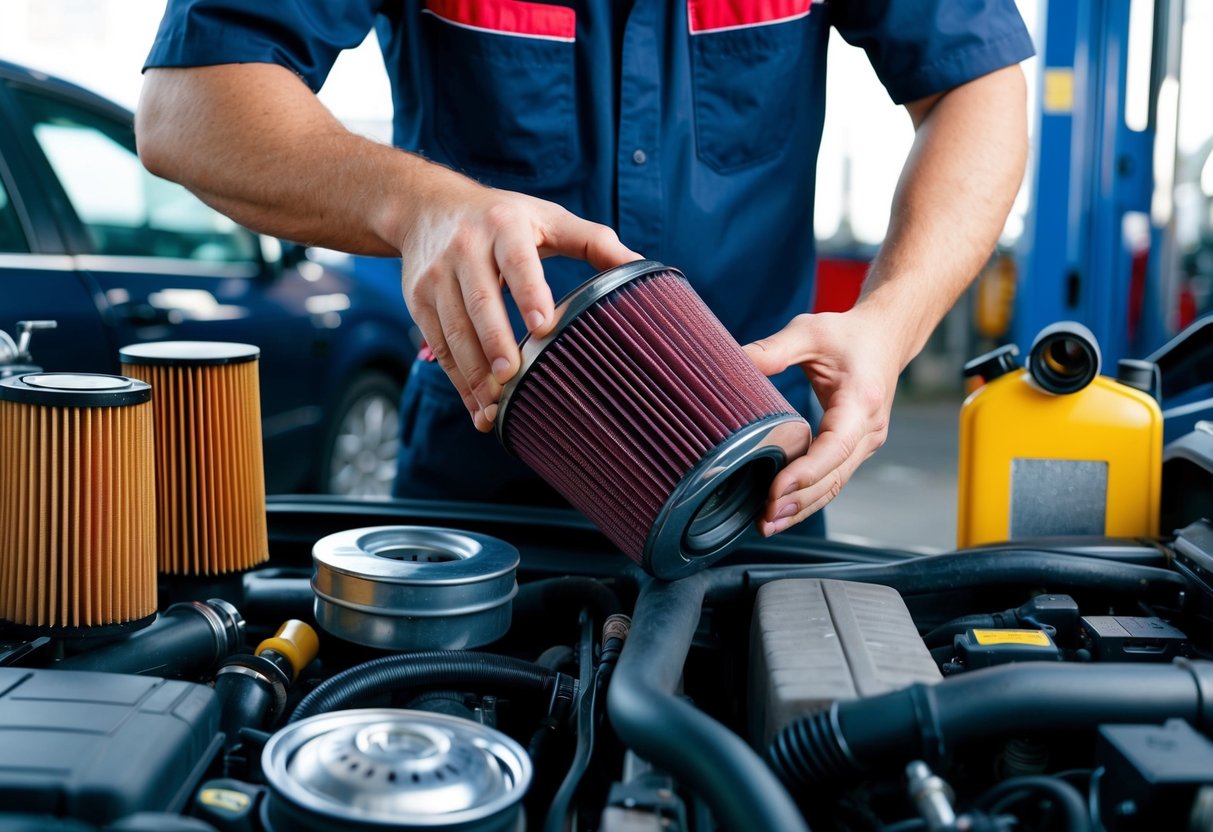
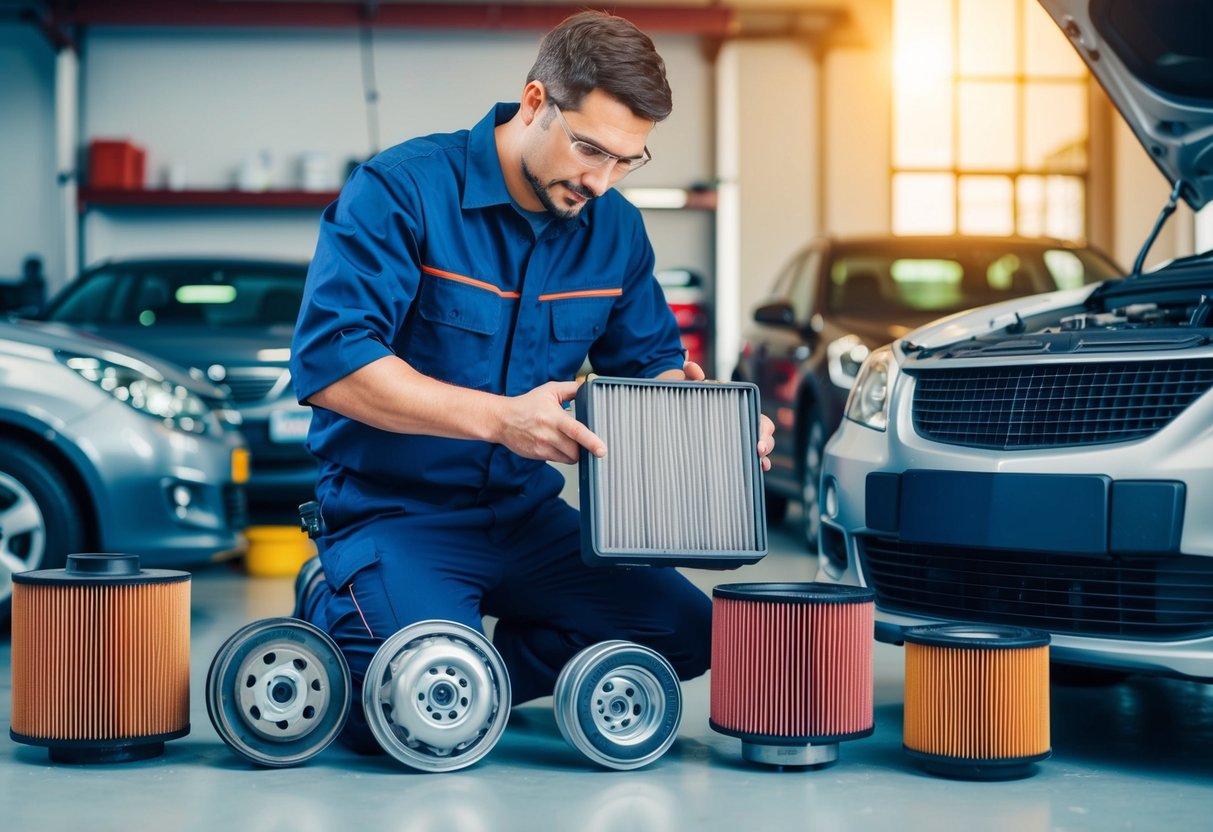
A car air filter being replaced under the hood of a car, with various types of air filters displayed nearby for comparison

Changing your car’s air filter is a simple maintenance task that improves engine performance and fuel efficiency. Regular filter changes ensure proper air flow to your engine while preventing harmful debris from entering.

Inspecting and Replacing the Air Filter

Start by locating your vehicle’s air filter box, typically found on top of the engine or to the side connected by air intake tubes. Most air filter boxes are secured with clips or screws that can be easily removed without special tools.

Once opened, pull out the air filter and hold it up to a light source. A clean filter allows light to pass through. If the filter appears dirty, clogged, or damaged, it’s time for a replacement.

Steps for replacement:

  1. Purchase the correct filter for your specific vehicle model
  2. Remove the old filter carefully, noting its orientation
  3. Clean the inside of the air box with a damp cloth
  4. Insert the new filter in the correct orientation
  5. Secure the housing cover and check that all clips or screws are tightened

Experts recommend replacing your air filter every 15,000 to 30,000 miles, though driving conditions may require more frequent changes.

Cleaning Versus Replacing Filters

Most standard paper air filters are designed to be replaced rather than cleaned. Attempting to clean paper filters with compressed air or liquid cleaners can damage the filter material and reduce its effectiveness.

However, some specialty filters, such as reusable cotton or foam filters, can be cleaned and reinstalled. These filters typically come with specific cleaning instructions that should be followed carefully.

When cleaning reusable filters:

  • Use only manufacturer-recommended cleaning products
  • Allow the filter to dry completely before reinstallation
  • Apply the correct amount of filter oil if required

While reusable filters have a higher upfront cost, they may save money over time. Standard paper filters are less expensive initially but must be replaced regularly to maintain optimal air flow.

The decision between cleaning or replacing depends on your vehicle’s requirements, driving conditions, and personal preference. Regardless of choice, maintaining clean filters is essential for proper engine function.

How Air Filter Choice Relates to Other Vehicle Maintenance

A mechanic replacing a dirty air filter in a car engine, surrounded by various types of air filters and vehicle maintenance tools

Your air filter selection isn’t an isolated maintenance decision but interconnects with your entire vehicle care strategy. Proper filtration systems work together to protect your engine and ensure optimal performance across all systems.

Air Filter, Oil Filter, and Fuel Filter Roles

Your car relies on three main filters to keep things running smoothly. The engine air filter prevents dust, debris, and contaminants from entering the engine, ensuring proper combustion.

The oil filter removes metal particles and sludge from engine oil, preventing premature wear on engine components. When the air filter is clogged, the engine works harder and burns more fuel, which can put extra strain on the oil filter.

The fuel filter protects the fuel injection system by trapping contaminants that could clog fuel injectors. These three filters work as a team to keep your engine clean and functioning efficiently.

Using high-quality filters for all three systems provides comprehensive protection. When one filter fails, it increases the burden on the others.

The Link Between Air Filters and Oil Changes

Regular air filter replacement directly impacts your oil change schedule. A dirty air filter restricts airflow to the engine, causing it to run rich (too much fuel, not enough air).

This inefficient combustion leads to:

  • Carbon buildup in the engine
  • Oil contamination occurring more quickly
  • Reduced fuel economy
  • Increased engine temperature

Most manufacturers recommend changing the air filter every 15,000-30,000 miles, while oil changes typically occur every 5,000-7,500 miles. However, if you drive in dusty conditions, both may need more frequent replacement.

Technicians often check the air filter during oil changes because these maintenance items are complementary. A clean air filter helps your oil stay cleaner longer, potentially extending the life of both your oil and engine.

Choosing the Right Air Filter for Your Car

A mechanic holds various air filters, examining them closely for a car engine illustration

Selecting the appropriate air filter for your vehicle involves considering your driving conditions, manufacturer specifications, and performance goals. The right choice can maximize fuel efficiency and prolong engine life, while a poor selection might harm your vehicle’s performance.

OEM vs. Aftermarket Air Filters

Original Equipment Manufacturer (OEM) air filters are designed specifically for your vehicle by its manufacturer. These filters match the exact specifications of your car’s intake system and provide reliable performance.

Aftermarket filters offer alternatives that may provide benefits over OEM options. They often come in various filtration materials like cotton, synthetic, or paper.

When choosing between OEM and aftermarket, consider:

  • Warranty implications: Using non-OEM parts might affect vehicle warranties
  • Cost differences: Aftermarket filters typically cost less than OEM versions
  • Maintenance requirements: Some aftermarket filters are washable and reusable, unlike most OEM filters

The best filter option provides the lowest resistance to airflow while effectively preventing contaminants from entering the engine.

Brand Considerations: Ford, Chevrolet, Cummins, Duramax

Different vehicle manufacturers have specific requirements for air filtration systems. Ford and Chevrolet vehicles typically use different filter designs based on their engine configurations.

For diesel engines like Cummins and Duramax, filtration requirements are more stringent due to higher particulate concerns. Duramax engines in GM trucks require filters designed to handle increased airflow and protect against fine dust particles.

Ford vehicles often use panel-style filters, while some performance models utilize specialized systems. When replacing filters in these vehicles, checking the owner’s manual for specifications is essential.

Cummins diesel engines, common in Ram trucks, benefit from high-capacity filters due to their robust air intake needs. Using the correct filter size is crucial, which can be verified by checking the existing filter or consulting your vehicle’s documentation.

Performance Upgrades and Sport Filters

Sport air filters are designed to increase airflow and potentially boost engine performance. These filters often use different materials than standard filters, such as oiled cotton gauze instead of paper.

Performance benefits may include:

  • Improved throttle response on acceleration
  • Slight horsepower gains (typically 1-5 HP)
  • Enhanced engine sound with certain filter designs

Cold air intake systems represent a more comprehensive upgrade, positioning the filter to draw cooler air from outside the engine bay. Cooler air is denser and can improve combustion efficiency.

When selecting a performance filter, consider the trade-offs. While they may offer better airflow, some performance filters might provide less filtration than OEM options. This balance between airflow and protection is especially important in dusty environments.

Many sport filters are washable and reusable, making them more cost-effective over time despite higher initial costs.

Community Insights: Forums and Owner Discussions

A mechanic replacing a car air filter in a garage, surrounded by various types and varieties of air filters and car engines

Car enthusiasts and everyday drivers regularly share their experiences with air filter maintenance across various online forums. These community discussions provide valuable real-world insights about maintenance intervals and best practices that complement manufacturer recommendations.

Popular Questions and Concerns

One of the most common questions in automotive forums is about the correct timing for air filter replacement. On the Honda Insight Forum, one member realized they hadn’t replaced their air filter for over 100,000 miles, despite the maintenance schedule recommending every 30,000 miles.

Many forum participants express confusion about contradictory advice. While dealerships might suggest frequent replacements, community members on Car Talk forums often recommend less frequent changes, noting that air filters changed every 2 years are “likely adequate” for most driving conditions.

Drivers frequently question whether visual inspection is reliable. The Element Owners Club members typically advise that if you know how to remove the filter for inspection, you’re already equipped to judge its condition.

Shared Tips and Tricks

Forum veterans often recommend testing light penetration through the filter—if light barely passes through, it’s time for a replacement. This simple test is popular on BobIsTheOilGuy forums where enthusiasts discuss maintenance schedules.

Many experienced drivers suggest adapting the replacement schedule based on driving conditions:

  • Dusty/rural areas: Check every 5,000-10,000 miles
  • Urban driving: Every 15,000-20,000 miles
  • Highway miles: Up to 30,000 miles between replacements

For vehicles with specialty components like Allison transmissions, forum members typically recommend more frequent inspections, as these high-performance systems can be more sensitive to contaminants.

DIY filter cleaning techniques are also commonly shared, though most experts caution against cleaning disposable filters, which can damage the filtering media and reduce effectiveness.

Frequently Asked Questions

A mechanic replacing a car air filter in a cluttered garage

Car owners often have specific questions about air filter maintenance, replacement timing, and costs. Understanding these aspects helps maintain optimal vehicle performance and extend engine life.

How do I determine the appropriate interval for replacing my car’s engine air filter?

The recommended interval for replacing your car’s engine air filter varies based on several factors. Most manufacturers suggest changing it every 15,000 to 30,000 miles, depending on driving conditions.

For average driving conditions, changing the air filter every 20,000 miles is generally sufficient. Some mechanics recommend more frequent replacements at 12,000-15,000 miles.

Drivers in dusty areas, unpaved roads, or high-pollution environments should consider more frequent replacements. Always consult the vehicle’s owner manual for manufacturer-specific recommendations.

What are the indicators that my car’s air filter requires replacement?

Visual inspection is the most reliable indicator – a clean filter appears white or off-white, while a dirty one looks gray or brown with visible dirt and debris. Reduced engine performance can also signal a clogged air filter.

Decreased fuel efficiency might indicate filter problems, as engines compensate for reduced airflow by consuming more fuel. Unusual engine sounds or rough idling sometimes occur when the filter is severely clogged.

Check engine warning lights may illuminate in some vehicles when airflow is significantly restricted. A smoky exhaust can also indicate that the engine isn’t receiving adequate air for proper combustion.

Can you explain the advantages of regularly changing my vehicle’s air filter?

Regularly replacing the air filter maintains optimal engine performance by ensuring proper airflow. This helps the engine operate efficiently and prevents unnecessary strain.

Clean air filters improve fuel economy by allowing the correct air-to-fuel ratio. When filters become clogged, vehicles often compensate by using more fuel, increasing consumption.

Routine air filter maintenance extends engine life by preventing dirt and debris from entering sensitive engine components. This reduces wear and helps avoid costly repairs.

Fresh air filters also reduce emissions, contributing to environmental protection. The engine burns fuel more completely with adequate air supply, resulting in cleaner exhaust.

What is the typical cost associated with replacing a car’s engine air filter?

Engine air filters typically cost between $15 and $30 for standard vehicles, though premium or specialty filters may cost more. Luxury or performance vehicles sometimes require more expensive filters, ranging from $40 to $100.

DIY replacement is straightforward for most vehicles, requiring minimal tools and about 10-15 minutes. This approach saves on labor costs and is feasible for most car owners.

Professional replacement at a service center usually adds $20-$50 in labor to the filter cost. However, many shops offer free installation when purchasing filters from them.

Are there different types of air filters for cars, and how do their maintenance needs vary?

Paper air filters are most common, offering good filtration at affordable prices. They typically need replacement every 12,000-15,000 miles and cannot be cleaned or reused.

Cotton or foam filters, often used in performance vehicles, can be cleaned and reused multiple times. These filters require cleaning every 30,000-50,000 miles following manufacturer guidelines.

Synthetic filters combine durability with excellent filtration. They generally last longer than paper filters but cost more initially, with replacement intervals similar to paper filters.

HEPA (High-Efficiency Particulate Air) filters offer superior filtration for cabin air but are less common for engine air. They capture smaller particles but may need more frequent replacement.

For specific car models like Toyota, is there a recommended frequency for changing the engine air filter?

Toyota generally recommends changing engine air filters every 30,000 miles under normal driving conditions. This interval aligns with their standard maintenance schedule for most models.

For Toyota vehicles operated in severe conditions – such as dusty areas, frequent stop-and-go traffic, or extreme temperatures – the recommended interval shortens to approximately 15,000 miles. Regular inspections help determine if earlier replacement is needed.

Toyota Hybrid models follow similar guidelines, though their efficient operation sometimes allows for slightly extended intervals. Owners should check their specific model’s manual for precise recommendations.

Previous Article

How to Check Engine Oil of Different Brands and for Different Car Engines: A Comprehensive Guide

Next Article

The Advantages of Using Quality Fuel and Its Various Types for Automobile Engines: Maximizing Performance and Longevity

Write a Comment

Leave a Comment

Your email address will not be published. Required fields are marked *

Subscribe to our Newsletter

Subscribe to our email newsletter to get the latest posts delivered right to your email.
Pure inspiration, zero spam ✨