Motorcycle Design Trends Over the Decades: A History of Evolution
Motorcycles have changed dramatically since they first appeared in the late 1800s as simple motorized bicycles. Each decade brought new design…



Early motorcycles had no brakes at all, forcing riders to drag their feet on the ground to stop. The first real braking system appeared in 1902 when Steffey Motorcycles created a steel plate that pressed against the front tire. Motorcycle brakes evolved from basic shoe brakes in the early 1900s to disc brakes in the 1960s and eventually to modern anti-lock systems that prevent wheels from locking up during hard stops.
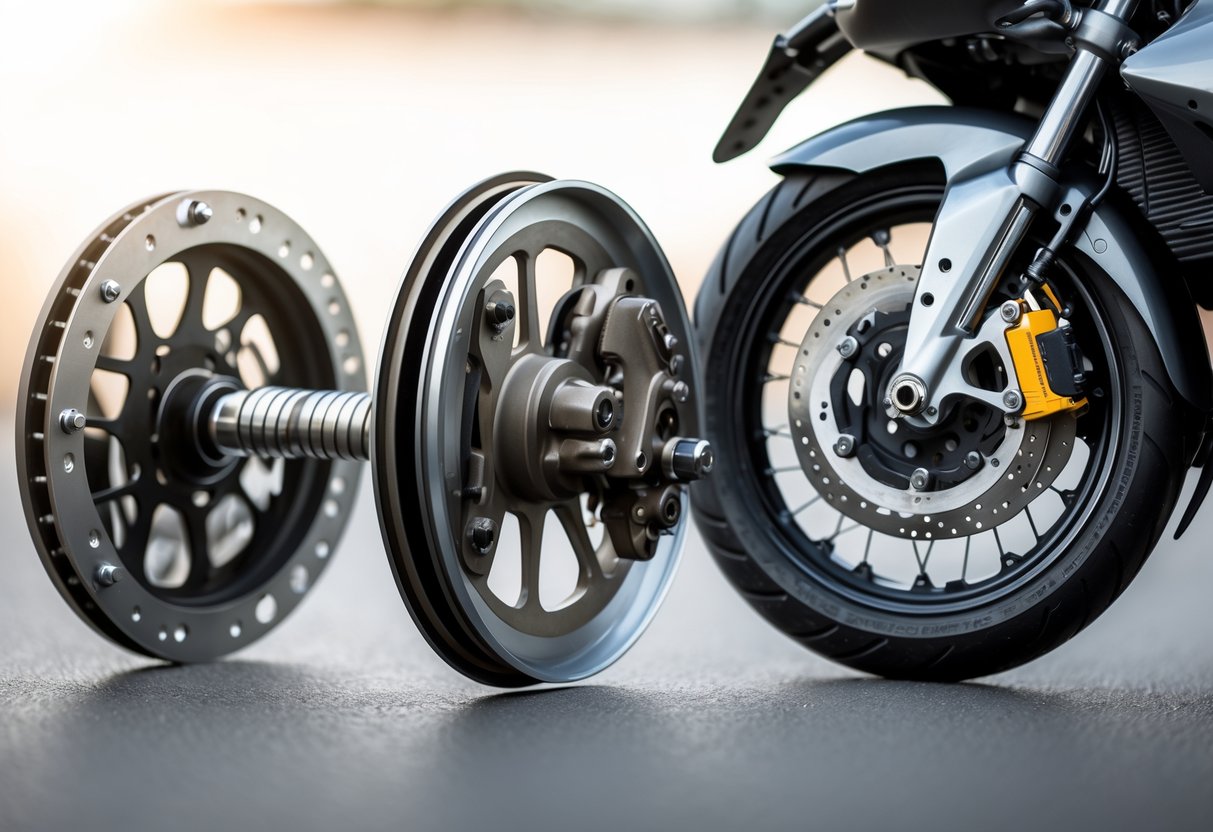
The journey from those early foot-dragging days to today’s advanced braking technology involved many experiments and improvements. Manufacturers tested different designs to solve problems like overheating and brake fade. Some attempts worked well while others failed completely.
Understanding how motorcycle brakes developed helps riders appreciate the safety features on modern bikes. The changes in braking systems directly affected motorcycle performance and rider safety over the past century.
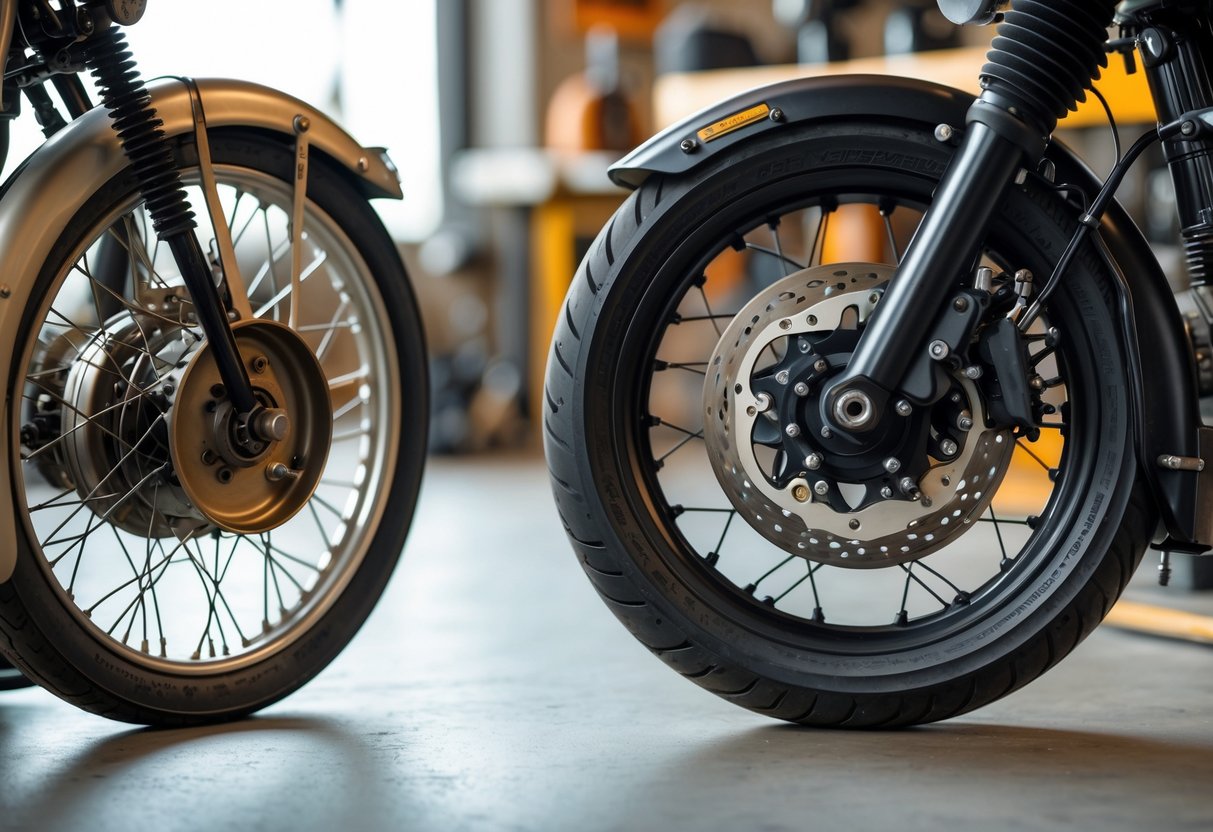
Early motorcycles borrowed braking technology from bicycles, but riders quickly needed better ways to stop as engines became more powerful. The first systems used simple friction methods before engineers developed drum brakes that would dominate motorcycle design for decades.
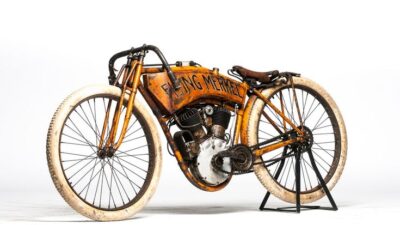
The earliest motorcycles had no brakes at all. Riders slowed down by cutting the engine and dragging their feet on the ground to stop.
Steffey Motorcycles of Philadelphia introduced one of the first actual braking systems in 1902. The system used a steel plate mounted on the front wheel that rubbed directly against the tire. This friction between the plate and tire created enough resistance to slow the motorcycle down. The design worked similarly to bicycle brakes of that era.
These early mechanisms had serious limitations. The steel plate wore down tires quickly and provided weak stopping power. Riders needed considerable distance to come to a complete stop, especially at higher speeds.
As manufacturers built dedicated motorcycle frames instead of just adding engines to bicycle frames, they recognized the need for better stopping power. More powerful engines meant faster speeds, which made inadequate braking systems dangerous.
Engineers started developing brake systems specifically for motorcycles rather than adapting bicycle technology. The focus shifted to creating brakes that could handle heavier weight and higher speeds. Manufacturers tested different materials and designs to find solutions that offered better durability and stopping force.
The innovation period of the early 1900s saw rapid experimentation with various friction-based systems. Each manufacturer tried different approaches to solve the same basic problem of converting motion into heat through controlled friction.
The single leading shoe drum brake emerged as the solution to early braking problems. This design featured a curved brake shoe inside a cylindrical drum that pressed outward when activated. The system was simple, effective, and cheap to manufacture.
Drum brakes quickly became standard equipment on motorcycle front wheels. The enclosed design protected the braking components from dirt and water better than exposed systems. This protection improved reliability and reduced maintenance needs.
By the 1920s, drum brakes appeared on both front and rear wheels of most motorcycles. The basic design remained largely unchanged for decades because it worked well enough for the performance levels of that era. Manufacturers focused on refining the drum brake concept rather than developing entirely new systems.
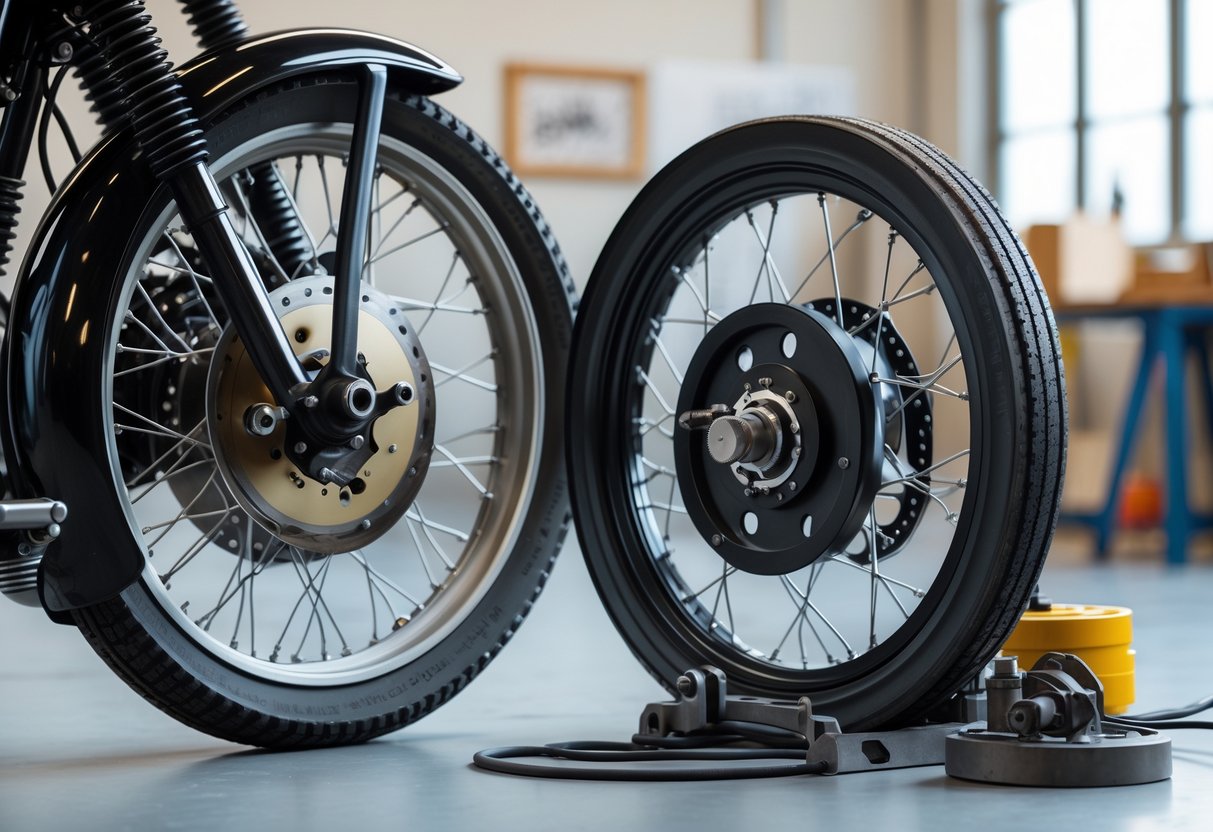
Drum brakes evolved from simple cable-wrapped systems into sophisticated mechanisms that dominated motorcycle braking for decades. Engineers focused on improving the self-energizing action of brake shoes, developing better cooling methods, and selecting materials that could withstand repeated heat cycles.
The self-servo effect occurs when a brake shoe wedges itself against the rotating drum, creating additional braking force beyond what the rider applies. Louis Renault developed the first practical drum brake system in 1902, which used this principle to improve stopping power.
Leading-trailing shoe designs emerged as the most common configuration for motorcycles. The leading shoe rotates into the drum during braking and generates more friction through self-servo action. The trailing shoe rotates away from the drum and produces less force.
Single leading shoe (SLS) front drum brakes became standard on many motorcycles but provided limited stopping power. This created problems since the front brake handles 60% or more of braking force during normal stops. Twin leading shoe (TLS) designs improved performance by making both shoes act as leading shoes, which doubled the self-servo effect and significantly increased braking power.
Drum brakes appeared on motorcycles in the early 1900s and remained the standard braking system until disc brakes gained popularity in the 1960s. Manufacturers installed them on both front and rear wheels across all motorcycle categories.
Front drum brakes with single leading shoes struggled to provide adequate stopping power on larger, faster motorcycles. Performance-oriented bikes switched to disc brakes first, while economy models continued using drums well into the 1980s. The lower manufacturing cost made drum brakes attractive for budget motorcycles.
The rear brake on many modern motorcycles still uses drum brake technology. Drums work well in this application because the rear wheel requires less braking force than the front. They also stay cleaner and require less maintenance than rear disc brakes in off-road conditions.
Heat buildup presented a major challenge for drum brake systems. The enclosed design trapped hot air inside the drum, which reduced friction between brake pads and the drum surface. Engineers added cooling fins to drum exteriors to dissipate heat more effectively.
Brake pad materials progressed from basic organic compounds to more heat-resistant formulations. Early pads wore quickly and lost effectiveness when hot. Later developments included semi-metallic compounds that improved heat tolerance.
Sintered pads offered the best performance in demanding conditions. These pads used metal particles fused under high pressure and temperature, creating a material that maintained consistent friction even when very hot. Drum materials also improved, with aluminum alloys replacing cast iron in some applications to reduce weight and improve heat dissipation.
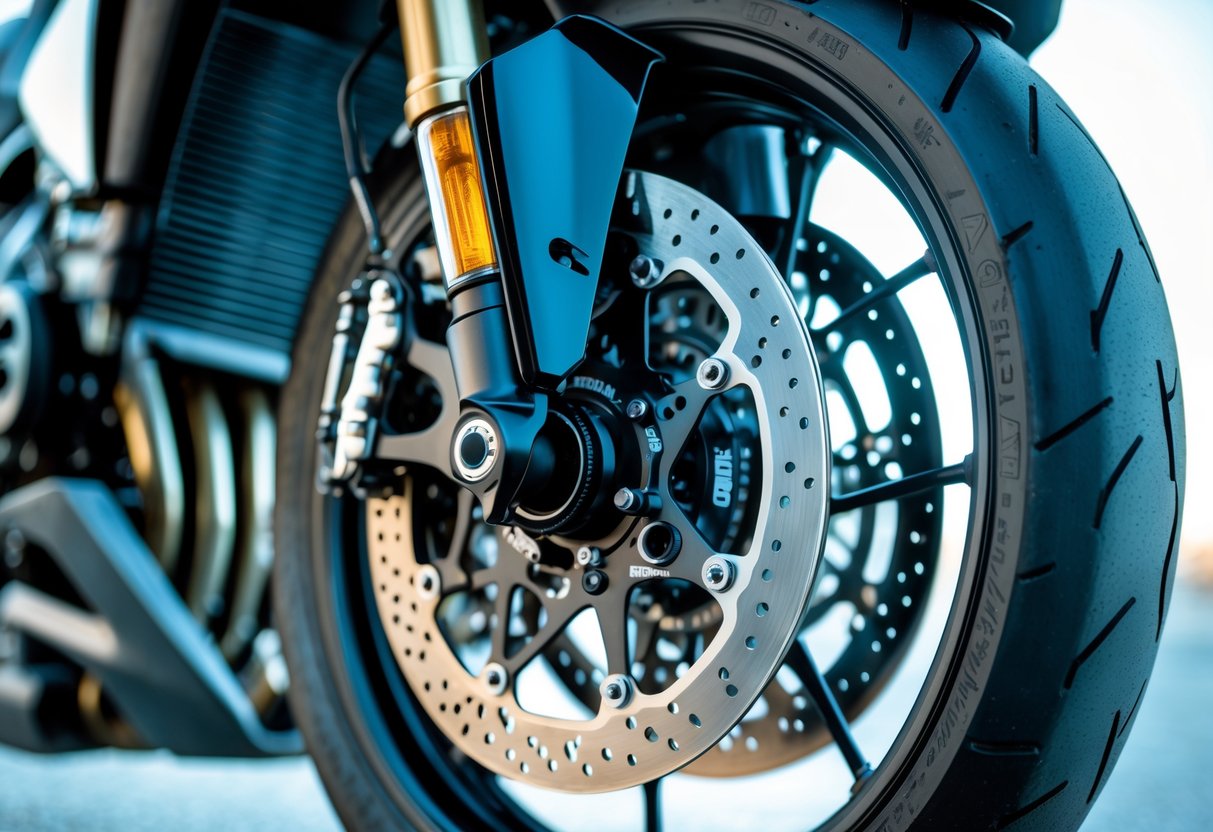
Disc brakes transformed motorcycle safety and performance starting in the 1960s, offering superior stopping power compared to drum brakes. The technology addressed critical issues like heat management and braking efficiency, which became essential as motorcycles grew faster and more powerful.
The 1963 Lambretta 175 TV became the first scooter to feature disc brakes in production. This system used a steel plate mounted on the wheel with a hydraulic pump that activated a piston, pushing brake pads against the disc to slow the vehicle.
Motorcycle manufacturers began widespread adoption of disc brakes throughout the 1960s. The technology quickly moved from racing applications to consumer models as riders demanded better stopping power.
By the late 1960s and early 1970s, disc brakes appeared on the front wheels of most new motorcycles. Manufacturers recognized that the improved braking performance justified the additional cost and complexity of the hydraulic system.
Early disc brake systems solved major overheating problems that plagued drum brakes during repeated stops. The exposed design of brake rotors allowed air to flow freely around the braking surface, dissipating heat more effectively than enclosed drum systems.
Engineers developed anti-lock braking systems (ABS) for motorcycles in the late 1980s, which prevented wheel lockup during emergency stops. This advancement worked particularly well with disc brakes because of their consistent and predictable friction characteristics.
Hydraulic systems replaced mechanical cable-operated brakes, providing more consistent pressure to the brake pads. The fluid-based system eliminated cable stretch and wear issues while delivering smoother, more controlled braking force.
Brake pad compounds evolved significantly from early organic materials to modern semi-metallic and ceramic formulations. These advanced materials provide better grip, reduced fade at high temperatures, and longer service life.
Brake rotor designs now include several specialized variations:
Modern brake rotors use stainless steel and specialized alloys that resist corrosion while maintaining consistent friction properties. The materials withstand extreme temperatures without losing effectiveness or developing uneven wear patterns.
Disc brakes now appear on nearly all motorcycles except some entry-level scooters. The front brake typically uses larger diameter rotors than the rear to handle the forward weight transfer during deceleration.
Modern disc brake systems deliver consistent stopping power in varied weather conditions. While early models struggled in rain, current designs with slotted or perforated patterns quickly shed water from the contact surface between brake pads and rotors.
Braking performance improvements include shorter stopping distances, better modulation for smooth control, and resistance to fade during repeated hard stops. The durability of disc brake components exceeds drum brakes by significant margins, requiring less frequent maintenance and replacement.
Twin disc setups on the front wheel have become standard on mid-size and larger motorcycles. This configuration distributes braking force across two brake rotors and multiple sets of brake pads, reducing the workload on each component while increasing overall stopping power.
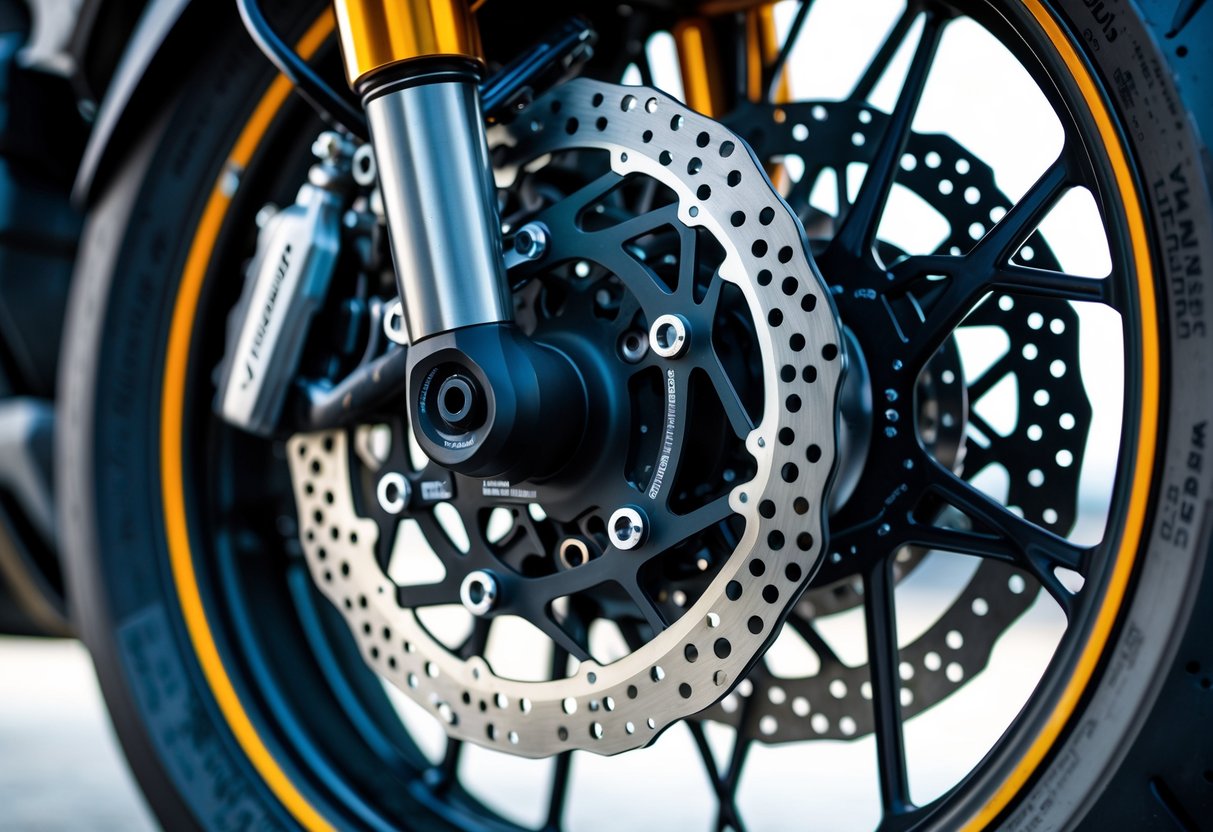
Motorcycle brake systems rely on several key components that have evolved significantly over the decades. Advances in caliper design, brake pad materials, rotor configurations, and integration methods have dramatically improved stopping power and rider control.
Single-piston calipers use a sliding pin design where the piston pushes one brake pad against the disc while pulling the opposite side into contact. This simple design works well for standard applications but has limitations under heavy braking.
Dual-piston calipers changed the game by placing opposed pistons on both sides of the disc. This fixed caliper design reduces flex and greatly improves the piston area for better braking force. The rigid mounting eliminates the slight movement found in sliding designs.
Modern sport bikes now use four, six, or even eight-piston calipers. More pistons mean greater swept piston area without needing larger, heavier rotors. This allows manufacturers to use longer, narrower brake pads while maintaining strong braking performance.
Radial-mounted calipers attach parallel to the forward direction rather than perpendicular. This mounting style creates a more rigid connection that resists torsional flexing. The design delivers more precise braking and crisper feel at the lever. It also simplifies rotor upgrades since only a spacer is needed rather than replacing the entire mounting bracket.
Early brake pads used asbestos for its heat resistance and friction properties. Manufacturers discontinued asbestos when its health risks became clear. They switched to semi-metallic and organic compounds instead.
Sintered pads represent a major advancement in brake pad technology. These pads are made by fusing metallic particles under high heat and pressure. They offer improved heat-up time compared to organic pads. Sintered pads also provide better wet weather performance, making them popular on modern sport and touring motorcycles.
Different pad compounds suit different riding styles. Organic pads run quieter and produce less rotor wear but fade faster under hard use. Sintered metallic pads handle high temperatures better and last longer but can be noisier and more aggressive on rotors.
Standard solid discs were the first type used on production motorcycles. The 1969 Honda CB750 popularized this design with its hydraulically operated front disc brake.
Floating discs separate the braking surface from the mounting carrier using bobbin-style rivets. This design allows the disc to self-center with the caliper, reducing warping. Floating discs also transfer less heat to the wheel hub. Lambretta first used this design on volume production motorcycles.
Wavy or contoured discs place mass closer to the axle. This reduces rotational inertia and lowers weight while improving heat dissipation. Originally developed for motocross, these rotors now appear on many street bikes.
Vented or drilled rotors enhance cooling by increasing surface area and airflow. Some high-performance applications use larger diameter rotors paired with multi-piston calipers for maximum stopping power.
Early disc brake calipers mounted in front of the fork leg on top of the disc. This position provided excellent airflow for heat removal. Most modern motorcycles mount calipers behind the fork leg. This placement reduces the angular momentum of the fork assembly and improves low-speed handling characteristics.
Some manufacturers experimented with alternative designs. Honda tried inboard brakes on models like the VF400F, enclosing the brake assembly in a vented aluminum hub. The system kept components dry and allowed cast iron vented discs without visible rust. Despite these advantages, Honda returned to standard exposed layouts on later models.
Buell adopted rim-mounted perimeter brakes attached to the wheel’s outer edge. This design aimed to reduce unsprung weight in the wheel-brake system. The concept remains rare in production motorcycles.
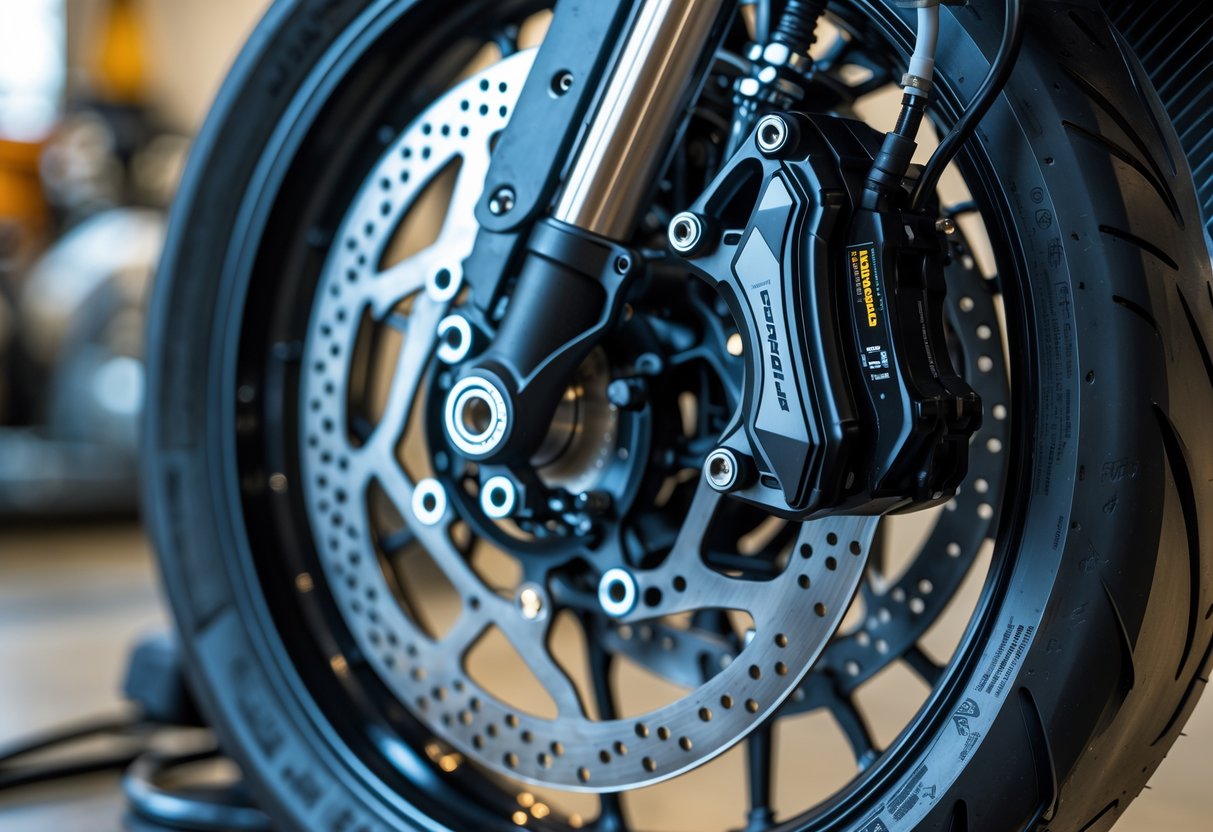
Motorcycles gained significant safety improvements through electronic brake technologies starting in the late 1980s. Anti-lock braking systems, combined brake systems, and traction control work together to prevent wheel lockup, distribute braking force, and maintain grip during acceleration.
BMW introduced the first production motorcycle anti-lock braking system in 1988 on the K100 model. The system used wheel-speed sensors to detect when a wheel was about to lock up during hard braking. When the sensors detected impending lockup, the ABS computer rapidly reduced and reapplied brake pressure multiple times per second.
This rapid pressure modulation kept the wheels rotating while still providing maximum braking force. Early ABS systems added weight and cost to motorcycles, which limited their adoption. The technology improved over the following decades with lighter components and faster processors.
Modern ABS can activate in milliseconds and cycle brake pressure over 10 times per second. Studies show that motorcycles equipped with ABS have 31% fewer fatal crashes than those without it. Many countries now require ABS on new motorcycles above certain engine sizes. The system has become standard equipment on most mid-range and premium motorcycles.
Combined brake systems link the front and rear brakes so that activating one brake engages both wheels. Honda pioneered this technology for motorcycles in the 1980s with mechanical linkage systems. The rider pulls the front brake lever, and the system automatically applies some rear brake pressure as well.
CBS helps riders who tend to over-rely on one brake or the other. The system distributes braking force between both wheels in predetermined ratios. This balanced approach reduces braking distance and helps prevent the rear wheel from lifting during hard stops.
Honda’s Electronically Controlled Combined ABS integrates CBS with anti-lock braking. The electronic version allows more precise control over brake force distribution. The system adjusts brake pressure based on riding conditions and prevents excessive weight transfer to the front wheel.
Traction control systems monitor wheel speed to prevent the rear tire from spinning during acceleration. The technology originated in racing before appearing on production motorcycles in the 2000s. TCS uses the same wheel-speed sensors as ABS but focuses on acceleration instead of braking.
When the system detects the rear wheel spinning faster than the front, it reduces engine power temporarily. Most systems cut ignition timing or fuel delivery to bring the wheel speed back in line. Advanced traction control systems use lean angle sensors and throttle position data to adjust intervention levels.
Riders can typically adjust TCS sensitivity or turn it off completely. The system proves most valuable in wet conditions or when accelerating hard out of corners. Modern sport bikes often include multiple traction control modes for different riding situations.
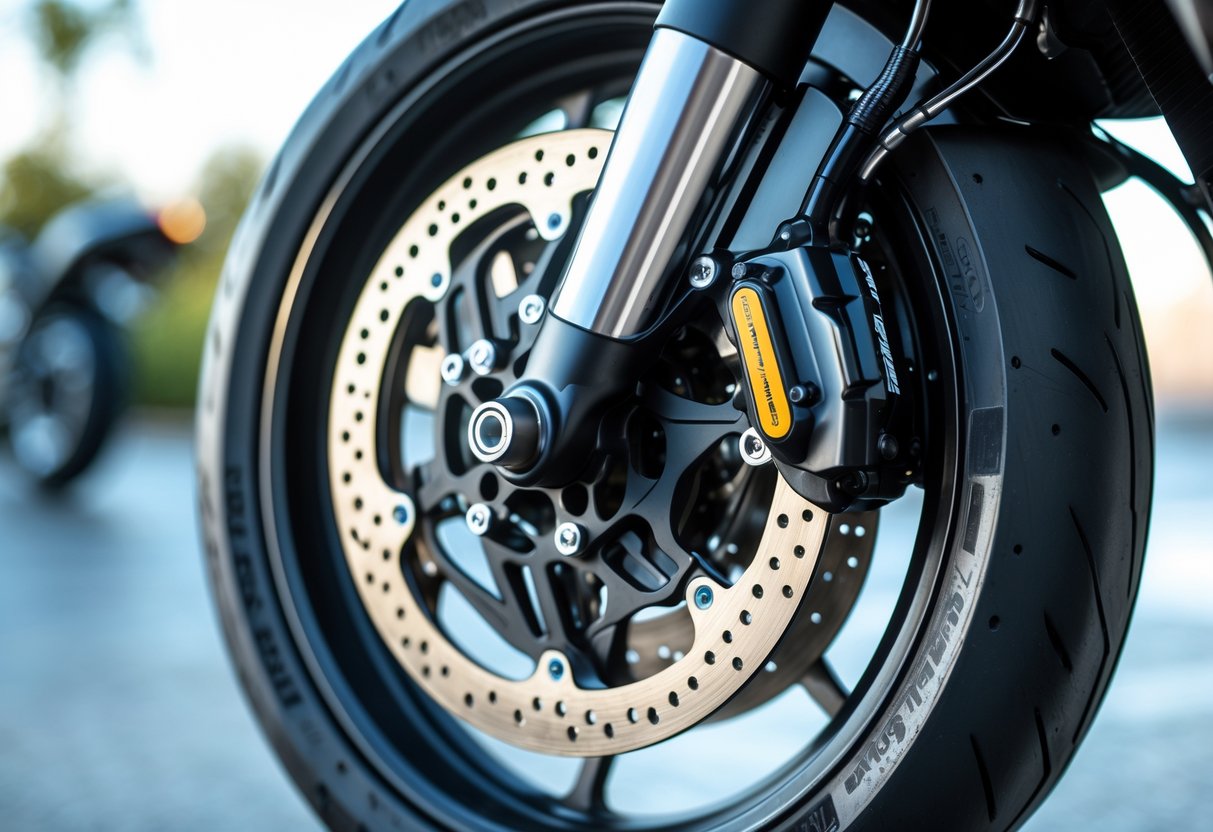
Different motorcycle manufacturers have shaped brake technology through their innovations and design choices. Honda introduced the first hydraulic disc brake on a production motorcycle, while other companies developed systems for specific riding styles and bike types.
Honda launched the Dream CB750 FOUR in 1969 with a hydraulic disc brake on the front wheel. This marked the first time a production motorcycle came equipped with this technology. The disc brake system provided better stopping power than the drum brakes used on motorcycles at that time.
The CB750 FOUR’s front brake used a single disc with a hydraulic caliper. This setup gave riders more consistent braking performance and better heat dissipation. The innovation set a new standard for the motorcycle industry.
Other manufacturers quickly recognized the advantages of Honda’s disc brake system. Within a few years, disc brakes became common on larger motorcycles. Honda’s decision to put this technology on a mass-produced model changed how motorcycles were designed and built.
NG Brakes developed specialized brake components for racing and high-performance motorcycles. The company focused on creating lighter brake discs and more responsive caliper designs. Their floating disc designs allowed for better heat expansion and more consistent performance during hard braking.
Racing teams adopted NG brake systems because they offered weight savings and improved stopping power. The floating disc design used bobbins to attach the braking surface to the center carrier. This let the disc expand and contract without warping.
These innovations moved from racing bikes to street motorcycles. Manufacturers started using similar floating disc designs on sport bikes and touring models.
Cruisers use different brake setups than sport bikes because of their riding style and weight distribution. These motorcycles often feature larger diameter discs on the front wheel to handle the bike’s mass. The rear brake typically uses a single disc or drum brake.
Harley-Davidson and other cruiser manufacturers adapted brake technology to match their bikes’ character. They focused on smooth, progressive braking rather than maximum stopping power. Many cruisers use dual front discs with larger pistons in the calipers.
Touring motorcycles need brakes that work well under heavy loads. These bikes often carry a passenger and luggage, which increases the demands on the brake system. Manufacturers install linked braking systems that distribute force between the front and rear brakes when the rider applies either brake lever.
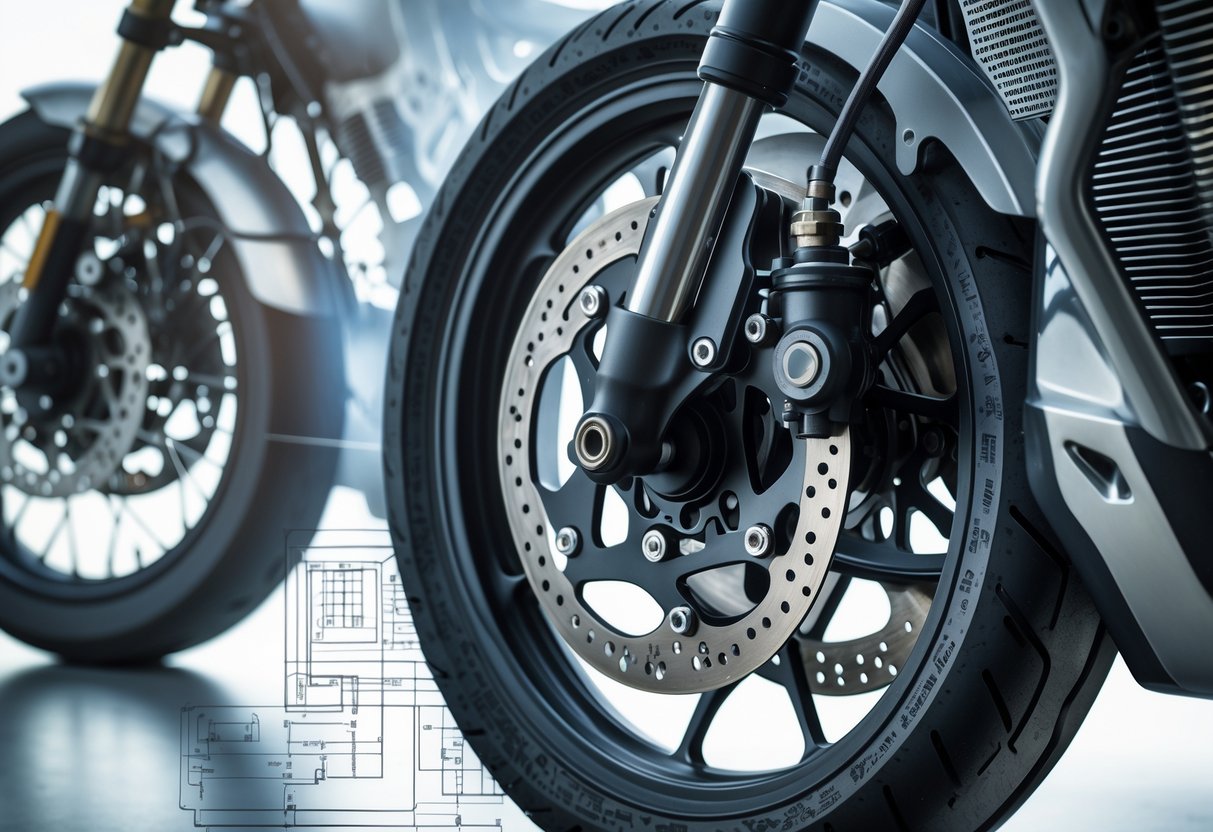
Motorcycle braking technology involves several specialized systems and components that have changed significantly since the early days of motorized bikes. These systems work through different mechanisms to slow or stop motorcycles safely.
A linked braking system connects the front and rear brakes so that applying one brake activates both. When a rider presses the rear brake pedal, the system automatically engages the front brake as well. This helps distribute braking force between both wheels.
The system uses hydraulic connections to link the brake circuits together. Some versions work in both directions, while others only activate the front brake when the rear is applied.
Motorcycles use three main types of braking systems: drum brakes, disc brakes, and combined braking systems. Drum brakes contain brake shoes inside a drum that press outward to create friction. Disc brakes use calipers that squeeze brake pads against a rotating disc.
Combined braking systems link the front and rear brakes together. ABS systems prevent wheel lockup by adjusting brake pressure rapidly during hard braking.
Modern motorcycles often feature regenerative braking on electric models, which converts motion energy back into battery power.
Early motorcycles had rim brakes similar to bicycles, with some machines only featuring a rear brake. Drum brakes appeared as the first major improvement, though front drum brakes with single leading shoes remained weak.
Disc brakes started appearing in the 1970s, offering better performance despite early problems in wet conditions. The 1970s also saw the introduction of ABS technology, though it mainly appeared on high-end touring bikes until 2016. That year, ABS became mandatory on all motorcycles over 125cc in many markets.
Modern radial brakes require only one or two fingers to achieve full stopping power. Current systems can stop a bike traveling at 160 km/h in about 5 seconds and less than 100 meters.
Perimeter brakes mount the brake disc at the outer edge of the wheel rather than near the hub. The disc sits closer to the rim, which increases the leverage and braking force. This design creates a larger radius for the braking surface.
Traditional brakes mount the disc near the wheel’s center, limiting the mechanical advantage. Perimeter designs can use larger diameter discs without increasing the wheel size.
Drum brakes had limited cooling capacity and were prone to fade during repeated hard braking. Heat buildup inside the drum reduced braking effectiveness. Front drum brakes with single leading shoes performed poorly, even though the front wheel handles 60% or more of braking duties.
Disc brakes exposed the braking surface to air, allowing better heat dissipation. They provided more consistent performance and stronger stopping power. The open design made maintenance and inspection easier compared to enclosed drum systems.
The Combi Brake System improves safety by automatically balancing braking force between the front and rear wheels. It reduces the risk of rear wheel skids from over-braking. The system helps riders who might apply too much rear brake and not enough front brake.
This balanced approach maintains better motorcycle stability during braking. It shortens stopping distances compared to using only one brake. The system works particularly well for less experienced riders who may not have developed proper braking techniques.